Turkey: Another BRIC in the wall?
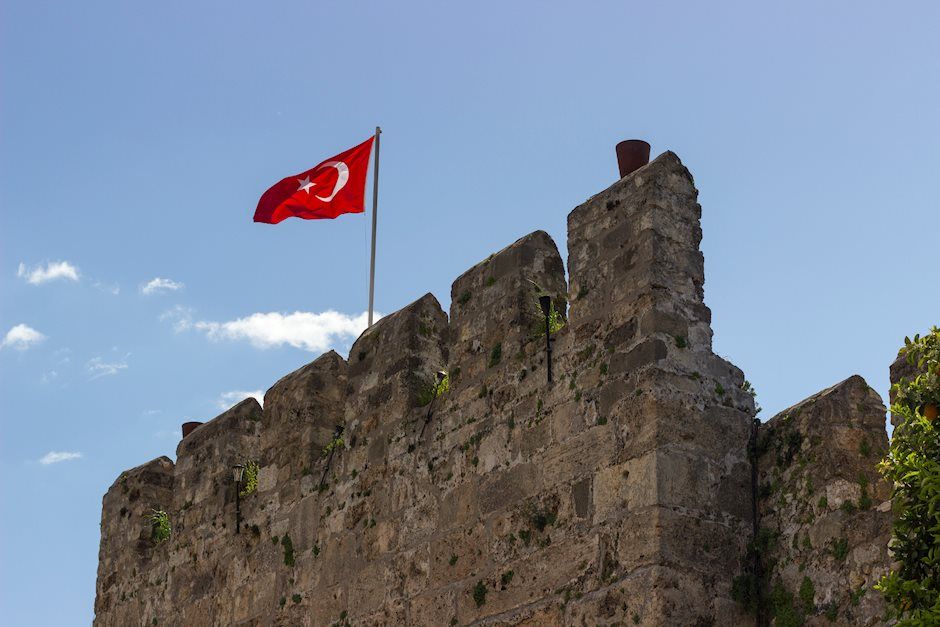

Turkey has formally applied to join the BRICS economic bloc.
The move came as something of a shock given that Turkey is a member of NATO and is generally perceived to be oriented toward the West.
Turkey has also been cozying up to the Shanghai Cooperation Organization, a Eurasian political, economic, international security, and defense organization established by China and Russia in 2001.
Turkish membership in BRICS would be another boost to an economic cooperation bloc that many see as a potential challenge to Western economic hegemony.
BRICS was originally made up of Brazil, Russia, India, China, and South Africa. As of Jan. 1, 2024, the bloc expanded to include Saudi Arabia, Egypt, the UAE, Iran, and Ethiopia.
More than 40 other nations have expressed interest in BRICS membership.
The expanded BRICS has a combined population of about 3.5 billion people. The economies of the BRICS nations are worth over $28.5 trillion and make up roughly 28 percent of the global economy. BRICS nations also account for about 42 percent of global crude oil output.
The Turkish population stands at around 85 million people, and its economy ranks 18th in the world, although it has struggled in recent years.
A foreign policy expert told CNBC that Turkey’s quest to join BRICS is “in line with its broader geopolitical journey,” and the country is positioning itself “as an independent actor in a multi-polar world.”
“Turkey wants to foster as many trading ties as possible and pursue opportunities unilaterally without being constrained by Western alignment.”
The Turks seem to be trying to "diversify" their alliances. This is a growing trend globally, as many countries seek to extract themselves from under the thumb of Western influence. We see this specifically in diversification away from the dollar. The U.S. has effectively weaponized the dollar, using its status as the world reserve currency as a foreign policy tool. As a result, a lot of countries are trying to rely less on dollars to curb American influence.
The CNBC report noted that “being part of BRICS allows its members to trade in currencies other than dollars. This aims to reduce dependency on the U.S.-led system and usher in a more multi-polar world.”
With Russia taking the lead, the BRICS bloc is talking about creating a new payment system that isn’t controlled by the United States and that is not dependent on the dollar.
Such a system could accelerate de-dollarization.
There have also been discussions about a BRICS currency, possibly backed by gold.
Such a system could raise gold’s role in the international monetary system. The BRICS countries own a lot of gold. Since just before the 2008 financial crisis official gold reserves held by BRICS nations have grown from just over 1,500 tons to over 6,600 tons today.
Interestingly, the Turkish central bank has been one of the biggest gold buyers over the last year.
The Turkish government has also refused to participate in economic sanctions against Russia.
Turkey’s bid to join BRICS has certainly ruffled some feathers. The Middle East Forum, a publication that “promotes American interests in the Middle East and protects the West from Middle Eastern threats,” suggested Turkey should be ejected from NATO. It went on to assert that being affiliated with both NATO and the Shanghai Cooperation Organization simultaneously “would be like sharing membership in the National Association for the Advancement of Colored People (NAACP) and the Ku Klux Klan,” noting “BRICS may not be as extreme as the Shanghai Cooperation Organization, but it is quickly moving in that direction.”
BRICS isn’t currently positioned to meaningfully challenge Western economic power, but it is slowly growing in influence. The BRICS bloc doesn’t have to become dominant to create problems for the West and the U.S. in particular. Any diversification away from the dollar will further erode the value of the greenback. This could be a big problem for the U.S. because it depends on demand for dollars to maintain its profligate borrowing and spending.
The only reason the U.S. can borrow, spend, and run massive budget deficits to the extent that it does is the dollar’s role as the world reserve currency. It creates a built-in global demand for dollars and dollar-denominated assets. This absorbs the Federal Reserve’s money creation and helps maintain dollar strength despite the Federal Reserve’s inflationary policies.
But what happens if that demand drops leading to a dollar glut? What happens if BRICS nations and other countries decide they don’t want to hold dollars?
A de-dollarization of the world economy would cause the value of the U.S. currency to crash and likely spark a currency crisis. Americans would feel the impact through more price inflation eating away at the purchasing power of the dollar. At the extreme, it could even lead to hyperinflation.
This won’t likely happen overnight, but the de-dollarization trend is accelerating. And to whatever extent it occurs is a problem for the U.S.
To receive free commentary and analysis on the gold and silver markets, click here to be added to the Money Metals news service.
Author
Mike Maharrey
Money Metals Exchange
Mike Maharrey is a journalist and market analyst for MoneyMetals.com with over a decade of experience in precious metals. He holds a BS in accounting from the University of Kentucky and a BA in journalism from the University of South Florida.

















