Trump–Xi meeting primer: The great bargain — When Earth’s core meets the negotiating table
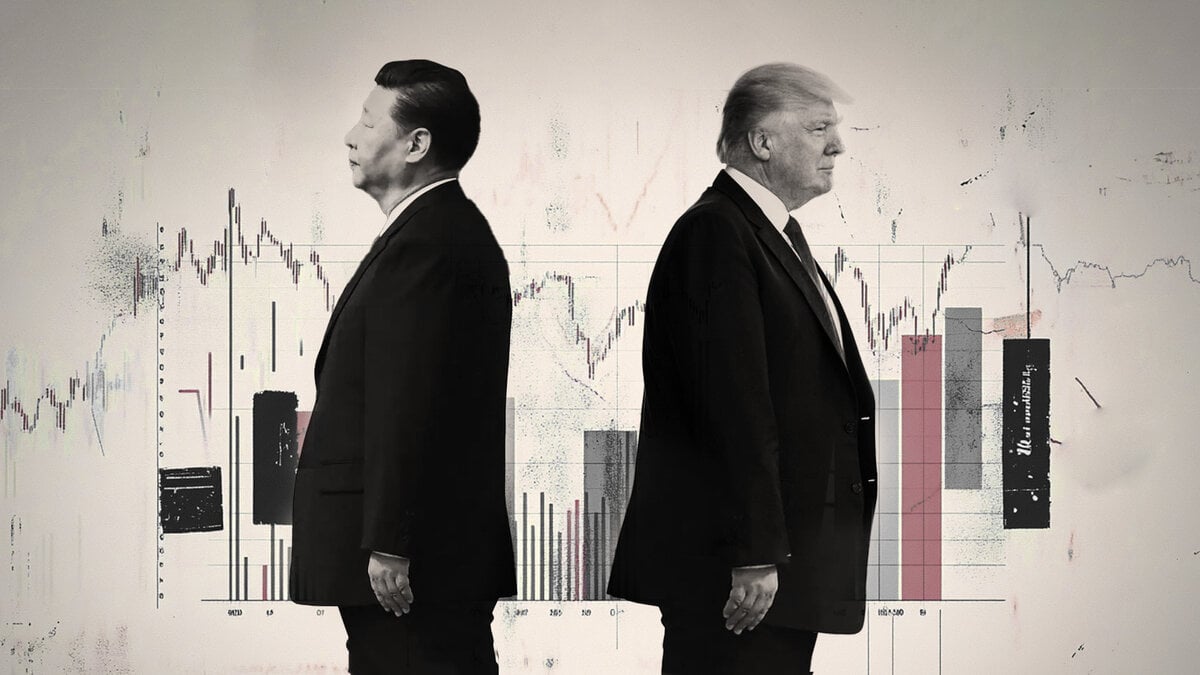

Markets are bracing for a summit that feels less like diplomacy and more like a staring contest between tectonic plates. The Trump–Xi meeting at the upcoming APEC summit is being billed as a chance to “defuse” tensions — but traders know better. This isn’t détente; it’s leverage theatre at the edge of a resource war, where the currency isn’t dollars or data, but elements pulled from the earth’s crust itself.
Over the past month, the two superpowers have been fencing not over tariffs, but over the invisible architecture of the modern world: the rare earths that power magnets, semiconductors, missiles, and every machine that hums beneath the digital surface. China holds the shovel; the U.S. holds the sanctions and tariff lists. Between them lies a nervous global supply chain pretending it can function without either.
Trump’s threat of a 100% tariff on Chinese imports by November 1 is less about protectionism than it is a bluff in an energy-mineral poker game. Beijing’s move to throttle rare-earth exports was a masterstroke of asymmetry — a reminder that in a world obsessed with chips and servers, the real power still comes from the ground. These aren’t commodities; they’re the sinews of the future economy.
The market’s reaction has been oddly calm — as if traders are watching a storm from behind soundproof glass. But anyone who has traded through a currency war or oil embargo knows the pattern: first indifference, then realization, then chaos. When resource leverage meets political brinkmanship, the tape doesn’t move linearly; it snaps.
China’s strength in rare earths isn’t just production — it’s process. The refinement, the magnetization, the logistical stranglehold. The U.S. can fund a thousand mines, but it can’t conjure the metallurgical ecosystem that took China decades to build. America’s new mining investments won’t produce strategic supply before 2028; until then, any talk of “independence” is wishful thinking wrapped in PowerPoint optimism.
For Asia, the tremors are uneven but discernible. Taiwan shrugs — its semiconductor giants have stockpiles and leverage. Korea and Japan, however, sit closer to the blast radius. These economies live on precision manufacturing, where even a minor disruption in dysprosium or terbium supply can ripple through defense systems and EV motors like a skipped heartbeat in the global circuit.
If Trump’s tariffs go live at 100%, China’s GDP hit could exceed 2.5 percentage points — a sharp but survivable wound. Yet the true damage wouldn’t be macro; it would be moral. China’s policymakers view this fight not as a trade dispute, but as a test of resolve, an ideological referendum on sovereignty in the era of sanctions. Hence, don’t expect a sudden concession. Beijing will come to the table not as a supplicant, but as a supplier of the world’s irreplaceable atoms.
What makes this stand-off uniquely treacherous is that both sides think they hold the upper hand. Trump sees tariffs as leverage to extract “fair play”; Xi sees rare earths as the quiet choke point through which America’s tech dominance must pass. It’s a standoff between liquidity and geology — between printing presses and mountain seams.
The “off-ramps” are few and steep. China could roll back its export curbs, but doing so would look like submission. The U.S. could delay tariffs, but delay is not de-escalation. And the third option — escalation to de-escalate — is how financial markets end up gasping for breath. One side tightens export screws; the other retaliates with sanctions or secondary tech bans; the result is not détente but entrenchment.
Prediction markets may price in only an 8% chance of tariffs taking effect, but markets have a habit of underpricing political vanity. Both men need a win. Trump, a campaign flourish; Xi, a proof of power to his domestic audience. That’s a combustible setup for the world’s logistics spine, and traders know it. Behind every calm futures quote, there’s a trader whispering: “What if they mean it this time?”
-638965190244291498.jpg)
We’re heading toward a summit where the two largest economies on Earth will bargain not just over trade but over the elements that define technological civilization. If there’s a deal, it will be cosmetic — a handshake over the fault line. If not, we enter the mineral age of geopolitics, where leverage is mined, refined, and rationed — and where the next great bull market might just be buried under our feet.
Author
Stephen Innes
SPI Asset Management
With more than 25 years of experience, Stephen has a deep-seated knowledge of G10 and Asian currency markets as well as precious metal and oil markets.