Trump Asks China to Shift Soybean Tariffs to Something Else


As part of a trade deal, the US and China will both keep $50 billion in tariffs. Trump asked China to shift tariffs.
US farmers have borne the brunt of China retaliatory tariffs as U.S. Soybean Shipments Hit One-Year Low.
Despite being close to a deal (for months), Trump insists in keeping $50 billion in tariffs on Chinese products. China will do the same.
Trump had demanded that China remove all tariffs as part of a deal. However, Trump backed down as he always appears to do.
To make it appear as if China is doing something meaningful for US farmers, China to Consider U.S. Request to Shift Tariffs on Farm Goods.
China is considering a U.S. request to shift some tariffs on key agricultural goods to other products so the Trump administration can sell any eventual trade deal as a win for farmers ahead of the 2020 election, people familiar with the situation said.
The step would involve China moving retaliatory duties it imposed starting last July on $50 billion worth of U.S. goods to non-agricultural imports, said the people, who asked not to be identified because the discussions were private. The shift is because the U.S. doesn’t intend to lift its own duties on $50 billion of Chinese imports even if an agreement to resolve the trade war between the two nations is reached, one the people said.
The bartering shows that both sides are taking political considerations into account as negotiations drag on to end the trade war, which has rattled financial markets for months. An outcome that completely removes punitive tariffs looks increasingly unlikely as Trump looks to hone his campaign message and continues to threaten the European Union, India and other countries with trade actions.
Over the weekend, Treasury Secretary Steven Mnuchin said the U.S. and China were “hopefully getting very close to the final round” and discussing whether to hold more in-person trade talks. He also said the U.S. is open to facing “repercussions” if it doesn’t live up to its commitments in a potential trade deal, a sign that the two sides are edging closer to an accord.
Under the proposed agreement, China would commit by 2025 to buy more U.S. commodities, including soybeans and energy products, and allow 100 percent foreign ownership for U.S. companies operating in China as a binding pledge that can trigger retaliation from the U.S. if left unfulfilled, people familiar with the situation said earlier this month.
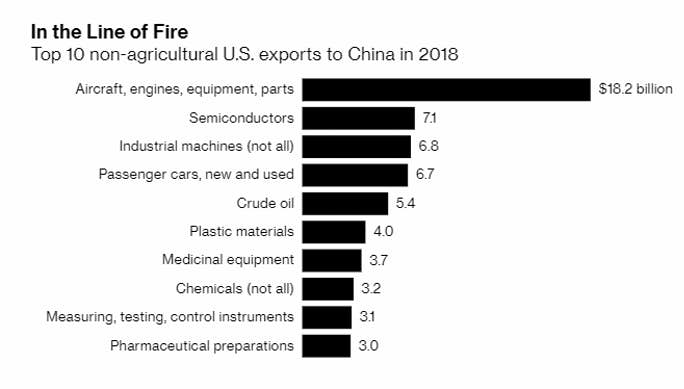
In the Line of Fire
Hooray! China will buy more soybeans.
As a result of this side arrangement, China will buy as many soybeans as it did before Trump started the trade war.
Since Trump will not remove all tariffs, neither will China. Instead, China will put retaliatory tariffs on Boeing aircraft and other things instead of soybeans.
Trump is sure to label this as the greatest trade deal in history.
The EU is now in the spotlight.
Author
Mike “Mish” Shedlock's
Sitka Pacific Capital Management,Llc