Triple Witching hour after Juneteenth holiday: What could go wrong?

Between expected volatility and the return of a Juneteenth public holiday, the US markets are approaching this triple witching hour in a new context.
This Friday, June 20, will be no ordinary session on the financial markets, especially for short-term traders. It's one of the four days of the year when what professionals call the triple witching occurs, a rare and powerful conjunction in the world of derivatives trading.
But this June edition stands out in particular, as it comes immediately after the markets close for the Juneteenth bank holiday, potentially amplifying volatility and unbalancing trading flows.
What exactly is triple witching hour?
Triple witching hour refers to the simultaneous expiration of three major derivative instruments:
- Equity options
- Stock index options
- Index futures.
This phenomenon occurs every third Friday in March, June, September and December, and often triggers increased trading volumes and higher volatility, particularly at the end of the day, when positions must be liquidated, exercised or rolled over by traders.
Historically, these days are marked by renewed market nervousness: institutional traders massively adjust their portfolios, triggering technical movements in the prices of equities, ETFs and indices.
For instance, in 2021, the S&P 500's average daily volume almost doubled on the four triple witching trading days. Additionally, the daily range expanded nearly 7% on triple witching days, and the average percentage return was 0.72% lower than the daily average, according to AInvest.
Why is the one on June 20 unique?
This triple witching is all the more closely scrutinized by traders because it takes place the day after a holiday: Juneteenth.
Established as a federal holiday in 2021, Juneteenth commemorates the end of slavery in the United States. On this date, the US stock exchanges are closed, upsetting the preparation habits of investors, particularly those who trade derivatives to hedge or speculate.
"There's a time compression effect: investors will have one less day to position themselves or adjust their strategies, which can generate more tension or imbalances," explains an eToro analyst to MarketWatch.
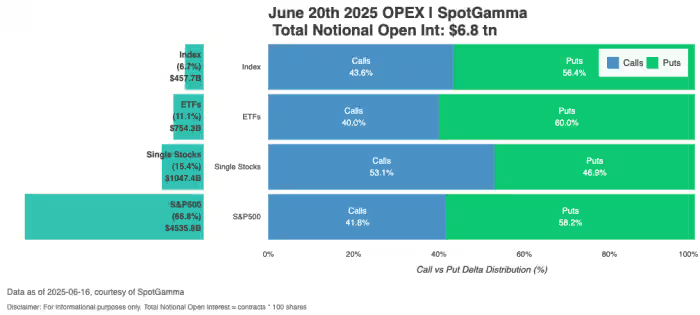
According to MarketWatch, quoting a SpotGamma report, more than $6,000 billion worth of options and futures contracts on equities, indices and ETFs expire on this day, a record figure that illustrates the scale of the challenge.
Increased volatility risks
With each triple witching hour, the question is the same: how far will volatility go? Past statistics provide some clues.
Since 2021, during triple-witching weeks, the S&P 500 has underperformed on average, with a decline of 0.52% on the Friday of the event, according to market data compiled by Reuters, cited by Britannica Money.
In addition, the current geopolitical context – notably persistent tensions in the Middle East – and uncertainties over trade policy, have already contributed to pushing the VIX volatility index above 20, its long-term average level. This indicates growing market nervousness, which may exacerbate the effects of the triple witching hour.
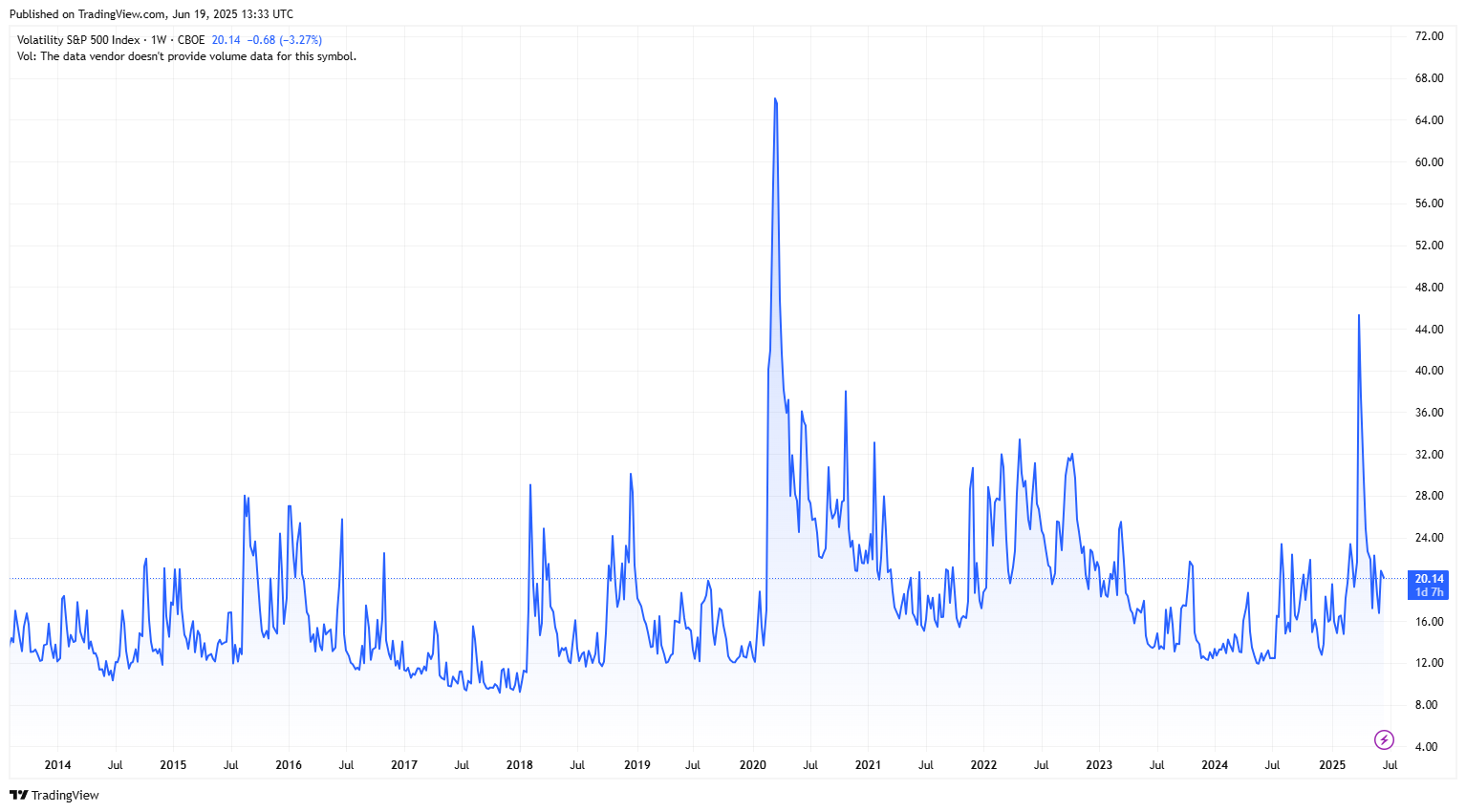
VIX index chart. Source: TradingView
What should you do as an investor?
It all depends on your profile:
- Long-term investors: Generally speaking, triple witching does not call fundamentals into question. There is no need to modify a solid investment strategy for a one-off event.
- Active traders: These days can offer opportunities, notably via volatility strategies or arbitrage, but they require a high level of reactivity and risk management.
- Beginners: It's better to observe than try to profit from technical movements that are difficult to anticipate. You can also learn by analyzing this type of day in hindsight.
A date to watch closely
With the markets closed for Juneteenth the day before, massive derivatives maturities and a still uncertain economic climate, the triple witching hour of June 2025 could leave a more marked imprint than usual.
Even if all the ingredients don't guarantee a brutal jolt, conditions are ripe for a lively – and potentially instructive – session for all tarders.
Author

Ghiles Guezout
FXStreet
Ghiles Guezout is a Market Analyst with a strong background in stock market investments, trading, and cryptocurrencies. He combines fundamental and technical analysis skills to identify market opportunities.