Trade Deficit Widens Modestly in August


Despite a modest widening in the trade deficit in August, real net exports likely will contribute positively to U.S. GDP growth in the third quarter.
Surge in Soybean Exports Has Yet to Reverse
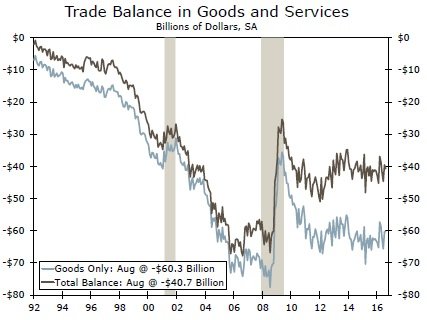
The U.S. trade deficit in goods and services widened modestly from $39.5 billion in July to $40.7 billion in August (top chart). Although the red ink in the overall trade accounts was a bit higher than most analysts had expected, it did not come as a complete surprise either. Preliminary data on international trade in goods (excluding services) that were released last week had indicated there would be little change in the overall trade deficit in August. Although the value of goods and services exports rose by nearly $1.5 billion (0.8 percent) in August, the trade deficit widened because imports were up more than $2.6 billion (1.2 percent) during the month.
When data for the July trade deficit was released a month ago, analysts were surprised by the $3.5 billion increase in the value of exports which caused the trade deficit to narrow by more than expected. As we explained at the time, however, the jump in exports in July was caused largely by a one-off surge in the value of soybean exports (middle chart). Exports of soybeans remained at a high level in August, but it is only a matter of time before these values return to more normal levels. That said, there were solid gains in most other categories of exports with exports of consumer goods up by more than $100 million (0.7 percent) in August. Auto exports climbed nearly $400 million (3.1 percent) during the month. However, the notoriously volatile category of civilian aircraft helped to drag overall exports of capital goods down by more than $700 million (1.6 percent).
Turning to the import side of the ledger, petroleum products helped to push up the overall value of imports due largely to increased volumes of oil imports. Service imports, which tend to be rather stable on a month-bymonth basis, shot up $1.5 billion (3.6 percent) due largely to an increase in "charges for the use of intellectual property."
Real Net Exports Should Boost U.S. GDP in Q3
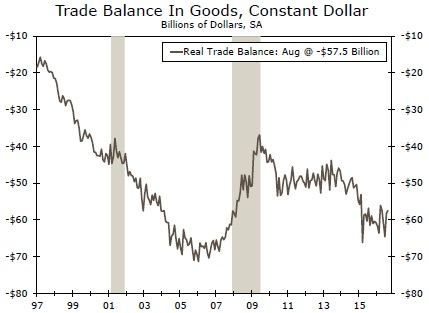
The real trade deficit, which enters directly into real GDP calculations, narrowed further in August (bottom chart). Although we expect that the real trade deficit will widen again in September as the one-off effect of soybean exports are reversed, it looks like the overall deficit for the third quarter will narrow significantly relative to Q2. Indeed, real net exports could boost overall GDP growth by 1/2 percentage point. That said, we do not expect real exports to be a driver of U.S. GDP growth on a sustained basis. Underlying rates of economic growth in many of the country's trading partners is lackluster, which tends to depress the trend rate of real export growth. On the other hand, real imports likely will continue to trend higher in coming quarters as the U.S. economic expansion remains intact. In sum, we expect that real net exports will revert to being a modest drag on U.S. real GDP growth in coming quarters.
Author
Wells Fargo Research Team
Wells Fargo

















