Top Trade Setups in Forex

XAU/USD - Bullish Channel Putting Up Resistance
The Safe-haven metal prices dropped mainly due to the gains in as traders are cautious ahead of testimony from Federal Reserve Chairman Jerome Powell. As of writing, the gold is currently trading at $1,567 and representing 0.25% declines on the day. Gold Futures for April delivery lost 0.5% to $1,571.65.
The Asian equities were mostly higher today, putting the safe-haven metal on pressure. The safe-haven gold prices rose during the previous 4-days mainly due to fear about the coronavirus because the death losses crossed 1,000 lives in China. The coronavirus has already taken more than 1,000 lives by the end of February 10 and about 40,000 cases of the disease.
On Sunday alone, 97 people died, which was the highest daily death toll since the outbreak began. Almost 6,500 of the affected patients were in critical condition, authorities said Monday. Moreover, the death losses have increased to 1,011 with the epicenter Hubei adding 2,097 confirmed cases. It's worth mentioning that there have been 103 deaths on Monday due to the deadly disease.
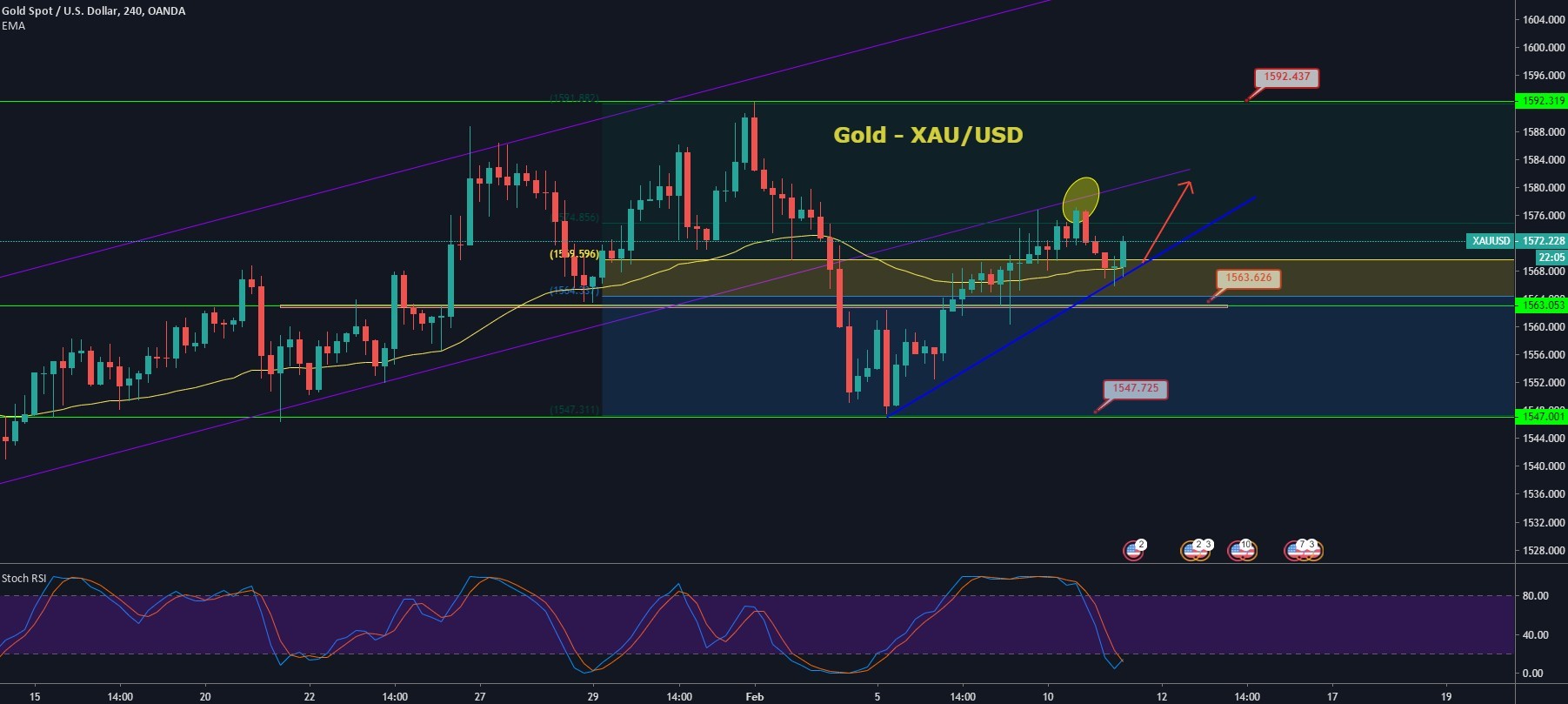
XAU/USD - Daily Technical Levels
|
Support |
Pivot Point |
Resistance |
|
1562.34 |
1568.25
|
1576.29 |
|
1554.3 |
1582.19 | |
|
1540.35 |
1596.14 |
XAU/USD - Daily Trade Sentiment
Gold continues to face resistance nearby 1,573 and has concluded bearish marabou and a bearish engulfing candle, which implies bearish bias amongst investors. On the lower side, the support prevails around 1,564 and 1,560 today. We may see gold prices trading bullish as the upward trendline is extending support around 1,563 area. While the resistance may be found around 1,580 level. Let's look for buying trade for now above 1,568 to target 1,578.
USD/CAD - Bullish Channel Continues to Play
The USD/CAD was broadly flat at 1.3318. Official data showed that Canada's housing start rose to an annualized rate of 213,200 units in January (205,000 units expected) from 195,900 units in December.
Besides, the WTI crude oil prices showed stronger downward momentum amid China's coronavirus outbreak and uncertainty in the Organization of the Petroleum Exporting Countries' (OPEC) output-cut plan. Nymex crude oil futures lost a further 1.5% to $49.57 a barrel, and Brent slid 2.2% to $53.27 a barrel.
The coronavirus has already provoked more than 1,000 deaths by the end of February 10 and over 40,000 infected persons. On Sunday alone, 97 people died, which was the highest daily death toll since the outbreak began.
Almost 6,500 of the affected patients were in critical condition. Moreover, the death losses have increased to 1,011 with the epicenter Hubei adding 2,097 confirmed cases. It's worth mentioning that there have been 103 deaths on Monday due to the deadly disease. All of this is adding selling pressure on the crude oil, which makes the Canadian dollar weaker today.

USD/CAD- Daily Technical Levels
|
Support |
Pivot Point |
Resistance |
|
1.3283 |
1.3302
|
1.3325 |
|
1.3259 |
1.3344 | |
|
1.3217 |
1.3387 |
USD/CAD- Daily Trade Sentiment
The USD/CAD hasn't moved much as it is trading bullish around 1.3295, crossing below an immediate support level of 1.3300. That's a negative Unemployment rate, which is placing bearish pressure on the U.S. dollar, driving pair a bit lower.
The USD/CAD is still keeping the bullish channel that is expanding support around 1.3280, while the resistance predominates at 1.3345. The USD/CAD pair may continue to trade bullish until 1.3335 resistance if lt manages to trade bullish until 1.3335. Let's watch for bullish trades over 1.32600 level today.
AUD/USD – Triangle Pattern Breakout
The AUD/USD currency pair flashing green and crossed the 0.6700 level off-late mainly due to the risk-on market sentiment and the expectations of the more stimulus by China. The AUD/USD is currently trading at 0.6710, having hit the high of 0.6720 and consolidates in the range between the 0.6683 - 0.6720.
The currency pair continued its previous session's modest gains and recovered further from the multi-days low of last Friday. The Australian Dollar buying rally did not affect badly despite the concerns over the economic impact of the deadly coronavirus and dismal domestic data – National Australia Bank's Business Confidence for January.
The risk-tone recovers mainly due to China's liquidity help, and the report came that the scientists in Shanghai recently have isolated strains of the novel coronavirus, which will raise the development of vaccine and medicine against the virus. The improving risk-on mood spread some additional support to perceived riskier currencies, including the Australian dollar.
Looking forward, all eyes will be on Fed Chair Jerome Powell's semiannual testimony, which will affect the near-term USD price dynamics and provide a fresh directional impetus.
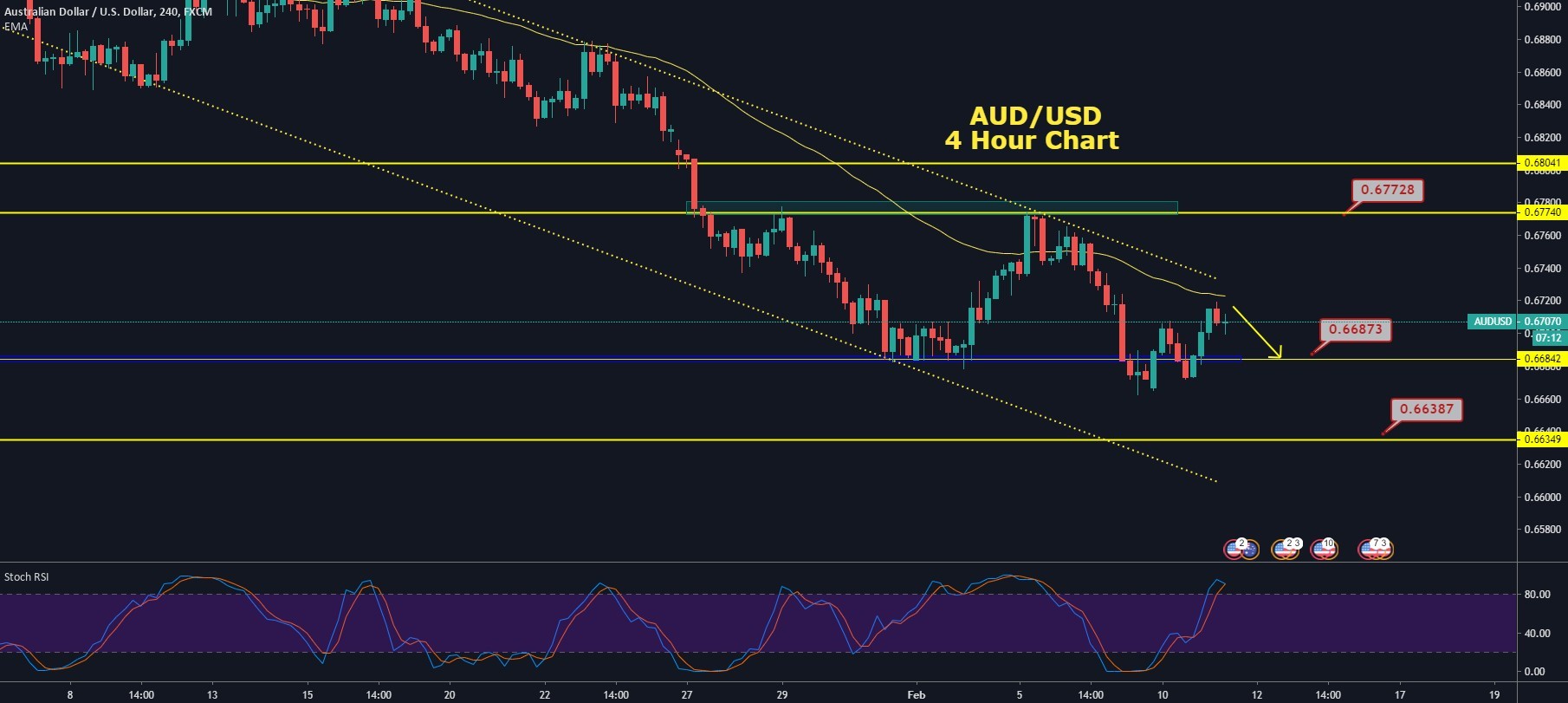
AUD/USD - Technical Levels
|
Support |
Pivot Point |
Resistance |
|
0.665 |
0.6687
|
0.6711 |
|
0.6625 |
0.6749 | |
|
0.6563 |
0.6811 |
AUD/USD - Daily Trade Sentiment
On Tuesday, the AUD/USD extends trading lower at 0.6692, having met a stiff resistance nearby 0.6720 area prolonged by the 50 periods EMA. The AUD/USD is still holding in the downward channel, which is keeping the AUD/USD pair under selling pressure.
The RSI and Stochastics are still holding in the overbought range, suggesting the odds of bearish correction in Aussie. The pair may find support around 0.6685 along with resistance around 0.6635 while; the support stays around 0.6667. Consider adding a sell trade below 0.6685 and buying above the same today.
Author

EagleFX Team
EagleFX
EagleFX Team is an international group of market analysts with skills in fundamental and technical analysis, applying several methods to assess the state and likelihood of price movements on Forex, Commodities, Indices, Metals and

















