|

Time to rethink excess savings
Summary

A defining characteristic of the current economic expansion is the uncanny staying power of the consumer. In this report we explain why we are moving away from the “excess savings” measure we previously used and why we will no longer make estimates of how long excess savings will last.

Times they are a-changin'

A year ago there was a general consensus among economists and financial markets that a recession was in the offing. Those forecasts have largely been pared, put off or canceled altogether. To some extent the rationale for these more sanguine assessments is a recognition of the uncanny staying power of the consumer. That consumer resilience, in turn, has relied upon a trio of supporting factors: The first is income, which has generally outpaced inflation over the past year or so. Access to credit is another—credit which was once both cheap and widely available but lately has been neither of those things. Last, and perhaps most unique to this cycle is excess savings. It is this final drive that we seek to better understand in this report.

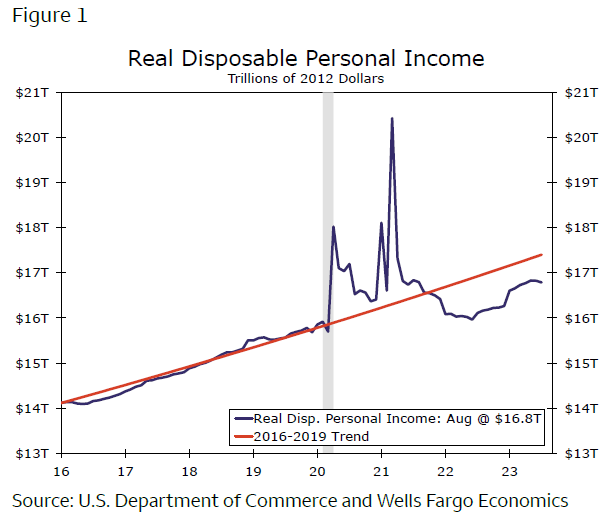
In the first 12 months that followed the pandemic, robust fiscal policy under two different presidential administrations boosted personal income in an impactful way. The three largest of these programs—the CARES Act, the December 2020 COVID-19 Relief bill and the American Rescue Plan in 2021—played the biggest role in boosting pay and are clearly visible in the data for real disposable personal income (Figure 1). There were other measures as well, from student debt relief to provisions that allowed people to stay in homes or apartments rent-free without fear of eviction also played a more marginal, but not inconsequential role in supporting the health of consumer balance sheets.
Chart

Download The Full Special Commentary

Author

More from Wells Fargo Research Team
Share:

Editor's Picks

EUR/USD: US Dollar to remain pressured until uncertainty fog dissipates

Unimpressive European Central Bank left monetary policy unchanged for the fifth consecutive meeting. The United States first-tier employment and inflation data is scheduled for the second week of February. EUR/USD battles to remain afloat above 1.1800, sellers moving to the sidelines.

GBP/USD reclaims 1.3600 and above

GBP/USD reverses two straight days of losses, surpassing the key 1.3600 yardstick on Friday. Cable’s rebound comes as the Greenback slips away from two-week highs in response to some profit-taking mood and speculation of Fed rate cuts. In addition, hawkish comments from the BoE’s Pill are also collaborating with the quid’s improvement.

Gold: Volatility persists in commodity space

After losing more than 8% to end the previous week, Gold remained under heavy selling pressure on Monday and dropped toward $4,400. Although XAU/USD staged a decisive rebound afterward, it failed to stabilize above $5,000. The US economic calendar will feature Nonfarm Payrolls and Consumer Price Index data for January, which could influence the market pricing of the Federal Reserve’s policy outlook and impact Gold’s performance.

Week ahead: US NFP and CPI data to shake Fed cut bets, Japan election looms

US NFP and CPI data awaited after Warsh’s nomination as Fed chief. Yen traders lock gaze on Sunday’s snap election. UK and Eurozone Q4 GDP data also on the agenda. China CPI and PPI could reveal more weakness in domestic demand.

Three scenarios for Japanese Yen ahead of snap election

The latest polls point to a dominant win for the ruling bloc at the upcoming Japanese snap election. The larger Sanae Takaichi’s mandate, the more investors fear faster implementation of tax cuts and spending plans. 

XRP rally extends as modest ETF inflows support recovery

Ripple is accelerating its recovery, trading above $1.36 at the time of writing on Friday, as investors adjust their positions following a turbulent week in the broader crypto market. The remittance token is up over 21% from its intraday low of $1.12.















