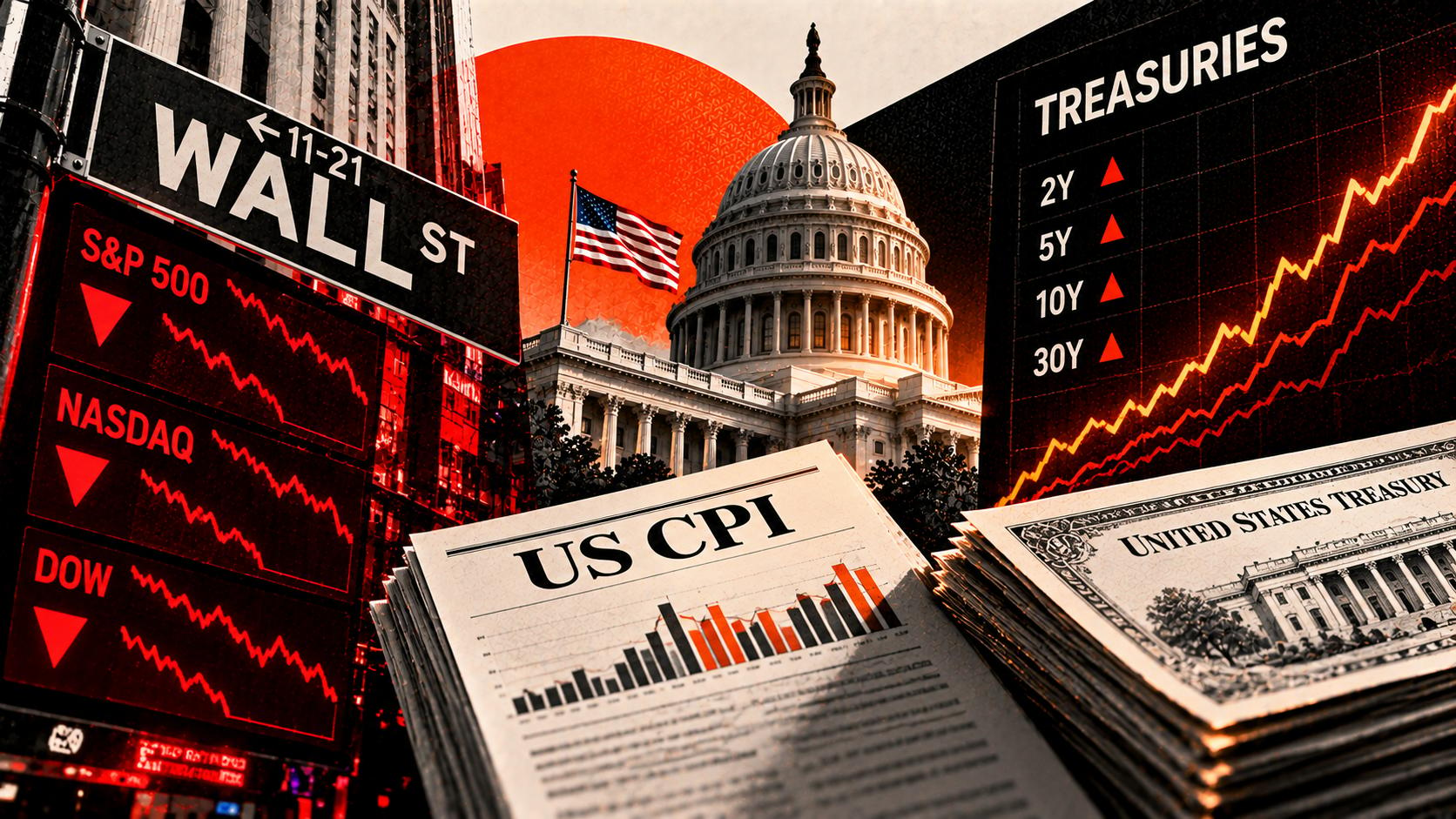
This week one of the top releases will be Wednesday’s Fed policy meeting minutes
Outlook
This week one of the top releases will be Wednesday’s Fed policy meeting minutes. Now that we have fresh inflation data, it’s not clear how much weight the markets will give the minutes.
A week ago, the CME Fed funds betting had a 52.2% probability of a rate hike at the Sept meeting. Today it’s 30.6%. Similarly, a week ago the probability of rates staying the same was 47.8%. Today it’s 69.4%.
This is not the situation elsewhere. Bloomberg writes “Market expectations for further tightening are building around the world, spelling trouble for bonds, as traders see borrowing costs rising faster in Japan, Canada, the euro zone and the UK than in the US over the next year. Central banks are facing overlapping pressures from higher oil prices, heavy government spending and an AI investment boom that’s supercharging growth, leading to inflation across countries in the OECD hitting a two-year high.”
But remember, the ING economists wonder if markets are not overpricing the probability of rate hikes in the UK and Europe.
Then there is the geopolitical. This time Trump is turning his back on S. Korea to seem to favor the North, which critics say will not calm any waters and just embolden the North. Trump is famously not smart about foreign policy. The consensus is building that Canada’s PM Carney got it right—the global world order we had before Trump is over and done with. Trump has not only screwed up the US economy, but squandered US credibility. Credibility is an asset, too. You have to wonder how Japan feels about it, let alone China.
Getting increasing attention is the amount of money flowing to the tech sector, chiefly AI-related, and not just in equity markets. The FT worries that lending to tech companies threatens the banking system. Bloomberg writes that the borrowing binge threatens the Treasury market. “Investment-grade companies have sold nearly $1.5 trillion of bonds this year, a 36% jump from a year earlier, and the biggest tech companies' borrowing is equivalent to roughly 25% of the US Treasury's net issuance of notes and bonds to private investors.
“The surge in new AI debt is potentially crowding out long-end Treasury demand and has played a major role in the rise of bond yields, with some estimates suggesting it has pushed up 10-year rates by about 0.3 percentage point this year.”
Yields do matter. “As the slew of longer-dated bonds keeps hitting the market, some investors have sold US Treasuries. That freed up cash to buy higher-yielding debt from immensely profitable companies like Alphabet, whose recent 30-year debt was issued at a yield of nearly 6.4%, 1.15 percentage points more than comparable Treasuries. Last month, a bond that’s financing a data center tied to Meta Platforms Inc. paid over 7.5%.”
The retreat from Treasuries and the dollar extends as far as emerging markets. This is always a wild card because we know from sad past experience, that money can flow out as fast as it flows in. Reuters reports “Global shocks that once triggered sharp sell-offs across developing economies have failed to derail investor demand this year, with emerging market debt inflows at a more than two-decade high and governments issuing record amounts of bonds.
"Roughly from 2015 to 2025 was like the valley of tears for emerging markets: strong dollar, U.S. exceptionalism, lots of crises, defaults, COVID, etc," said David Hauner, head of emerging markets fixed income strategy at Bank of America.
But those dire straits paved theway for the current rebound.”
The fundamentals are weakening in the developed world and flows are going to EM’s. One analyst says "The diversification (away from U.S. Treasuries) I think is driving this latest performance of emerging markets and frontier as well."
“Institute of International Finance figures show foreign investors plowing $214.4 billion into emerging market debt through July, up from $177.7 billion in the same period last year. Emerging market nations alsosold roughly $19 billion of bonds in July, twice the average for the month over the past decade, putting year-to-date issuance at a record $187 billion.”
Not much compared to the big hyperscaler names, perhaps, but not junk, anymore, either.
Forecast
The CME market reversed the probability of a rate hike in September from over 50% to a mere 30.6% today. This is behind the dollar decline since we are not getting the same sentiment about the UK and ECB, or at least not to the same extent. We do need to worry about the betting ratios being the rumor (dollar down) and the news being the actual decision (dollar rebound).
What prevents that point of view from dominance is a single concept—diversification. The implication is that flows to Treasuries will take ever-higher yields, quite apart from inflation concerns and musings about the Fed. That normally drags the dollar along with it. It would be a totally new thing for US yields to go up and the dollar to go down at the same time. But this is what some analysts are implying. One party that doesn’t care—Trump.
If this view becomes dominant, we are safe selling the dollar, but just wait—the conventional wisdom can all too easily return.
This is an excerpt from “The Rockefeller Morning Briefing,” which is far larger (about 10 pages). The Briefing has been published every day for over 25 years and represents experienced analysis and insight. The report offers deep background and is not intended to guide FX trading. Rockefeller produces other reports (in spot and futures) for trading purposes.
To get a two-week trial of the full reports plus traders advice for only $3.95. Click here!
Author

Barbara Rockefeller
Rockefeller Treasury Services, Inc.
Experience Before founding Rockefeller Treasury, Barbara worked at Citibank and other banks as a risk manager, new product developer (Cititrend), FX trader, advisor and loan officer. Miss Rockefeller is engaged to perform FX-relat