This is why this Friday is black
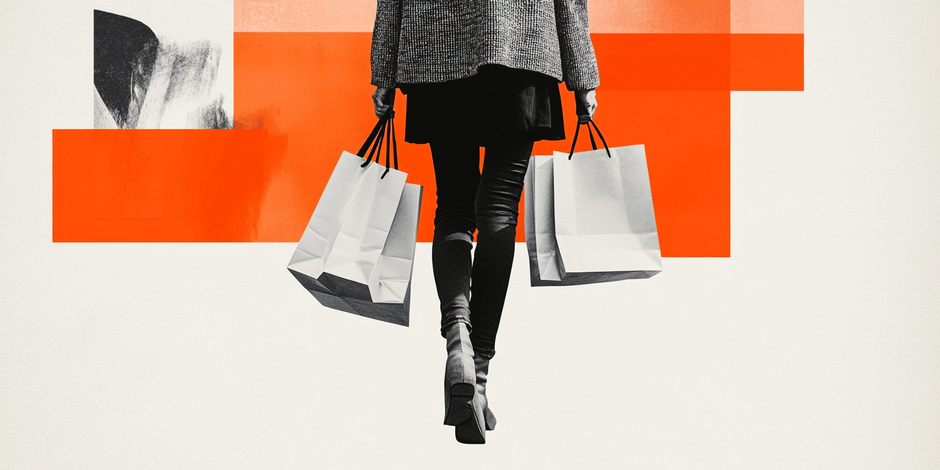

It’s finally Black Friday!
Of course, it feels like it’s been Black Friday for weeks. Yesterday was Black Friday. Tomorrow will be Black Friday. Heck, last week was Black Friday. And next Friday, it will still be Black Friday.
This is how we roll in 2025. Black Friday isn’t a day. It’s a season.
I’m not going to lie. I kind of miss the days when Black Friday was just one day. You know, on a Friday. AFTER Thanksgiving.
And really, that’s the rub. I hate the fact that the Christmas season lasts for two months. Stores start throwing up Christmas decorations before the kids even eat the good candy out from Trick-or-Treat. In my day, black licorice was the only thing left once Christmas decorations showed up.
Three weeks of Black Friday is a function of Christmas mission creep. I’m not going to lie -- it irks me a little. I love Thanksgiving, and it irks me that we’re basically just phasing it out.
You've heard of the "war on Christmas?" Well, the war can’t end until Christmas ends its illegal occupation of November. Or at least the first three weeks of November. I’m OK with Christmas stuff after Thanksgiving. In fact, today is the day I start listening to Christmas music. It’s also the proper time to put up the Christmas tree.
And Black Friday should be one day. On Friday. The day after Christmas. Old Man Maharrey will not compromise on this!
As if anybody cares.
There is a bit of irony in my getting all worked up about Black Friday because when it was a single-day event, I hated it. In fact, I pretty much refused to participate. It wasn’t so much the spirit of the day that I hated. It was how the day played out in practice.
I can best illustrate this by telling you what I rarely did on Black Friday.
Leave the house.
That's my tradition, and I'm sticking to it. It's just too peopley out there.
On top of my propensity to avoid hordes of grumpy shoppers, I like to sleep. Black Friday generally involves getting up early to get the best deal. As much as I like to save a few dollars, there isn’t a Walmart deal ever conceived that can entice me to go shopping at 5 a.m.
The truth is I have zero desire to go out at the crack of dawn, fight traffic, elbow through a smelly mass of humanity to squeeze into a store, risk a fistfight over the last discounted laptop on the shelf, stand in a long line to pay for said discounted laptop, fight traffic some more, only to get home exhausted to find out somebody broke my el-cheapo laptop during the melee.
Now, my mom and grandmother -- they did some serious Black Friday shopping back in the day. I think they crammed almost all their Christmas shopping into one exhausting day. But that was a different era when you couldn’t get "Black Friday" deals for weeks. As I said, from a nostalgia standpoint, I kind of miss Black Friday being, well, Black Friday. Not Black November and beyond.
So, why do they call it Black Friday?
Because it's an awful day.
I'm not kidding.
I can confirm this from experience. I worked part-time at Toys "R" Us back in the mid-90s. It was part and parcel with trying to make a living as a musician. Remember the Power Ranger craze? I survived it. In fact, I personally helped break up a physical altercation between two women in a Toys "R" Us aisle. They were fighting over the last of that season's must-have Ranger.
Conventional wisdom holds that they call it Black Friday because it was the busiest shopping day of the year, and sales on the day after Thanksgiving typically got retailers out of “the red” and into “the black” financially for the first time during the year. But this is nothing but propaganda put out by the retail industry. It’s kind of like the new-fangled definition of inflation concocted by government people and their enablers in the media and academia. It's designed to twist reality. Leaders in the retail industry made the “we’re in the black now!” story up because they didn’t want negative connotations attached to what, at the time, was arguably the most important shopping day of the year.
Obviously, the importance of Black Friday has waned. These days, it’s more about the entire holiday shopping season, running from October through the end of the year. In fact, as I understand it, black Friday isn’t even the busiest shopping day anymore, if it ever was. The Saturday before Christmas is generally the biggest sales day of the year for retailers.
So, why is it really called Black Friday?
I already told you. It’s an awful day. But the retail people don’t want you to consider that. Thus – the rebrand.
Interestingly, the first reference to the “getting out of the red” explanation for Black Friday that anybody can find was in the Philadelphia Enquirer in 1981.
I was Googling to confirm this and ran across a 1985 Philadelphia Inquirer story that I found kind of amusing. It highlights how people in the retail sector were desperately trying to rebrand Black Friday.
The article describes a phone call by a reporter to a big department store executive.
"The caller wanted to know about retail sales at Hess's department store in Allentown on Black Friday. But the question touched a sensitive nerve for Irwin Greenberg, chairman of the chain. 'That's the most disgusting thing I've ever heard,' snapped Greenberg. 'Retail sales?' the caller asked. 'No!' he steamed, 'The term Black Friday. Black Friday is a phrase that's sinful, and it's disgusting,' a perturbed Greenberg said. 'Why would anyone call a day, when everyone is happy and has smiles on their faces, Black Friday?' he asked."
I don’t think that dude was ever actually in one of his stores on Black Friday. Based on my experience working at Toys "R" Us, people were not typically happy and smiling during their black Friday shopping experience. I remember a lot of cursing, elbowing, and general grumpiness.
Anyway, the earliest known use of “Black Friday” predates the Enquirer article by three decades. The term was used in the journal Factory Management and Maintenance in 1951, referring to workers calling in sick the day after Thanksgiving.
At about the same time, cops in Philadelphia started using the terms Black Friday and Black Saturday to describe the crowds and traffic congestion as the Christmas shopping season kicked off the weekend after Thanksgiving.
You’ll notice Philly keeps popping up here. Now, no disrespect to any Philly folks, but I’ve been in your city, and I understand why.
In 1961, a public relations expert recommended rebranding the days “Big Friday” and “Big Saturday.” That went nowhere, and the New York Times started using Black Friday to describe the busiest shopping and traffic day in 1975.
That led to the “we’re in the black now” story that was concocted in the 80s.
You’ll notice traffic is a recurring theme here. Combine that with long lines, flustered shoppers, and surly clerks, and you have a recipe for unpleasantness.
So, there ya go. It’s Black Friday because it’s an awful day.
Well, anyway, enjoy Black Friday in whatever manner you choose. If you do go out, I’ll remember you as you were. And a friendly reminder -- be considerate of your fellow shoppers. Say you’re sorry as you shove people out of the way. And make sure you turn your phone horizontally before you video any Black Friday fist fights!
To receive free commentary and analysis on the gold and silver markets, click here to be added to the Money Metals news service.
Author
Mike Maharrey
Money Metals Exchange
Mike Maharrey is a journalist and market analyst for MoneyMetals.com with over a decade of experience in precious metals. He holds a BS in accounting from the University of Kentucky and a BA in journalism from the University of South Florida.

















