The Yuan Bomb
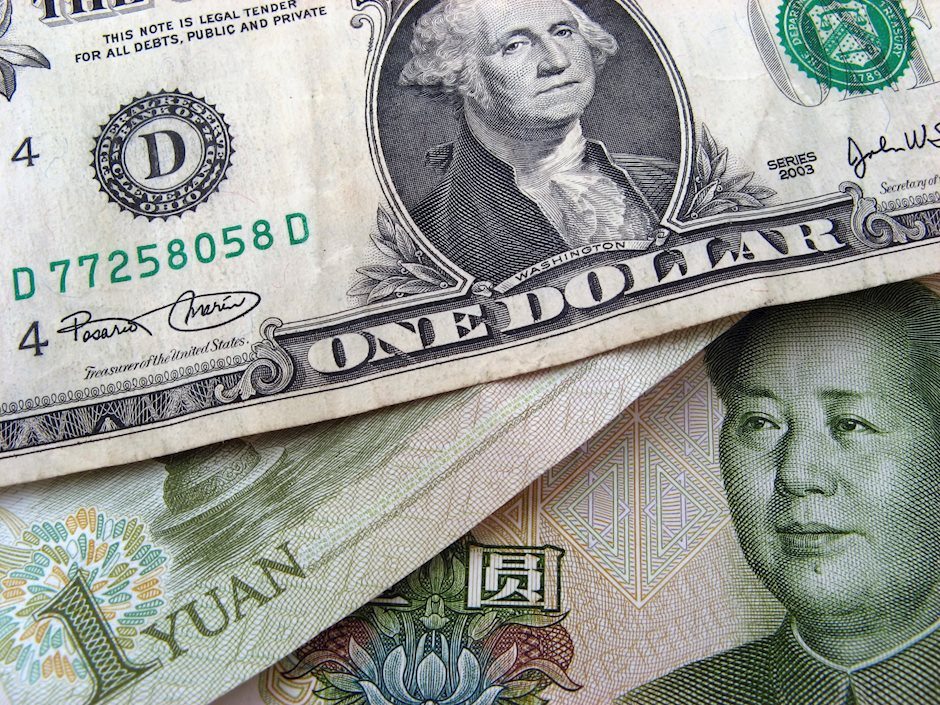

The Pboc has unleashed their version of shock and awe by allowing the natural market's reaction for the Yuan to weaken and move through the psychologically significant 7.0 USDCNY level. But the destabilising effect of a rapidly weakening Yuan has sent a tsunami of risk aversion across global markets leaving a swath of market carnage in its wake. U.S. equities sustained their most significant decline since December. The S&P 500 plunged 3%, and the Dow Jones Industrial Average lost almost 800 points.
The question now: is the U.S. administration willing to impose a 25 % tariff on the remaining 300 bn of Chinese exports which could see the CNH sink to 7.20-7.30 level in a heartbeat.
U.S. stocks have registered their most significant one-day drop of the year in reaction to the Yuan bomb that with ultra-precision guidance has hit flush in the centre of the currency war debate and triggering The U.S. Treasury Department to label China, a currency manipulator officially.
While a mostly symbolic gesture, it underscores rising trade tension and does also increase the likelihood of U.S. Treasury intervention which has traders preparing for worst-case scenarios: a protracted equity market sell-off, lower U.S. bond yields while provoking a stampede into safe havens
Gold markets
Gold rallied in lively trading as global financial market morphed into full-blown risk-off mode triggered by the Yuan breaching the psychological 7.0 level causing a stampede into Gold markets. Price action then intensified when it was confirmed China had asked its state-owned companies to suspend imports of agricultural products from the U.S.
The shift to risk-off mode was mirrored in the F.X. Markets as the JPY and CHF have been the main outperformers as risk appetite implodes, creating the perfect springboard for gold with the DXY falling while sinking U.S. bond yields lessened both the financial and opportunity costs of holding gold in inventory.
And of no less significance was the disappointing ISM data which suggests a more aggressive Fed response is warranted.
Oil markets
Oil markets are getting walloped as trade tension roiled and shifted into overdrive after the Pboc allowed the Yuan to float above the psychological 7.0 USDCNY levels.
On the surface, the weaker Yuan could be offset by lower oil prices as trade war escalate. But this view belies the fact that global economic data continues to struggle. And with the weaker Yuan influencing the Asian basket of currencies lower, it not only makes Oil more expensive in local terms but the weaker local currency offers much less policy wiggle room for Asian central banks to lower interest rates and counter the adverse economic effects of an escalating trade war. Horrible news across the region and the Pboc is certainly not making many central bank allies in Asia.
Despite the ongoing threat of supply disruption in the Middle East, it is clear that the US-China trade dispute is of more significant concern at the moment, and it doesn't seem likely that oil sentiment will turn positive any time soon with the US-China trade war moving towards full-blown mode.
But after China willingness to weaponise the Yuan, what will they turn to next?? Bond market or even defy Iran oil sanctions?? The later could see oil prices slip $ 15-20 lower in a heartbeat.
Currency Markets
Yuan Watch
How the yuan trades today will be critical for the market's sentiment. The Governor of the PBOC, Yi Gang, has denied the weakness in the yuan seen Monday was a deliberate attempt to offset the impact of tariffs while contradicting the US Treasury noting China will “not engage in competitive devaluation".
So, all eyes will be on the CNY Fixings this week where the markets will take their cue from one of two things. Either the Pboc fixes stronger closer to the 7.0 level or allows the introduction of more market volatility by initiating a high degree of ambiguity in the Fix neither supporting nor thwarting the move.
Given that depreciation pressures were building up following the new US tariffs on USD300bn of Chinese goods, it was clear that the 7.0 USDCNY threshold could not be held back indefinitely as the Pboc thought that a moderate Yuan depreciation could mollify a portion of the tariff impacts.
The Yuan sell-off has abated somewhat overnight, but no one is willing to fade the move just yet for fear of additional tariff reprisals from the U.S. trade administration hawks. But the Pboc allowing the Yuan to float hasn’t exactly endeared themselves to regional Asian central banks who were preparing to release a dove of their own and assist struggling domestic economies. With a weaker local currency, there is less policy wiggle room to adjust interest rate lower, which triggered an unwinding of "carry trades", bond and equity market positions as capital outflows intensified the speculative sell-off fervour.
While the Yuan’s movement will continue to dictate the fortunes of regional F.X. Markets in the near term, but we don't think the Pboc will let the Yuan wantonly weaken as a significant depreciation could have severe and destabilising effects on the domestic economy. If the exchange rate depreciates to around 7.2 or beyond, the PBoC will likely intervene. But in the meantime, traders will continue to hedge against worst-case scenario with the favoured expression via short CNHJPY
The Malaysian Ringgit
The Ringgit is holding up better than we expected this despite the MYR historically tight correlation to the Yuan, but this is likely a direct result of the lack of an NDF market which is benefitting the Ringgit as it trades with less sensitivity, good and bad, to the Yuan these days. However, given the likely hood of some US trade war reprisal, we expect USD-Asia and USDMYR to extend higher in coming days. Not to mention, lower oil prices make the Ringgit that less attractive.
Author
Stephen Innes
SPI Asset Management
With more than 25 years of experience, Stephen has a deep-seated knowledge of G10 and Asian currency markets as well as precious metal and oil markets.

















