The Warsh washout was a positioning purge not a policy pivot
Positioning purge not a policy pivot
Fumbling the risk baton out of the gates, Asian markets opened in catch-down mode to Friday’s US equity slide. Asian shares fell by around half a percent, and Nasdaq 100 futures were off as much as one percent, reflecting AI mega-cap bubble risk, in a familiar Monday morning echo of Wall Street’s late-week loss of balance.
The dollar pushed higher against most of its G10 peers, with the yen taking the brunt after Japan’s prime minister openly framed currency weakness as an opportunity for exporters rather than a policy problem. That comment mattered. It reminded markets that not every major economy is in a hurry to defend its currency, and in an environment already short on risk tolerance, it reinforced the bid for dollars as the default shelter rather than a fresh expression of conviction.
Monday mornings are always mentally unforgiving after a washout. You are back in the saddle, but the horse is still skittish, and every trader is quietly replaying the tape, asking whether they misunderstood the signal or simply got caught leaning the wrong way. That was the mood coming into this week as markets tried to make sense of the Warsh shock and decide whether they had just lived through the start of something structural or a classic case of narrative outrunning reality.
But the tell will be how the broader markets reassess the dollar as a new Fed chair begins articulating his framework
Last week was violent, but it was not ideological. Risk appetite slid hard and fast, and the pressure landed exactly where positioning had become most one-sided. Fiat alternatives were hit first and hit hardest as precious metals and crypto were treated as if a hawkish sledgehammer was about to fall. Silver's nearly six percent intraday drop this morning, extending a record plunge, was not a judgment on its long-term role. It was the sound of the last bits of leverage being forcibly unwound. Moves like Friday tend to show up near peak confusion rather than at the beginning of a new trend.
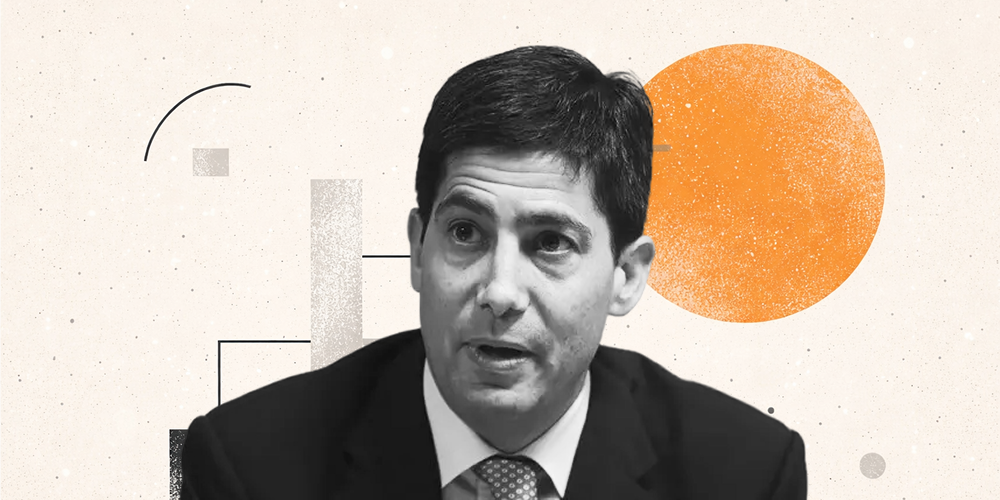
You can see it right there in the strip. If the market is still pricing 2026 cuts, then the core mistake was never about the destination. It was about the street briefly convincing itself that Kevin Warsh would walk into the Fed with a hawk on his shoulder and a sickle aimed at the balance sheet on day one. That reading ignores political gravity, and it ignores Warsh’s own evolution. He has already leaned into the case for lower rates in recent years, and there is zero incentive for an administration to appoint a chair who would turn around and sabotage its economic agenda at the first opportunity.
Now sit with that for a moment. It is highly unlikely that Warsh lives in some alternative universe that has nothing to do with the Trump Bessent Miran Hassett worldview. People do not get handed the keys to the most powerful central bank on earth because they plan to drive in the opposite direction of the people who gave them the keys. The Fed may be independent, but personnel is policy, and this appointment was unlikely to have been made in a vacuum.
That is why the hawkish Warsh narrative always smelled like a positioning story wearing a policy mask. It was a convenient excuse for the tape to do what it needed to do anyway, flush crowded debasement trades, squeeze the late longs in metals and crypto, and force everyone to pay the leverage bill at the same time. The market did not reprice a new regime. It repriced the fear of one.
So the right question is not whether Warsh will suddenly become an inflation zealot with a balance sheet chainsaw. The right question is how quickly the street stops shadowboxing with a caricature and starts trading the more likely reality, a pragmatic chair trying to manage credibility without strangling growth. That is where the next whipsaw risk lives, when the market realizes it sold the storyline and bought the misunderstanding.
Nonetheless, gold and silver absorbed the brunt of the “ hawkish” repositioning, but the structure underneath never gave way. Roughly five percent of the world’s gold is held by speculators. That is not mania. That is a thin, speculative skin stretched over a market increasingly driven by official-sector balance sheets. When central banks decide they want fewer dollars and more bullion, prices do not edge higher in an orderly fashion.
That dynamic has been visible ever since Russian assets were frozen following the invasion of Ukraine. That was not merely a geopolitical event; it was a balance-sheet shock. It forced every reserve manager in the world to quietly ask the same question. Could this happen to us? It is difficult to imagine China, Russia, or any emerging-market central bank viewing that episode and concluding that dollar concentration entails no risk. Gold is not bought in that context for yield or momentum. It is bought for immunity.
Seen through that lens, Gold still matters. That does not argue for straight-line gains from here. Exponential movescool, and they always will. But there is a meaningful difference between froth and structural demand. The idea that precious metals are being driven purely by speculative excess does not square with who is actually buying.
Oil is opening lower, and while OPEC's decision to hold production steady was fully expected, that was not the primary driver. The bigger release valve was geopolitical. The Middle East tinderbox premium bled out as the weekend passed without US bombs being dropped on Iran, and early signals emerged that Washington and Tehran are at least talking about talks. In oil markets, the absence of escalation is information. When missiles do not fly, hedges come off.
That matters because a meaningful chunk of last week’s bid was insurance, not demand. Traders paid up for protection against a worst-case Gulf scenario ( Strait of Hormuz closure), and when that scenario failed to materialize, those hedges were unwound in a hurry. You could see it in the open, a softer tone not because supply suddenly improved, but because fear was repriced lower.
Also rattling the backdrop, the US government stumbled into a partial shutdown over the weekend as the House dragged its feet on approving a funding deal brokered by Trump with Democrats. What should have been procedural turned ideological. The bill stalled not on spending lines but on a voter ID provision that the liberal Democratic core refuses to endorse. In market terms this is familiar theater. Washington dysfunction rarely changes the medium term economic path, but it reliably injects short term noise into sentiment.
For traders, the shutdown itself is secondary. The signal is the widening gap between political optics and economic reality. Markets have learned to discount these episodes quickly, but they still contribute to a general sense of institutional friction at a time when confidence is already thin. It adds another layer of uncertainty without adding new information, the kind that weighs on risk appetite at the margin even as investors assume it will eventually be resolved with little lasting damage.
Author

Stephen Innes
SPI Asset Management
With more than 25 years of experience, Stephen has a deep-seated knowledge of G10 and Asian currency markets as well as precious metal and oil markets.