The war signal heard 'round the world': Trump’s combat posture jolts global markets
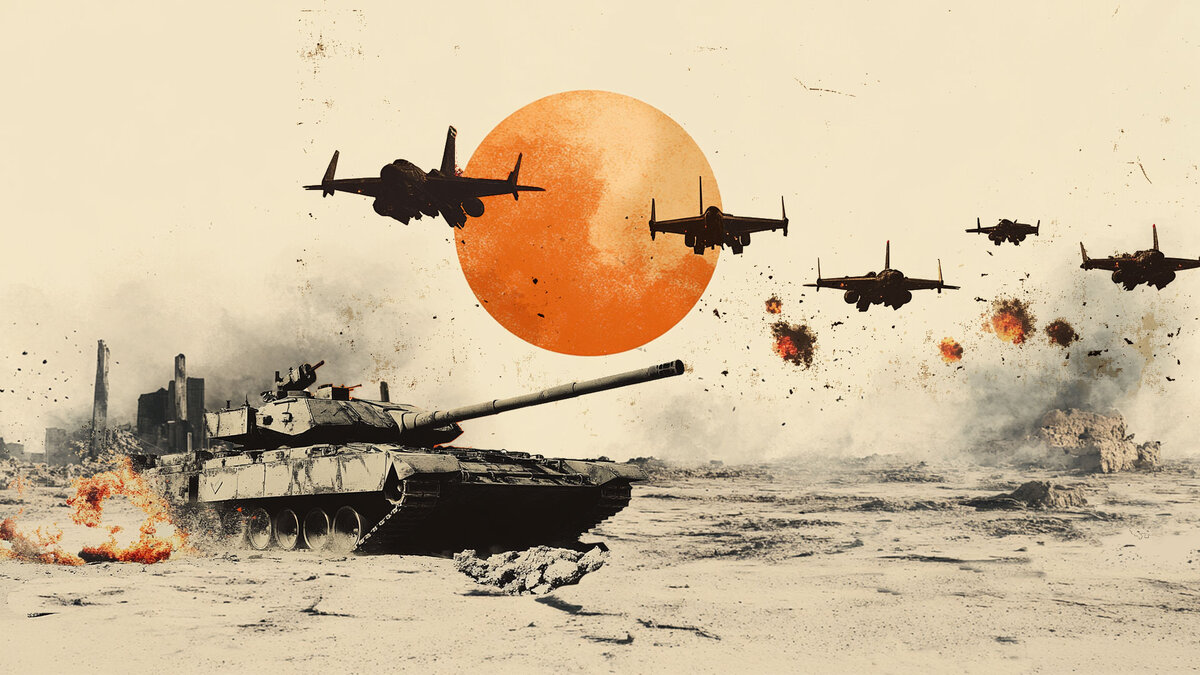

Markets cracked under the weight of geopolitical gravity, tumbling as a storm of hard data misses and Middle East war drums smacked risk appetite into submission. What began as another jittery session quickly spiralled into a full-blown flight to safety once President Trump’s language crossed the Rubicon: "We" are involved. Not hypothetically. Not diplomatically. Militarily.
By midday New York time, equities were bleeding red, oil was ripping higher, and the dollar was surging like a fire-breathing hedge. S&P futures cascaded lower on headline after headline, each more hawkish than the last. The Nasdaq was the sacrificial lamb, but no sector escaped the downdraft as traders braced for the unthinkable: direct U.S. involvement in Gulf War 3.0.
The escalation narrative shifted from whispers to air raid sirens. Iran is reportedly ready to target U.S. regional bases should Trump greenlight strikes on Iranian nuclear facilities. Washington’s refuelling jets are already en route, and if Fordow gets hit, expect the Strait of Hormuz to become a maritime minefield, Houthi drones to swarm Red Sea shipping lanes, and every militia from Basra to Damascus to light up American forward outposts.
And so the dollar caught the bid of the year—its sharpest surge in six weeks—as the market scrambled for shelter. In a world spinning off-axis, Uncle Sam’s paper still occasionally wears the safe-haven crown, tarnished as it may be. But let’s be real: neither the euro nor the yen is built to weather an oil or LNG shock. Europe’s still chained to imported energy fragility, and Japan’s energy import tab ticks higher with every Brent bid. When barrels rise and pipelines strain, there’s only one currency the market reaches for by reflex—and it’s not printing in Frankfurt or Tokyo.
Treasuries ripped higher as capital stampeded for cover, crude vol went vertical—spiking to a three-year high—and WTI flirted with $75 like it had unfinished business. Gold, strangely subdued just a breath from record highs, struggled under the weight of a surging dollar. But silver? Silver went full rockstar—blowing past $37 and clocking its best level in 13 years, stealing the precious metals spotlight with zero subtlety and all the swagger.
Meanwhile, U.S. retail sales and industrial production printed ugly: -0.9% and -0.2% respectively. The gulf between soft and hard data is closing, and not in a good way. Turns out tariffs might be deflationary after all—who knew?
All this on the eve of the Fed. Powell now walks the razor’s edge. Cut too soon, and he’s accused of flinching at shadows. Hold too long, and the growth drag deepens. Traders are already pricing in nearly two cuts this year, with October now the market’s favourite.
In Tokyo, the Bank of Japan played its usual background role—holding rates and deferring balance sheet tweaks until 2026. However, in this environment, even silence can be perceived as noise. Because higher oil, as we flagged yesterday, is the yen’s Achilles’ heel. Japan’s energy dependence means every tick up in Brent is a direct tax on the current account.
The Middle East is back at the epicentre of global market anxiety—but this time, the fuse isn’t just lit, it’s hissing loudly with smoke curling into every risk asset on the board. Traders are gripping the tape like a live wire, placing bets on whether the U.S. dives headfirst into the inferno or keeps playing the shadow partner behind Israel’s missile curtain. Judging by the way oil, defense stocks, and betting markets are behaving, the smart money is already pricing in afterburners and B-2 Spirits in stealth formation.
-638858041221680127.jpg)
The view
Today’s tape was powered by 'we,' 'solar,' and a –0.9% plot twist..
When Trump dropped the royal “we” into comments about strikes on Iran, it wasn’t just a slip of the tongue—it was a volatility trigger. Stocks buckled around 1200ET and never stood back up. The Nasdaq led the swan dive, but everything moved in lockstep. By the close, it was red across the board and risk off by design.
Under the hood, solar got nuked—literally and politically—as the Senate GOP’s bill to yank green tax credits early sent renewables into a tailspin. Nuclear looked better by comparison, but solar bore the brunt. Meanwhile, retail darlings got steamrolled, and the “Most Shorted” basket puked yesterday’s gains right back up, delivering the worst squeeze unwind in a month.
And then came the macro whiplash. Retail sales down 0.9%. Industrial production, down 0.2%. The delta between soft survey dreams and hard economic reality is closing fast—and not in the direction Powell was hoping for. Suddenly, the consumer doesn’t look so invincible. Tariffs might not be inflationary after all… they’re starting to smell like demand destruction.
The dollar, meanwhile, went on a tear—clocking its biggest gain in six weeks as geopolitical hedges and macro positioning collided in one hell of a bid. Treasury yields fell across the curve, with duration catching the biggest tailwind. Skew in vol land spiked, with VVIX clocking its highest read since April as downside protection got hoovered up like front-row tickets to Armageddon.
You know geopolitics just hijacked the trading desk when the VIX pos—but OVX surges like a missile out of the Gulf. Equity vol may have twitched, but oil vol went full thermonuclear. When the options market starts pricing crude like it's a ticking time bomb, you can forget your tidy macro models—this is headline roulette, priced in barrels and bang. Traders aren’t just hedging risk—they’re bracing for splash damage. OVX ripping while VIX tiptoes? That’s your tell: the real battlefield is in the oil pits, not the stock screens.
Oil? Predictably firm—because when Tehran tensions flare, the crude complex doesn’t ask questions, it just bids. But here’s the real tell: USO out-traded XLE by notional volume, a move we haven’t seen since the infamous sub-zero crude chaos of 2020. That’s not just flow—it’s full-blown fear and positioning. And if you needed an even louder signal, look no further than the buy blotter lighting up like a Christmas tree: XLE and XOP were on fire, with traders piling into energy exposure like it was the only sector with a pulse. When the market smells war, oil’s not just a commodity—it’s the trade.
The Fed? No one’s pricing a surprise cut tomorrow, but 2026 expectations have quietly climbed—now up to 63bps from 40bps at the last FOMC. The market’s not screaming panic yet… but it’s definitely starting to rehearse for it.
And just to round out the toxic risk cocktail, the Senate GOP lobbed a fresh legislative grenade—targeting deeper Medicaid cuts and slashing SALT deductions in Trump’s big-ticket bill. Bond desks flinched. The political fireworks added another log to the safe haven blaze, just as geopolitical embers were already flying. Meanwhile, Trump—fresh from the Situation Room and full of maximalist mojo—is now demanding nothing short of Iran’s “unconditional surrender.” We’re no longer tiptoeing to the edge of the war cliff—we’re jogging there in combat boots, blindfolded, with a match in one hand and a fuel canister in the other.
The market isn’t waiting for Congressional debate. It’s already pricing in consequences. War risk is no longer a tail—it’s curling around the main event. If U.S. bombers enter Iranian airspace t, expect the screens to light up in a blaze of volatility. Traders have seen this movie before. The only question is whether this version has a black swan twist no one’s hedged for.
Author
Stephen Innes
SPI Asset Management
With more than 25 years of experience, Stephen has a deep-seated knowledge of G10 and Asian currency markets as well as precious metal and oil markets.