The USD advances toward the strongest levels in more than two years
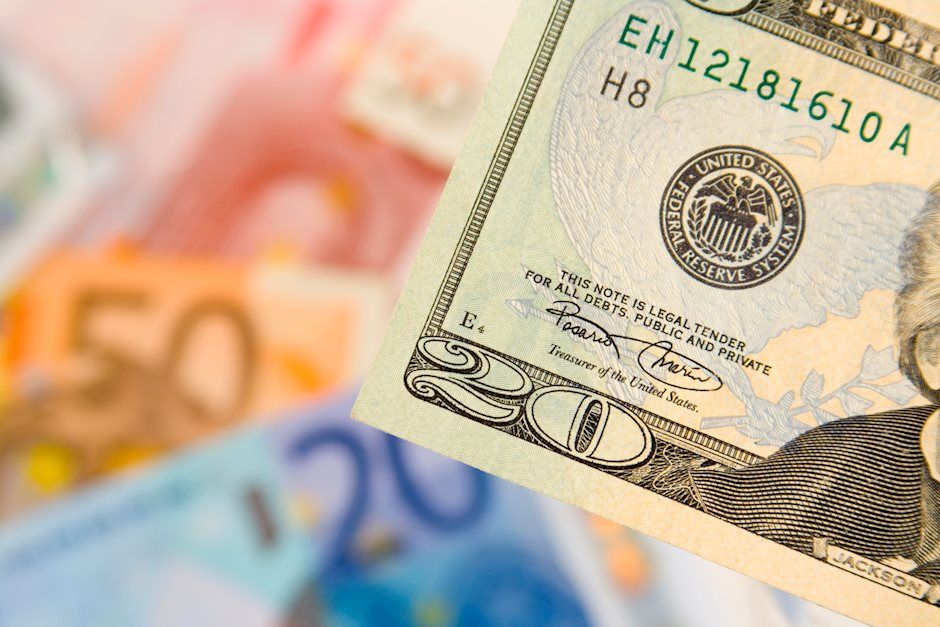

A week packed with central bank decisions is coming to an end with a sour taste in everybody’s mouth. The Federal Reserve (Fed)’s decision to cut rates by 25bp was fully meaningless and the incoming data is a proof. The US Q3 growth was revised to 3.1% from 2.8% printed earlier, the sales growth was revised higher from 3 to 3.3% and core PCE priced – though lower than the quarter before – was also revised slightly higher to 2.20%, raising worries that even the two rate cuts from the Fed next year would be too much. As such, the early gains were given back and the S&P500 and Nasdaq closed in the negative, the Dow Jones was flat while small and mid cap stocks saw no appetite either. Sharing the headlines with Powell, Trump threatens people of his own party to dump a bipartisan deal and risk a government shutdown if they don’t push to raise or suspend the national debt limit under Biden, so he can spend wholeheartedly when he comes to office. The US yield curve is steepening, investors are not willing to buy longer-dated maturities on prospects of higher long-term inflation and ballooning debt. And the US dollar advances toward the strongest levels in more than 2 years leaving other majors under the shadow before Xmas.
The EURUSD failed to stay above the 1.04 mark yesterday and is struggling to hold ground near the 1.0350 level, the Stoxx 600 is racing toward the 500 support, while Cable settles below the 1.25 mark on the back of a dovish no-change that the Bank of England (BoE) delivered at yesterday’s MPC meeting. Three MPC members instead of two (expected by analysts) voted to cut the rates at this week’s meeting. The other six opted for no change – wary of reigniting inflation as the government prepares to increase spending to boost growth, and as Trump threatens the world with eye-watering tariffs. Interestingly, Governor Andrew Bailey – who is clearly not the most popular central banker – had the merit of sounding rational yesterday by saying that the ‘world is too uncertain’ to commit to cut borrowing costs in February. War, Trump, climate change – there’s too much happening for anyone to claim they see the future with clarity. But one good news for the UK is that the United Kingdom is not as concerned as – say the EU, China, Canada and Mexico – by the Trump tariffs and the latter could help the British assets cope with Trump better than their peers. British stocks trade with around 40% valuation discount compared to the MSCI World peers, it has one of the fastest dividend growth among the European and American indices and they returned 10% to their investors these years including reinvested dividends. If inflation U-turns as geopolitical and trade tensions worsen, the FTSE 100 stocks will be in a good position to benefit from these developments.
Elsewhere – and this is amusing – inflation in Japan accelerated in November. The headline figure climbed back to 2.9%, the highest in three months, while core inflation advanced to 2.7%, also a three-month high. Why is this funny? Because just yesterday, the Bank of Japan (BoJ) decided to pass on a rate hike, with officials seemingly too cautious to act amid uncertainties over Trump-era policies and geopolitical tensions. Meanwhile, Japan’s interest rate sits at 0.25%, while inflation is running near 3%. The Japanese have a different relationship with inflation – they don’t despise it as much as we do. After all, decades of deflation, which is far harder to reverse, have shaped their perspective – a lesson the Chinese are now learning the hard way. But the BoJ’s decisions still feel illogical, as they don’t align with a conventional policy framework. Consequently, the USDJPY is giving back some earlier gains on the stronger-than-expected inflation figures and speculation that rising inflation might prompt BoJ action. However, since the BoJ doesn’t really tie interest rates to inflation, the USDJPY has room for further gains, especially as the US dollar continues to strengthen broadly.
In China, the People’s Bank of China (PBoC) kept its policy rates unchanged today – as expected – although the officials are now committed to put in place ‘more proactive fiscal measures’ and ‘moderately loose’ monetary policy. For now, none of these legs have been enough to bring investors back on board. The Chinese CSI 300 is preparing to close the week on a meagre note.
Author
Ipek Ozkardeskaya
Swissquote Bank Ltd
Ipek Ozkardeskaya began her financial career in 2010 in the structured products desk of the Swiss Banque Cantonale Vaudoise. She worked in HSBC Private Bank in Geneva in relation to high and ultra-high-net-worth clients.