Asia wrap: The market is fighting three wars at once

I am taking the easy way out today. This is a note I wrote yesterday, but I was too busy watching paint dry on the Pool Villa renovation to hit publish. Ironically, nothing has really changed. If anything, the tape has simply validated the framework. It’s also on a time-delay publish, so I might not be around to discuss in the comments later today.
Fighting three wars at once
Markets are not uneasy -queasy not because they’re sick. They are uneasy-queasy because they are being forced to price three separate wars on three separate fronts, each with its own timeline, its own transmission mechanism and its own margin call.
The first war is kinetic and visible. Force is being assembled in the Gulf at a scale that is not symbolic. The 60%+ crowd on Polymarket thinks that when carrier strike groups and advanced air wings reposition, that is not theatre. And that is logistics setting the clock. Once assets are in place, optionality narrows, and miscalculation risk rises. Tehran is not negotiating from a position of comfort but from a position of survival. Regimes under existential pressure do not optimize for efficiency; they optimize for endurance. Survival itself becomes victory. For markets, the ideology is irrelevant.
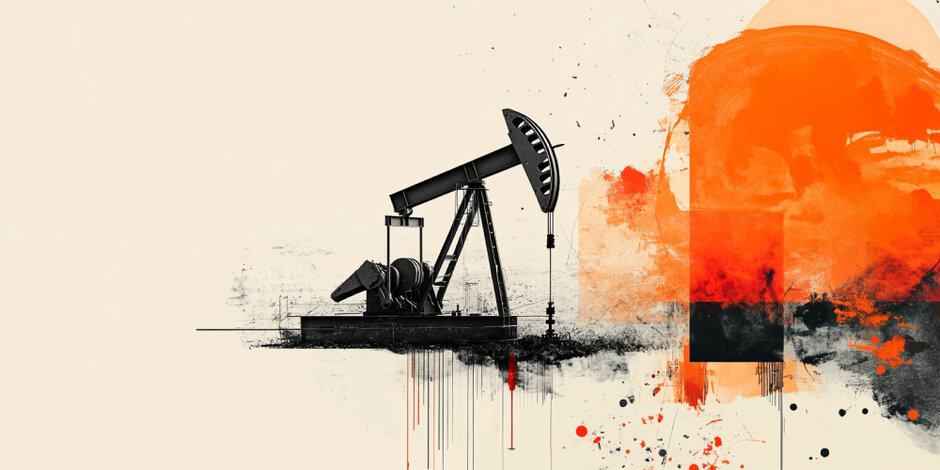
Yet the plumbing is the everything trade. One-fifth of global oil consumption flows through the Strait of Hormuz. Kharg Island is not a footnote; it is a valve. In a market where deliverable barrels are tighter than the headline surplus implies, any disruption would not be absorbed gently. It would be repriced violently.
“Even though it maintains the view that there will be global oversupply this year, Goldman Sachs has raised its oil price forecast for the fourth quarter as inventories in advanced economies remain low.”
The second war is policy-driven and economic. Trade architecture is being rewritten in real time. Legal challenges, executive workarounds and sector-specific measures create noise, but the net effect is a gradual clearing of uncertainty and, potentially, a forward fiscal impulse. At the same time, the labour market refuses to crack. Claims have stabilized, stress indicators are calm, and unemployment is at levels that historically generate wage pressure, not slack. If immigration flows were the shock absorber of the last cycle and that absorber is thinner now, then effective labour supply is smaller than it appears. The Fed has already delivered meaningful easing. If labour softness were more about supply than demand, the forward reaction function would be less dovish than markets are currently pricing. Bonds are leaning into a slowdown that the data do not confirm.
The third war stands apart and may prove the most consequential for the equity market right now. The AI war is not fought with missiles or memoranda but with capital expenditure and computing power. This is not a clean disinflationary fairy tale. Data centres require steel, copper, energy and labour. The buildout is commodity-intensive and construction-heavy. Productivity gains may arrive over time, but in the near term, the capex surge collides with supply constraints. That is fertile ground for input inflation. At the corporate level, AI is redrawing competitive maps. Some software models are being disrupted, others are being fortified. Margin structures will bifurcate. Winners will compound, laggards will compress. This is creative destruction happening in real time, and equity markets are still sorting signal from narrative.
Taken together, these three wars are oddly delivering a market structure that appears calm on the surface but is widely unstable beneath it. Equities can ride cyclical reacceleration higher, particularly if earnings are supported by firm nominal growth. But that same growth puts upward pressure on yields. Duration looks misaligned with the strength of the macro impulse. Credit spreads are priced for serenity in a world where policy errors and geopolitical shocks are very real risks.
Oil is a coiled spring tied to a narrow waterway. Bonds are pricing a slowdown that has yet to arrive. Equities are celebrating growth while quietly fearing the Fed. And AI is reshaping the battlefield beneath all of it.
Markets can process one war at a time. Pricing three simultaneously is where volatility is born.
From Goldman Sachs Delta-One Desk
Yesterday, a Goldman Sachs Delta One note from Rich Privorotsky was doing the rounds, and you will likely hear echoes of it again today. The core message was simple: tariff angst is probably somewhat overhyped relative to the deeper equity currents.
Yes, the Supreme Court ruling on IEEPA tariffs created a squeeze into the back end of last week, and yes the White House reset to 10 percent only to lift to 15 percent over the weekend, adding friction back into the system. But Goldman’s take is that this is more about uncertainty and modest growth downgrades than a wholesale macro regime shift. Commerce faces more grit in the gears, not a seized engine.
What really stands out in their framing, and I agree with this, is the tape. The broadening out is unmistakable. Mega-cap tech, the NDX and even the S&P are struggling to sustain bids. There is no panic supply, but capital is clearly rotating. Non-US equity indices are breaking out ( Europe is where the action is, if Hedge Fund flows are to be believed). Bonds abroad are firm. Commodities remain well supported.
Goldman floats an interesting structural question. If AI disproportionately disrupts knowledge work, and knowledge work is a heavy share of the S&P composition, then perhaps recent US outperformance was more compositional than structural. If tech does not work, does the US equity premium wobble with it?
In commodities, oil has eased after a weekend geopolitical premium tied to Iran fears, with some signs Washington may prefer to show the gun rather than fire it into midterms. (That was my base case from last week The Market Is Pricing a War Voters Do Not Want ) Rates are the more intriguing story. Nominal yields have risen even as commodities rally, with benign CPI and talk of AI-driven productivity gains creeping into the curve. That smells more like secular disinflation than overheating.
Flows tell their own story. Hedge funds were net sellers last week, especially in financials and Europe, even as indices pushed higher. Global financials saw their largest net selling since early April 2025. Goldman argues financials increasingly resemble low moat businesses vulnerable to technological disruption, and a flatter curve does not help.
The secular divide is durable moats versus exposed models. Industrials, energy, emerging markets and resource heavy markets are finding sponsorship. Tech, payments, brokers and other asset light rent collectors are losing relative leadership. The oddity is that utilities and healthcare are also outperforming, reinforcing the idea that the market is screening for resilience and defensiveness rather than pure growth beta.
The bottom line from Goldman is that tariff headlines add friction, not collapse. The bigger story is rotation, compositional risk and the market quietly re pricing which business models deserve a premium in an AI world.
And now it turns micro. NVDA is the main event, with CRM, INTU, DELL and others close behind. Policy theatre will continue, but price action will increasingly be decided company by company.
Author
Stephen Innes
SPI Asset Management
With more than 25 years of experience, Stephen has a deep-seated knowledge of G10 and Asian currency markets as well as precious metal and oil markets.