The spender’s dilemma
The S&P 500 had its worst day of July, as the first earnings reports from two Big Tech hyperscalers failed to reassure investors. Earnings themselves were not the problem; spending and evaporating free cash flow were. Both Alphabet and Tesla stood by their capital investment plans, while Alphabet raised its capex outlook by $15 billion to $205 billion. Meanwhile, free cash flow at both Alphabet and Tesla turned negative in the second quarter. For the latter, it is not a big deal, but for the former, it is.
It means Big Tech – that used to be capital light and cash heavy – is now turning capital heavy and cash light, increasingly relying on stock and bond issuance to finance additional AI spending at a time when interest rate expectations are rising.
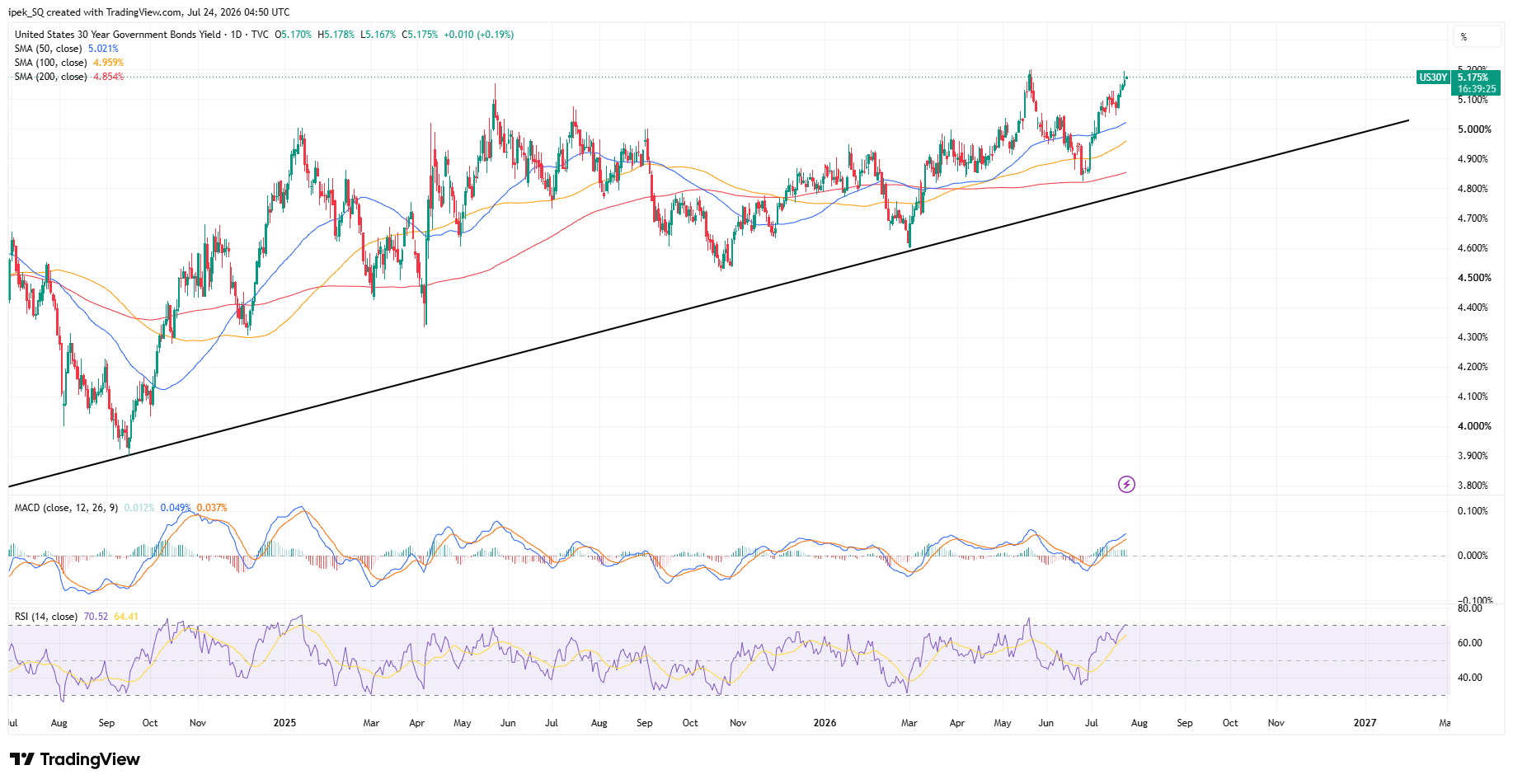
The short end of the yield curve is moving higher on mounting inflation expectations and growing expectations of a more hawkish Federal Reserve (Fed). The long end of the curve—which is a more important benchmark for Big Tech's longer-term financing—is also pushing higher on expectations of structurally higher inflation, rising US government debt and, arguably, increased bond issuance from Big Tech itself. The sector has flooded the market with debt over the past year, and as always, when supply rises sharply, prices fall. In the bond market, lower prices mean higher yields.
Read the full article here.
Author

Ipek Ozkardeskaya
ipekScope
Ipek Ozkardeskaya began her financial career in 2010 in the structured products desk of the Swiss Banque Cantonale Vaudoise. She worked in HSBC Private Bank in Geneva in relation to high and ultra-high-net-worth clients.
















