The President gets to work!
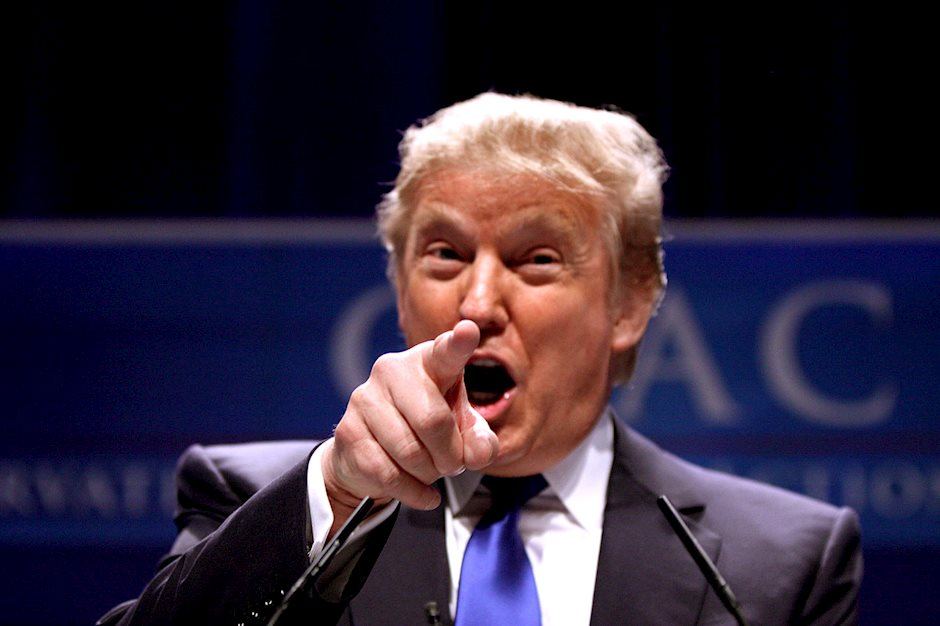

President Donald Trump, characteristically, wasted no time in ruffling more feathers as he started his first full week in the job.
The United States withdrew from the United States from the twelve (now eleven) nation Pacific Rim Trans-Pacific Partnership (TPP). This obviously reduces the pact’s effectiveness to virtually zero.
He has also said he intended to renegotiate the NAFTA free trade agreement between the United States, Canada and Mexico. Any changes in tariffs for Mexican and Canadian exports to the U.S. will have a major effect on their economies and by default, currencies.
The President’s nominee for Treasury Secretary, Steve Mnuchin, was quoted by Bloomberg as saying that a strong dollar is hurting the country’s ability to trade fairly with the rest of the world.
The dollar fell following these two events but remains buoyed by interest rate differentials which are set to widen further throughout the year.
Markets will wait until the “first one hundred days” have gone by which will, hopefully, see a calming of volatility as the machinery of Government starts to take effect once the Cabinet is fully in place and functioning.
In the U.K. the High Court will announce its verdict on the role Parliament should take on the invocation of Article 50 of the Lisbon Treaty in which Britain effectively gives notice of its intention to leave the European Community. This is the formal firing of the starting pistol for Brexit negotiations to start in earnest.
In her speech last week the Prime Minister effectively took the sting out of this decision by virtually accepting that the Government was going to be forced to put the case to Parliament for approval.
This is all a bit academic now as there is virtually no chance, despite a rebellion by a number of opposition members, that the Bill to invoke Article 50 won’t be passed.
Sterling rallied as traders clung to their forlorn battle cry “Hard Brexit Bad, Soft Brexit good”.
The freedoms of movement; Goods, Services, Workers and Capital are at the centre of the EU Charter and form the basis of just about the everything the EU stands for. There is no “half in Half out” option.
Where Parliaments involvement can cause a major upheaval in the markets would be if they voted against the final agreement for the U.K. to leave the E.U.
By its very nature, invoking Article 50 comes with a final date two years after it is triggered. If Parliament voted an against an agreement, the Prime Minister has already said “No deal is Better than Any Deal” and there would be complete chaos should the U,K, simply walk away in two years without a formal agreement in place!
Author
Alan Hill
Treasury Consultancy
A highly experienced banker with an in depth knowledge of Corporate Banking, Treasury and Trade Finance. Global markets, risk management, FX trading and sales & interest rate management have been a major part of my career.

















