The market is pricing a war voters do not want

A war voters do not want
There is a widening spread between what the betting markets are pricing and what American voters are actually signalling. And when spreads blow out, traders should pay attention.
Right now, the geopolitical book looks like it is being written by Polymarket odds and cable news chyron writers. The narrative leans into worst-case intelligence briefings, energy shock models, and the kind of CIA-style contingency maps that assume escalation as the base case. The tape is being fed a steady diet of tail risk. But the electorate is not trading that contract.
If you step back and read the polling data the way you would read positioning data, the message is blunt. This is not 2003.
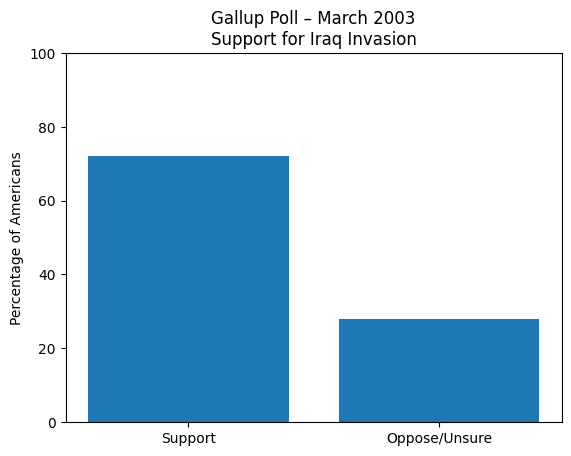
When George W. Bush launched the Iraq invasion in March 2003, roughly 72 percent of Americans supported the move, according to Gallup. That was a deep in the money call option on war. Political capital was abundant. The administration had wind at its back.
Fast forward to today, and the numbers do not rhyme. Surveys from SSRS University of Maryland show only 21 percent favour initiating an attack on Iran. Nearly half oppose it. Thirty percent are unsure. That is not a mandate. That is a fractured order book.
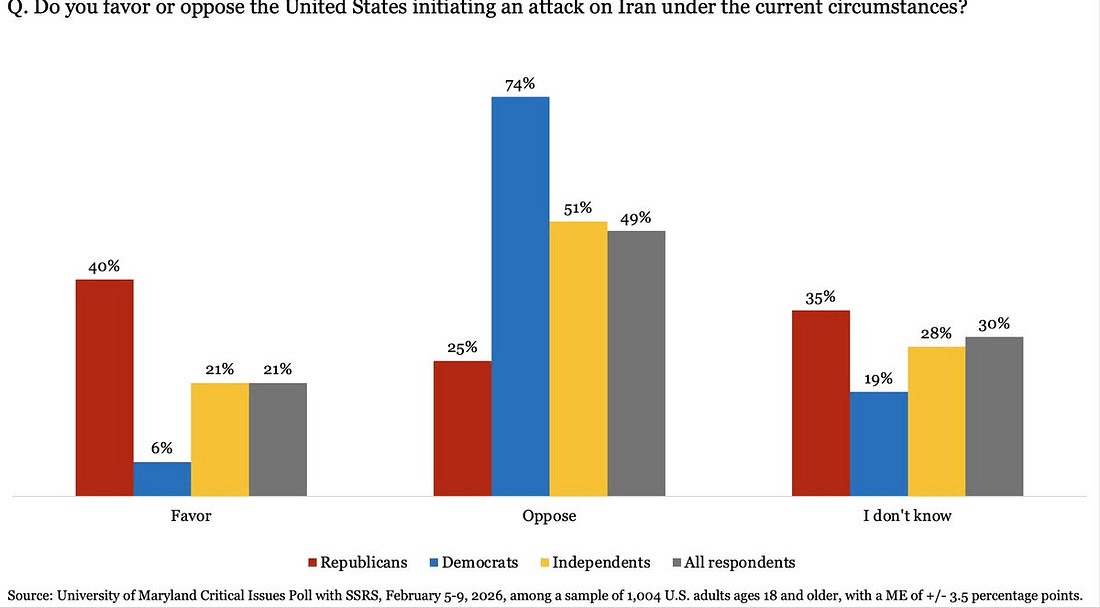
Even inside the Republican base, the bid is soft. About 40 percent of Republicans favor action, but a meaningful slice opposes and more than a third are undecided. There is no clean breakout in the president’s own constituency. Democrats are overwhelmingly against intervention. Independents lean no. The consensus trade is caution.
Other polls tell the same story. Economist YouGov data shows opposition to military action running materially ahead of support. Quinnipiac numbers show roughly 70 percent saying the United States should not become involved. Earlier YouGov work in the wake of prior strikes found as many as 85 percent saying they do not want the country at war with Iran.
That is not noise. That is structural resistance.
Markets can price crude at $90 on Strait of Hormuz scenarios. They can run gold through $5100 on escalation headlines. But elections are settled at the pump. Gasoline prices are not a sideshow in a midterm cycle. They are a ballot line.
The Silver lining trade
If there is a silver lining, it sits at the pump, and Trump knows it. His political pain point has always been gasoline prices. When the number on the sign creeps back above $3 a gallon, it stops being a commodity story and becomes a voter story. Energy is the most visible tax in the system. Voters do not parse core PCE, but they see every cent at the pump.
Every dollar added to the national average is a tax voters feel weekly. War with Iran is not an abstract foreign policy seminar. It is higher crude, tighter supply expectations, firmer inflation prints, stickier yields, and a consumer who suddenly rethinks discretionary spending. That feeds directly into approval ratings. When The Barrel Spoke The Recovery Rally Went Quiet.
If you want to understand the president’s restraint, look at the energy chart before you look at the war map.
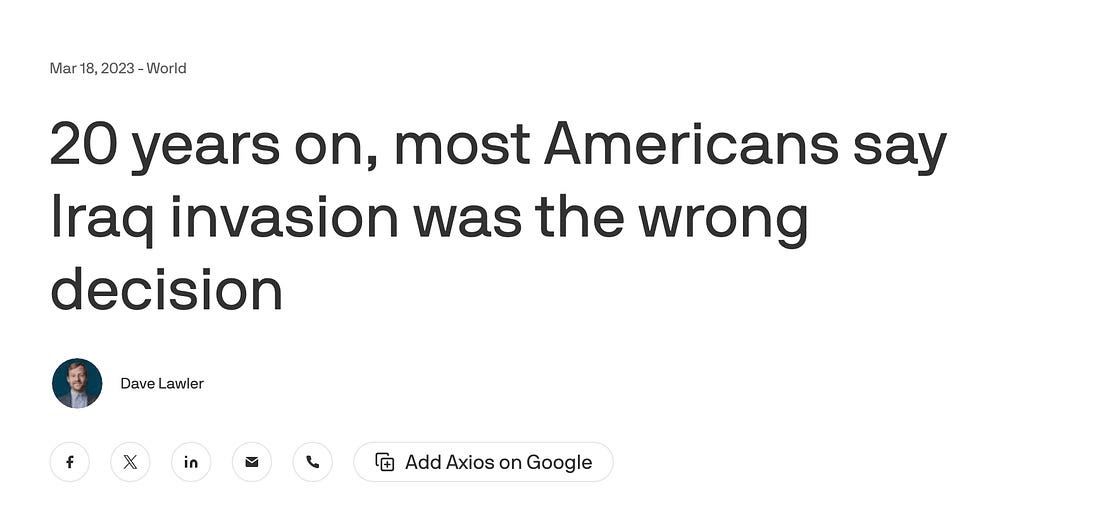
The Iraq war offers a longer arc lesson. By 2013 a majority of Americans viewed that invasion as a mistake. By the 20th anniversary, well over half believed it was the wrong decision. The trade that once cleared at 72 percent approval eventually marked deeply underwater.
Political memory lingers. Voters recalibrate.
The same foreign policy voices who championed the Iraq War are again arguing for escalation. But the messaging that bombing Iran protects protesters or neutralizes nuclear risk has not cleared the market. The bid simply is not there.
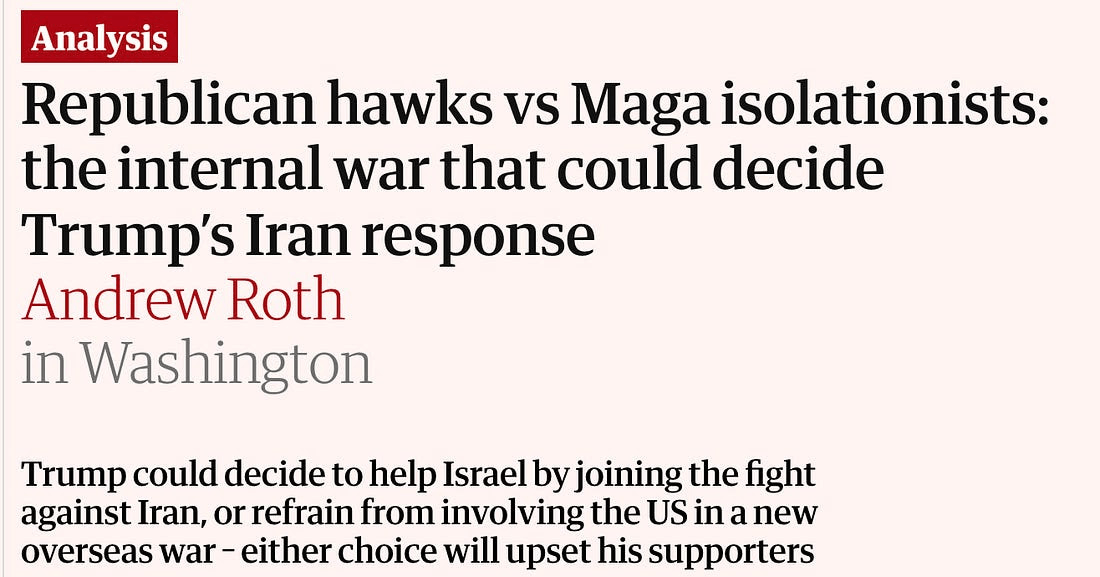
That leaves the White House with a calculus that is a debate over internal party ideology and, of course, gross margin.
President Donald Trump has not bombed Iran. He has not crossed that Rubicon, despite heated rhetoric and visible tensions with Tehran, even with Benjamin Netanyahu in the room. He continues to say he wants to talk.
That is not accidental.
If 2003 was a full-on geopolitical risk moment backed by overwhelming domestic support, in 2026 it should soon feel like a market where volatility remembers the historical lesson.
There is a disconnect between betting odds that imply an escalation probability and voter data that imply a stay-out-of-Iran stance. One of those will eventually reprice.
My bias is that public opinion matters more than the war drums. Especially during an election cycle where voters say keep our troops at home, and gasoline prices sit inches away from becoming a midterm referendum.
In markets we say do not fight the tape. In politics it is do not fight the polls.
So far, the president appears to understand that.
Author
Stephen Innes
SPI Asset Management
With more than 25 years of experience, Stephen has a deep-seated knowledge of G10 and Asian currency markets as well as precious metal and oil markets.