The Many Lives of Brexit
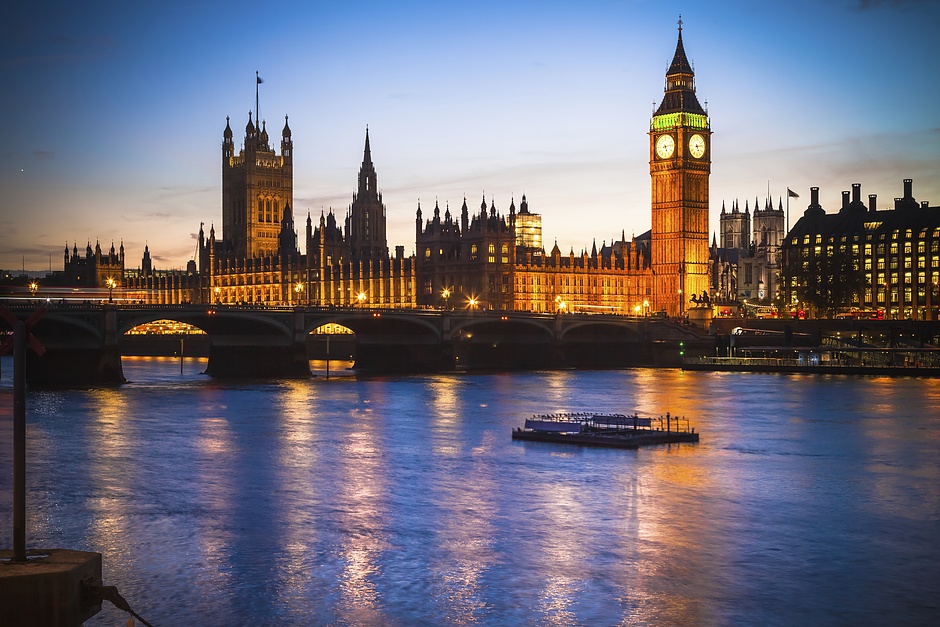

British Prime Minister Theresa May's Brexit deal survived a series of close votes in the House of Commons on Thursday.
It advanced no further towards approval but after losing two divisions in the House by large margins avoiding total defeat is a much more than a consolation prize. It leaves the Prime Minister free to bring her deal to the floor one more time.
With a no-deal Brexit eliminated in Wednesday's vote and an extension of the March 29th exit date authorized on Thursday Ms May is betting and hoping that enough Tories and the Democratic Unionists of Northern Ireland (DUP) will change their minds in a final vote knowing that the alternative, a long delay would most likely produce a softer Brexit or no Brexit at all.
The Prime Minister has said that Brexit could be delayed by three months, to June 30th if her deal is approved by March 20th. The additional time would be needed to pass the necessary enabling legislation. If the deal is not passed by Parliament she has said the government will seek a longer extension, perhaps as much as two years. Any extension has to be approved by the other 27 EU member states.
The majority of conservative MPs and seven cabinet ministers voted against delaying Brexit, according to the BBC. The tally was 413 in favor of the motion to extend Article 50 including 236 Labour, 112 Conservatives, 35 Scottish National Party members, 11 Liberal Democrats and 19 smaller party MPs. Against the motion were 202 MPs, 188 Conservatives, 10 DUP members, 3 Labor and 1 Independent. Not voting were 27 MPs.
Ms May has long said that the UK would leave the EU on March 29th whether or not the withdrawal was approved. But the decision was taken from the government after two heavy rejections of her Brexit deal and the vote by Parliament to deny a no-deal departure.
Downing Street has said it is still preparing for a no-deal Brexit, which, considering the EU approval needed for an extension is still a theoretical possibility.
The choices for the Conservative and especially the Euro-skeptic, pro-Brexit members are stark. A Brexit deal that they dislike and fear or the possibility, how large is impossible to determine, that in the long delay after the defeat to the new exit date their cause will lose all momentum to the determined and emboldened opposition to any exit at all. Labour has endorsed a second referendum and desires a general election, that, given the defeat of the government’s signature policy it is hard to see how the Conservatives avoid.
It was always likely that such a contentious and evenly divided issue would produce a deal loved by no one and that negotiations would go down to the pressure filled end.
Ms May’s determination to fulfill the will of the electorate and her warnings that failure would damage trust in democracy have not swayed Parliament, the majority of which probably are personally opposed to an exit, unlike the majority of their constituents.
The next week is indeed a historic one for the United Kingdom and the European Union. The Prime Minister plans to hold a “meaningful vote” on her withdrawal deal by next Wednesday.
If it does not pass the future relationship between the UK and the EU will immediately assume a very different shape.

Author
Joseph Trevisani
FXStreet
Joseph Trevisani began his thirty-year career in the financial markets at Credit Suisse in New York and Singapore where he worked for 12 years as an interbank currency trader and trading desk manager.