The holy grail

S2N spotlight
The most important criterion any investor or trader needs to succeed in the markets is an edge. Without an edge, you are playing against the odds and effectively gambling.
In more sophisticated circles they will talk about their alpha, which is that little bit extra you are able to extract from the market without taking extra market risk.
The more I think about this concept of edge, the more I think it is actually staring us in the face. It is there for almost all of us, but it is elusive at the same time (remember this word, as it is your clue). It is kind of like happiness. We can all be happy if we redefine what the definition of happiness is and accept it is a choice, a state of mind. I am not trying to minimise mental illness; it is real, and therefore, for some, it is harder to achieve than for others. What I am saying is that if you accept that happiness and edge are a choice (reframing is required), then it is quite empowering, as it is available to all of us. Let’s get to the edge bit. After all, that is why you are paying me the big bucks.
I will stick to investing, as I probably need some more time to make a compelling argument for traders.
I believe the edge available to most of us is time. We are all so short-term focused; the behavioural finance community calls it a myopic bias that comes in a number of different sub forms, like myopic loss aversion or myopic prospect theory, etc. The bottom line is we are addicted to instant gratification. So when we invest, we want good returns now. The moment the returns are subpar, the tendency is to want to do something; typically, we sell at the wrong time and then re-enter at the wrong time.
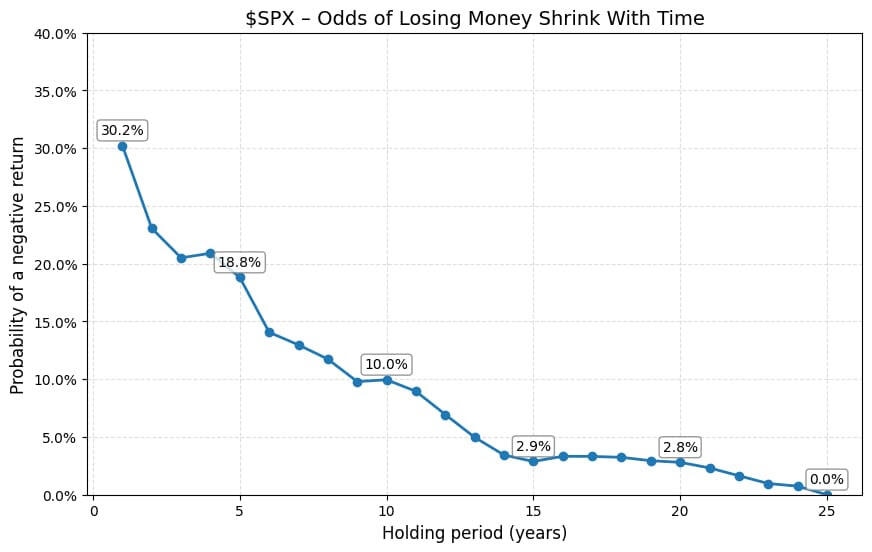
If you look at the chart below, there is a 30% probability of losing money if you hold the S&P 500 for a random year. That probability drops to 18% over 5 years, and there is a 0% probability of losing money if you hold for 25 years. Investing over time is a superpower and your edge.
Think of the cone like a weather forecast for your investment: The shorter your trip, the wilder the possible conditions—sunshine or storm—while the longer you stay, the sooner the extremes fade and the outlook settles near a steady, mild “growth” temperature. In practical terms, the chart shows that the best-case and worst-case annual returns for the S&P 500 swing dramatically over 1- or 2-year holding periods, but those highs and lows squeeze closer together as you stretch to 10, 20, or 30 years—so time doesn’t just raise the average return, it also tames the risk of nasty surprises.
It is kind of like Sydney at the moment; Saturday was like summer even though we are almost in winter, and the rest of the week has been miserable. Trust me, if you come to Sydney for a year, you will comment on how sunny and hot it is. Come for a week, and you may think you are back in London.
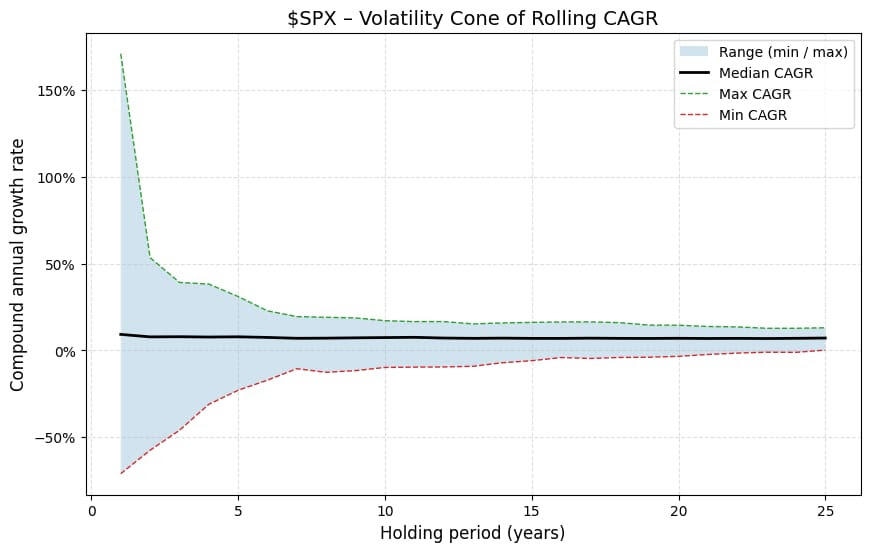
CAGR = Compound Annual Growth Rate
S2N observations
I have purposefully used the price charts on the top of the plot to show the performance of the S&P 500 and the Health Care Index. It is hard to tell them apart because of the accommodative linear scaling. However, if you look at the green ratio line, you will see we have the biggest deviation in returns since 2001. I am not an expert in health care, so I'm not sure what to make of it, but these are the kinds of setups that get me a little bit hot under the collar. Down, boy.
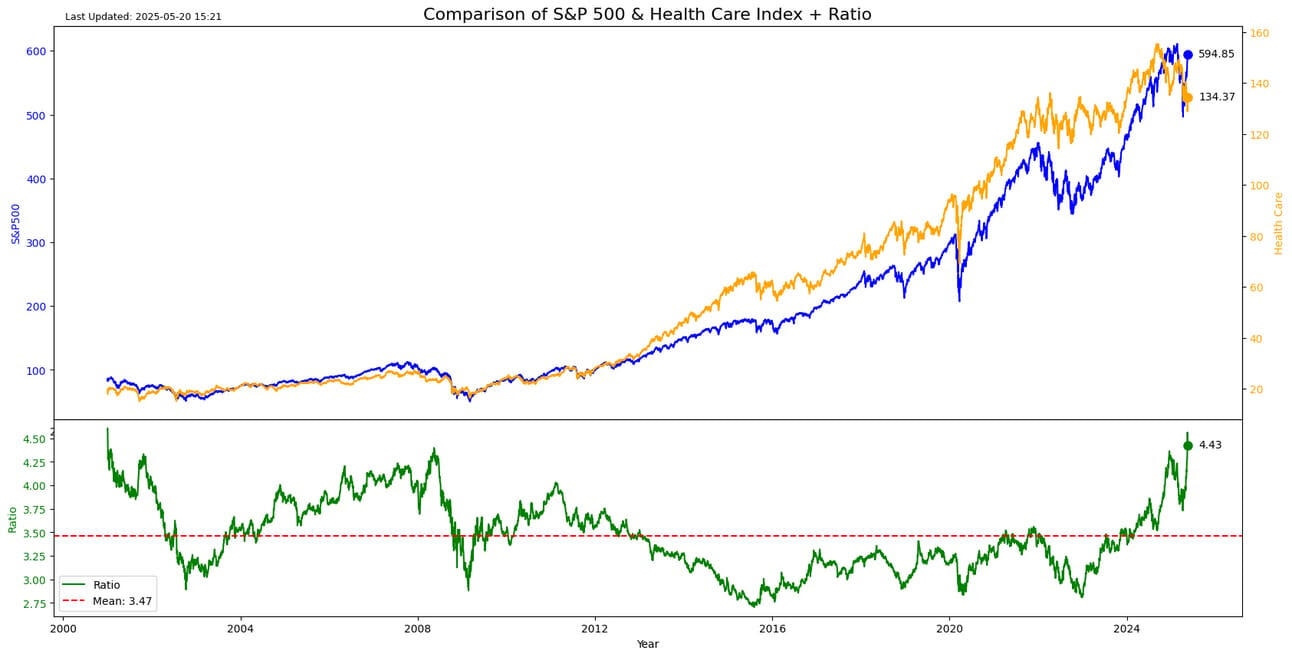
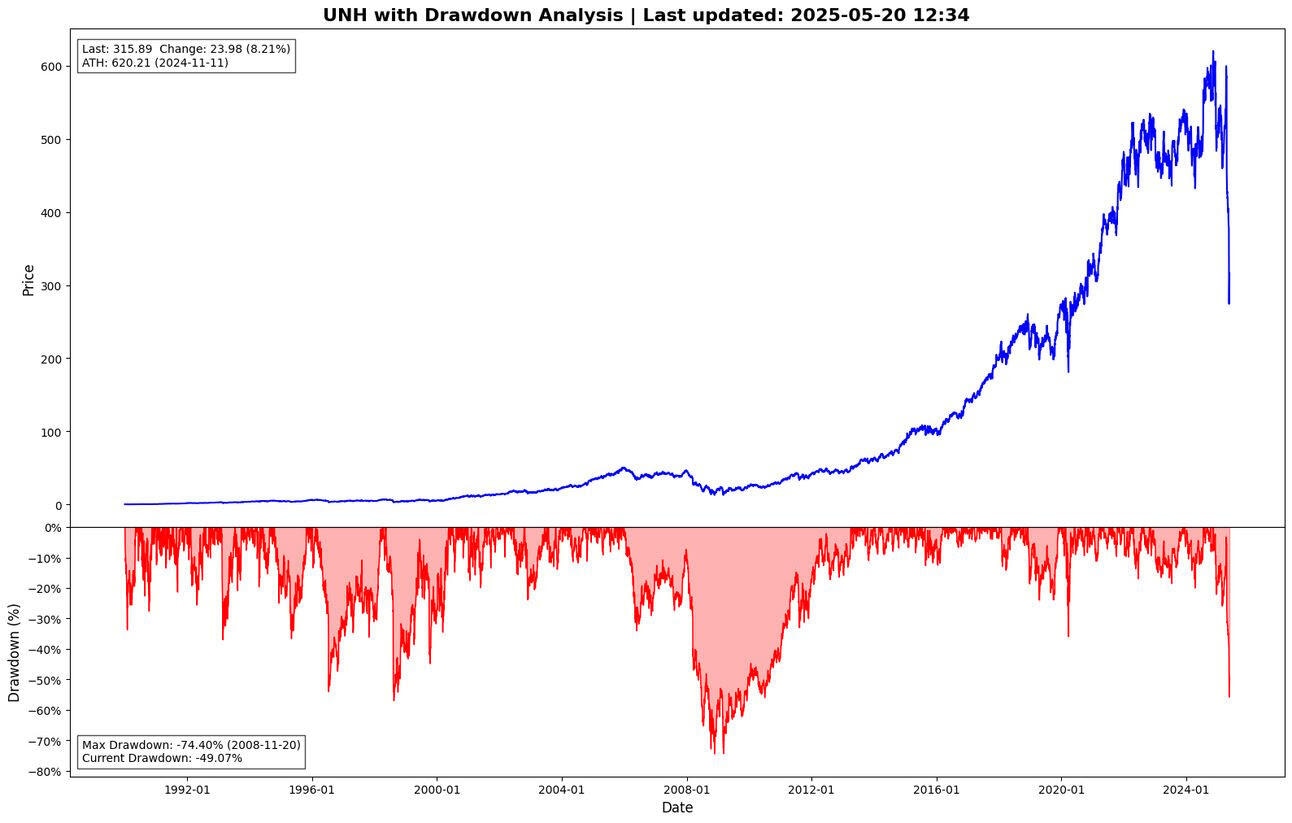
The health care sector has been badly affected lately by United Health Group. The latest drop has come super quick—a drop of 50%, ouch. The scary part is that is not the biggest drawdown in this stock. The global financial crisis saw a 70% drawdown in 2009. This is another great example of time being your edge.
S2N screener alert
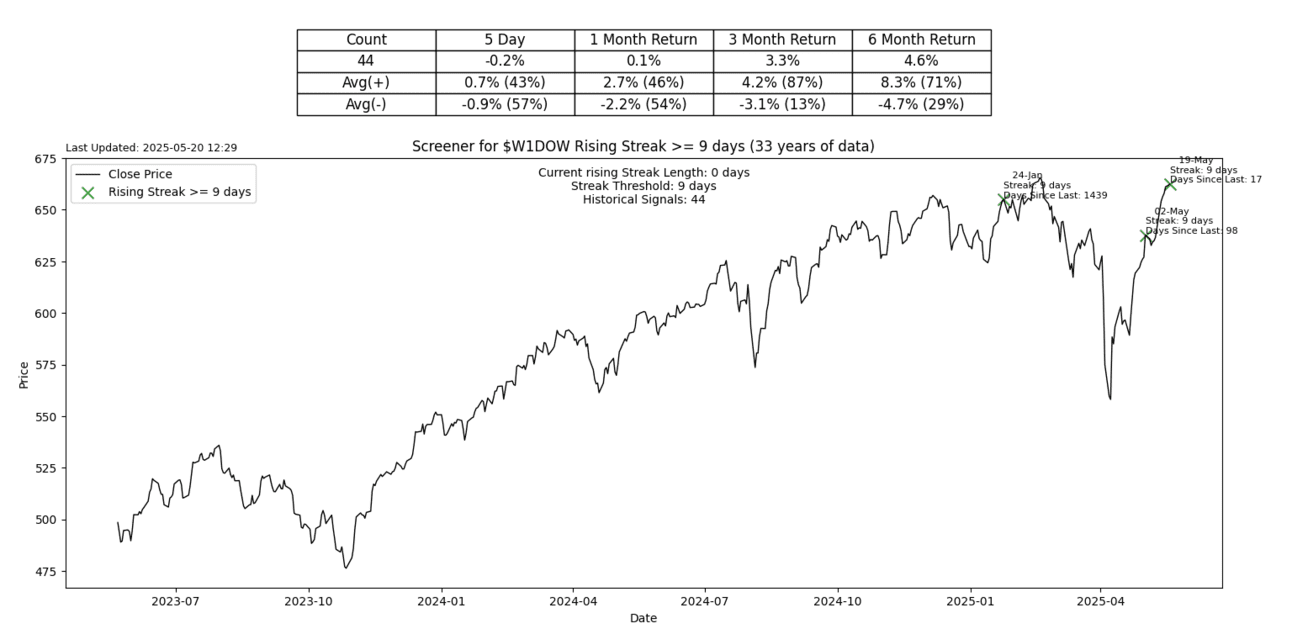
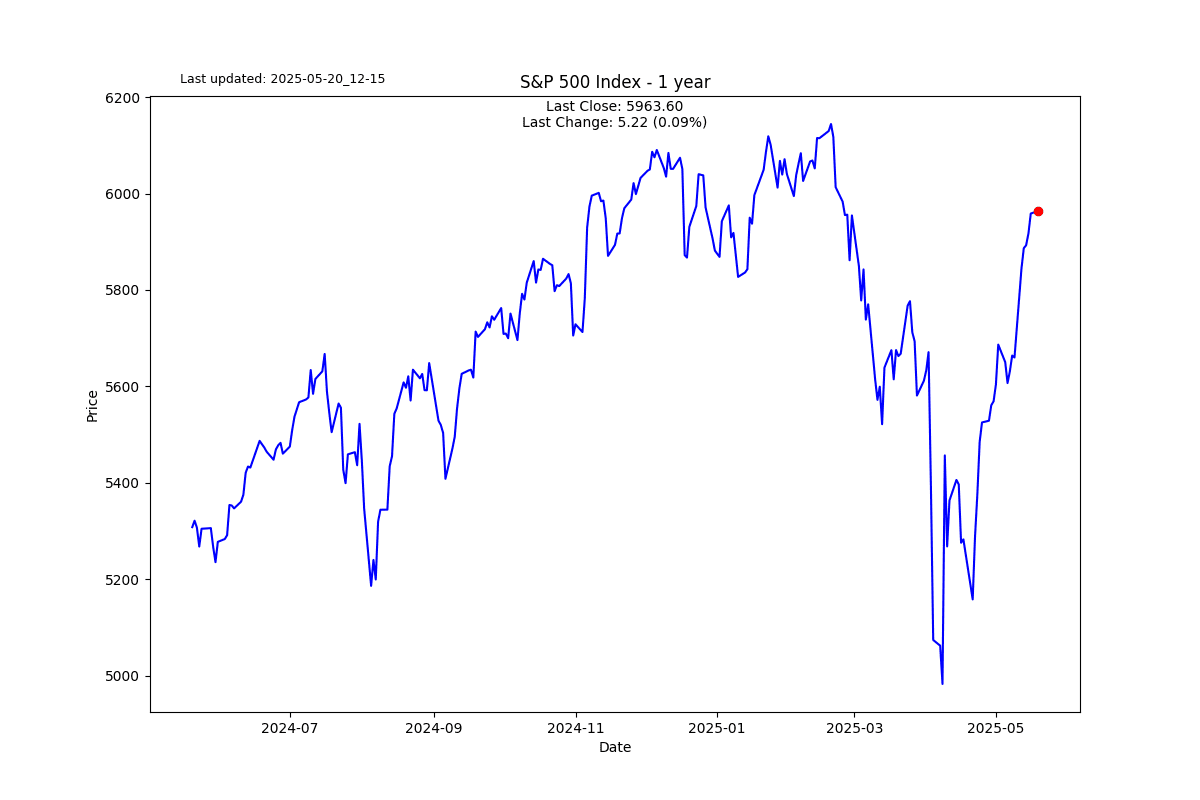
The Global Dow Jones Index is up 9 days in a row and within a fingernail of climbing to a new height.
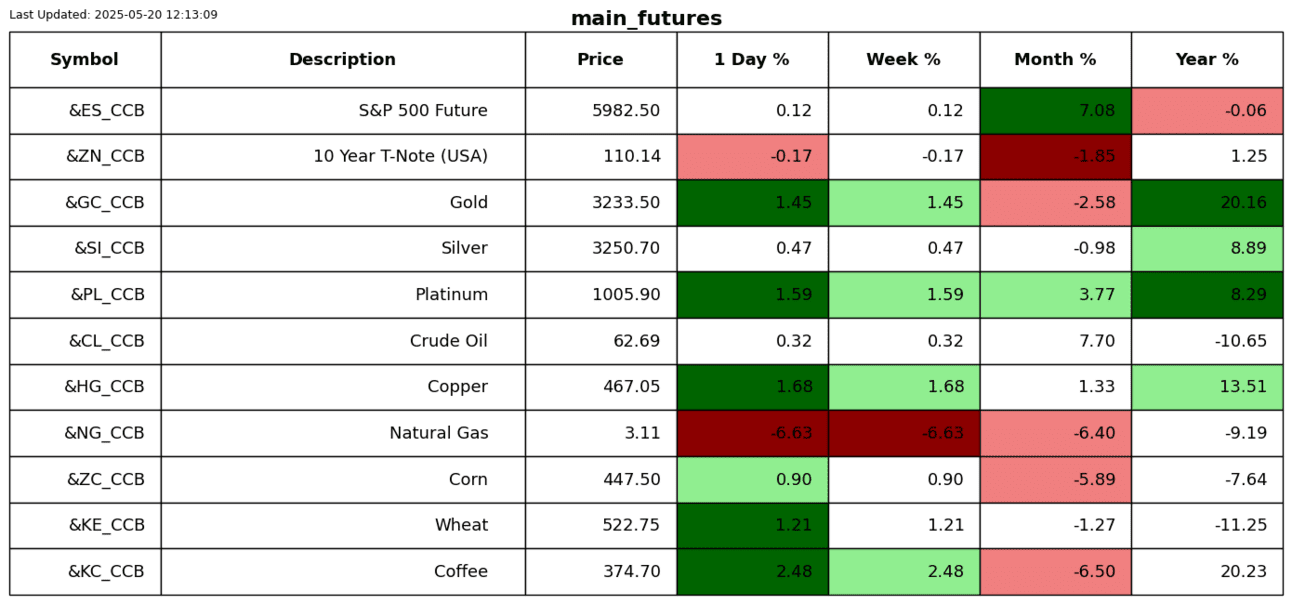
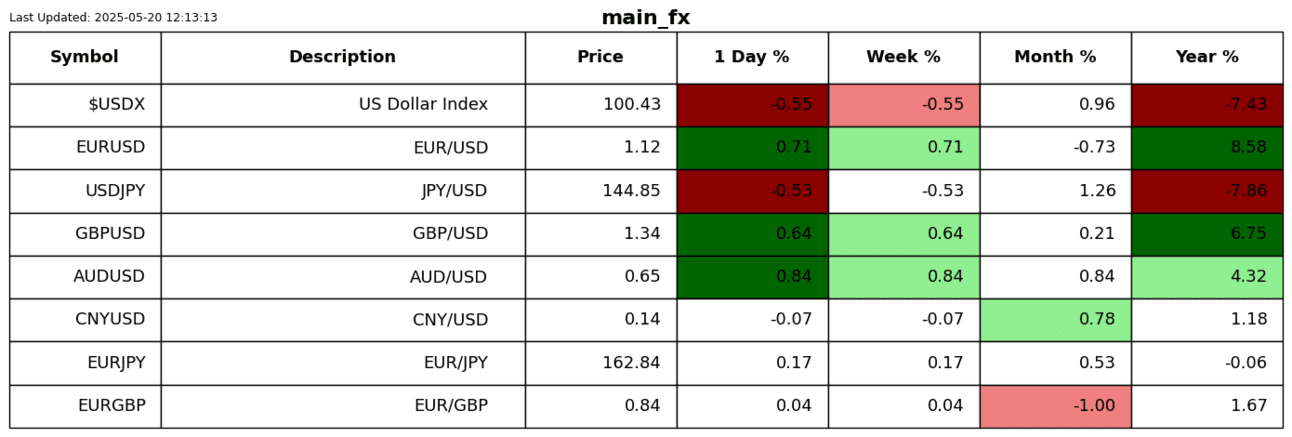
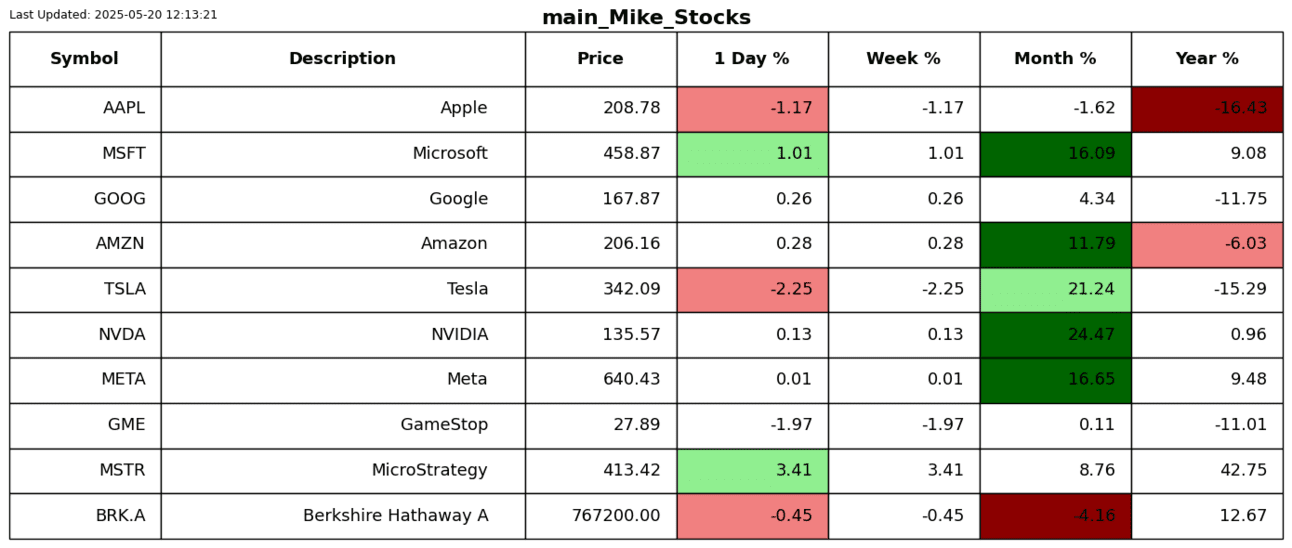
S2N performance review


S2N chart gallery
S2N news today
Author
Michael Berman, PhD
Signal2Noise (S2N) News
Michael has decades of experience as a professional trader, hedge fund manager and incubator of emerging traders.

















