|

The global knock-on from Japan’s policy change

The BoJ has been slowly moving away from its ultra-loose monetary policy but has been doing it in slow stages. First of all, we had the yield curve expanded and now we had rumours of a more hawkish BoJ Governor, Ueda, being lined up to take the reins. These moves have led to anticipation that the BoJ is going to let the reins go and allow rates to move higher. If we see inflation data coming in higher than expected over the next few weeks then that move could even come before the new BoJ Governor is in a situation for the March 10 BoJ meeting.

The implication for the bond market

Bloomberg points out that last year Japanese investors offloaded $181 billion of foreign debt and put $231 billion into Japan’s domestic bond market. Look at the heavy amount of foreign bonds that Japanese investors sold. The majority of that debt was US bonds.
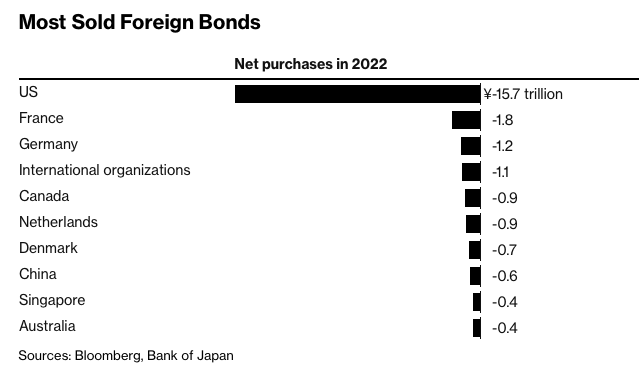
Chart

According to JPMorgan Chase & Co analyst Benjamin Shakil, this trend is set to continue. The risk here is that if the BoJ does exit its easy monetary policy program that will have spillover effects. That would strengthen the Yen, send US yields higher as more US treasuries find sellers, and send gold lower (on the higher rate and stronger dollar environment). The reason for this impact is that Japan still holds more than $1 trillion of US Treasuries as well as large amounts of bonds from France and the UK.

Chart

When Japan does finally exist its easy monetary policy program then that could mean domestic bonds find buyers as foreign bonds are sold. Patient Japanese investors will likely buy JGBs on the more attractive yields. Watch out for this dynamic and the implications it could have moving forward across a range of markets. The first beneficiary would of course be the JPY.
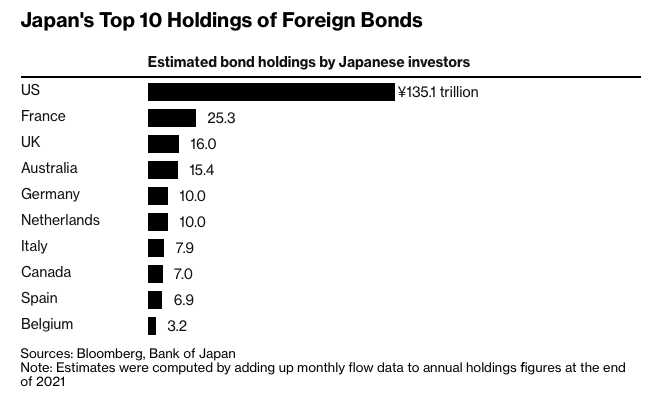
Chart

Learn more about HYCM

Author

Giles Coghlan LLB, Lth, MA

Giles is the chief market analyst for Financial Source. His goal is to help you find simple, high-conviction fundamental trade opportunities. He has regular media presentations being featured in National and International Press.


More from Giles Coghlan LLB, Lth, MA
Share:

Editor's Picks

GBP/USD loses momentum, flirts with 1.3200

GBP/USD is struggling to maintain its positive bias on Thursday, retreating toward the 1.3200 region in response to the pick in the buying interest around the Greenback. That said, Cable remains under scrutiny as cautious market sentiment keeps investors focused on the US-Iran conflict and political effervescence in the UK.

EUR/USD trims gains, challenges 1.1400

EUR/USD now gives away part of its earlier advance, receding toward the 1.1400 contention zone on Thursday. Meanwhile, the pair’s recovery comes amid extra losses in the US Dollar, at the time when while investors continue to monitor developments in the Middle East and sentiment surrounding global technology stocks.

Gold remains bid and close to $4,100

Gold accelerates its recovery and approaches the key $4,000 mark per troy ounce at the end of the week, adding to Thursday’s advance. However, expectations for a hawkish Fed remain steady and keep the yellow metal’s potential upside contained.

Crypto Today: Bitcoin at $60,000, Ethereum at $1,500, and XRP at $1 face a make-or-break test

Bitcoin (BTC), Ethereum (ETH), and Ripple (XRP) are trading in the red on Friday after three consecutive days of losses, testing their respective make-or-break support levels.

Week ahead – NFP report to challenge Dollar strength and the hawkish Fed

Dollar strength dominates markets, as the hawkish Fed overshadows geopolitics and lower oil prices. NFP week could drive September Fed hike expectations and boost market volatility. The euro lacks fresh bullish catalysts, all eyes on the preliminary inflation report and the ECB Forum.

Regime change: Inside Kevin Warsh's first move to make the Fed unreadable on purpose

The rate did not move. That was the least interesting thing about Kevin Warsh's first meeting in charge of the Fed. The FOMC held its benchmark at 3.50%-3.75% for the fourth straight meeting, exactly as priced, and then the new chair used his first press conference to dismantle the machinery the market has leaned on for a decade.