The Country that Will Best Survive this Global Financial Crisis and Prosper in the Aftermath
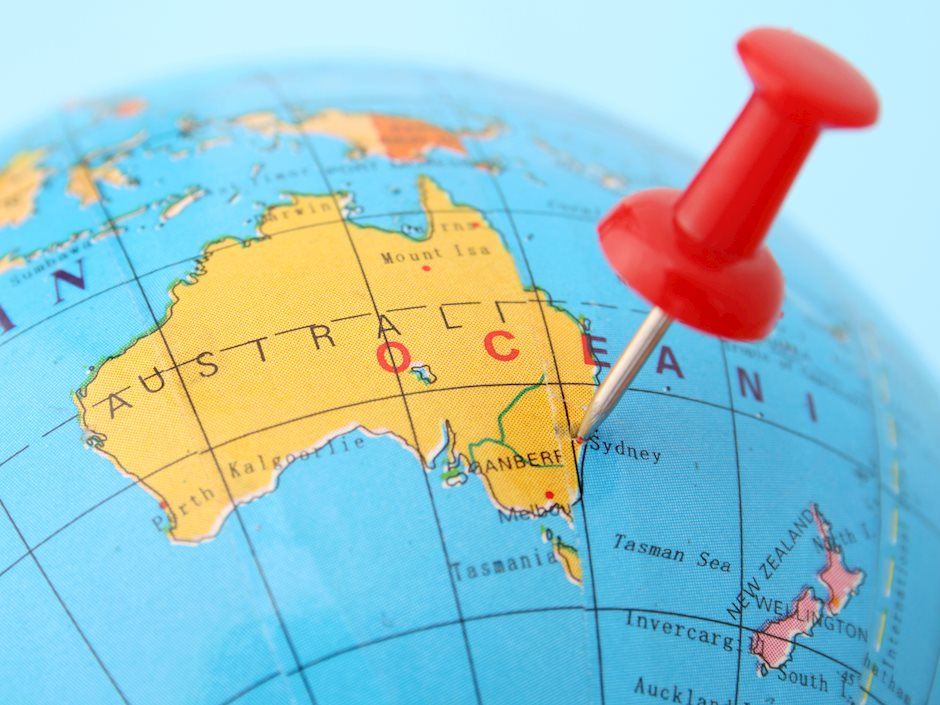

I’m in Australia this week.
It’s a long flight and the airlines lost part of my luggage.
Hate the jetlag.
But LOVE the country.
The first place I always go in Sydney is the best upscale food court I’ve ever seen anywhere in the world at the Westfield mall downtown.
I’ve been coming to Australia to lecture since the early 1990s, even before my first breakthrough book, The Great Boom Ahead. I started speaking at TEC, a global network of small business CEOs (it’s now called Vistage).
It’s beautiful here. The interior is a giant desert while the rim boasts the Great Barrier Reef, one of the great natural wonders of the world (it’s even visible from space!).
Sydney is a paragon of civilized beauty (Cape Town comes in a close second).
Melbourne is the most culturally sophisticated.
Brisbane has the best year-round weather, with close access to the reef and the infamous Gold Coast.
Perth has great weather and is very modern and classy for being 2,000 miles from anything, kind of like Honolulu.
But the country has so much more going for it…
It has high levels of immigration, much from Asia.
That’s the secret to becoming one of the top six developed countries in the world, with larger Millennial generations than Baby Boomers. (The U.S.’s trajectory away from immigration could have disastrous results and East Asia and most of Europe are worse!)
In fact, Australia has strong demographic trends ahead, giving it an edge most developed countries have lost.
And it’s a law-abiding country.
I only jay-walked once in Sydney. I never did it again. Not because I got a ticket, but because the looks I got from everyone on the street made it clear: “We just don’t do that here!”
No drivers speed either. There are traffic cameras everywhere!
Its cities are all clean and modern, like in Canada.
It has endless beaches and a great climate, dry and sunny (mostly).
The people are fun and friendly, and they even like Americans! Most other countries view us as imperialistic and meddling megalomaniacs.
And to top it all off, there’s no tipping here!
If there was anywhere in the world that I’d rather be when the worst financial crisis hits, and the civil unrest rises to a crescendo… it would be Australia.
Its government has the lowest debt of any major developed country.
It has less income inequality than the U.S., while taxing luxury goods, like cars and cigarettes, highly.
They’re a socially liberal people that are fiscally responsible.
And my books have sold more per capita here than in the U.S., which tells me that these people are open to new, leading edge ideas. Greg Owen of Goko.com.au, who’s my promoter here and a dear friend, understands my research better than most other marketers I work.
It’s not just about me though. Many leading-edge speakers I know tell me they do better in Australia than in the U.S. or Europe because there’s a thirst for knowledge and innovation here second to none.
There are just two problems…
It’s housing is in a bubble (which they’ve vehemently denied until recently), so consumer debt is high.
And it’s dangerously dependent on its largest trading partner, China. When the Red Dragon crashes – and it will – Australia’s going to hurt! Once it gets through that, this may be the best developed country to invest in or retire if you can.
My advice: Look to Australia for profit opportunities in the years ahead!
Author
Harry S. Dent, MBA
Dent Research
Harry S. Dent Jr. studied economics in college in the ’70s, but found it vague and inconclusive. He became so disillusioned by the state of his chosen profession that he turned his back on it.