FX alert: What ifs

What if
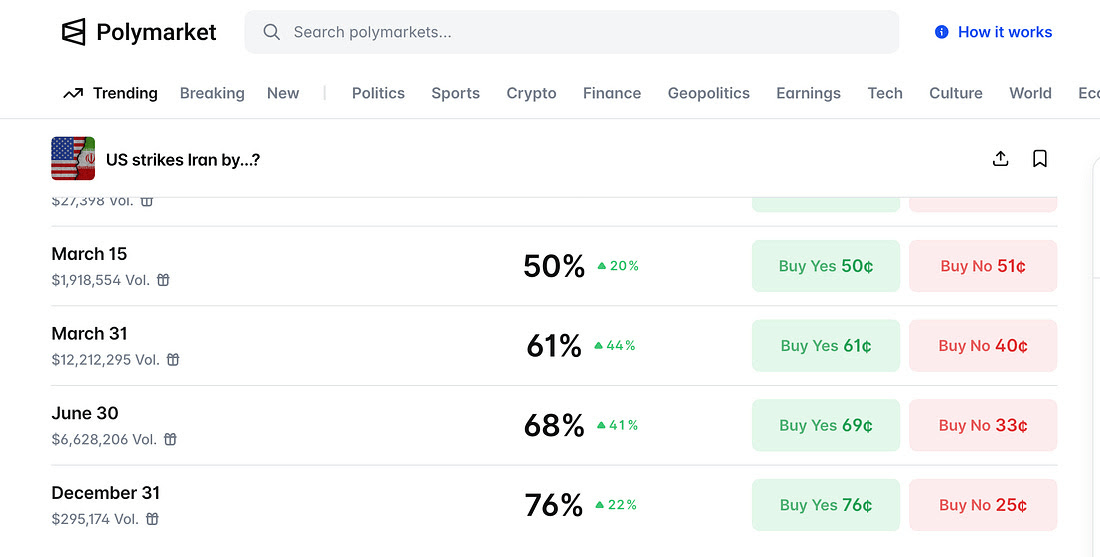
A large-scale US military show of force in the Middle East has pushed the implied odds of a strike on Iran toward 61 percent in betting markets. Oil has not ignored it. Brent in the $71 to $72 range is trading almost tick-for-tick with the betting market’s war barometer. If you stretch that line to its logical extreme and price a full 100 percent strike probability, crude jumps toward $75-80. The market, however, is sketching the map in pencil, not ink.
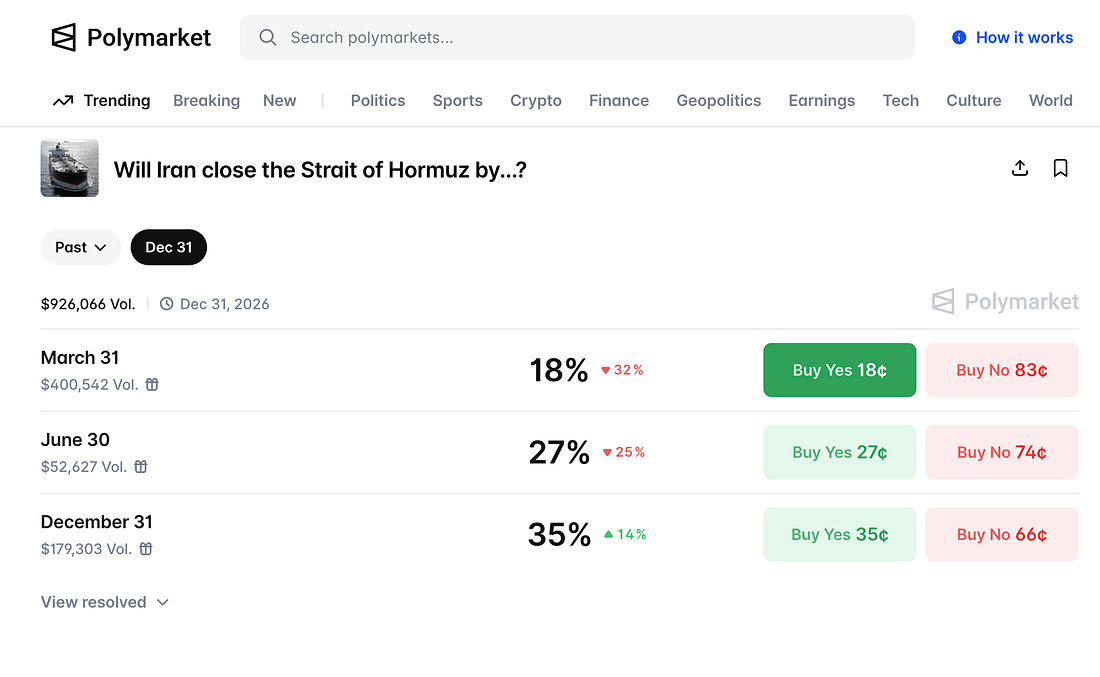
The real accelerant is not the strike itself but the closure of the Strait of Hormuz. That is the difference between a warning shot and a supply shock. Polymarket assigns only 18 percent odds of closure by the end of March and 35 percent by year's end. That is not a full risk premium. That is a market that still believes diplomacy will get a cameo appearance before the final act.
In FX land, the rulebook is simple when crude lifts on geopolitical stress. The dollar attracts a safe-haven bid as currency alternatives are compromised.
The euro and the yen are structurally energy importers. When oil prices spike, their trade balances feel the burn. Safe-haven status erodes when your current account starts bleeding. In that environment, the dollar becomes the cleanest dirty shirt in the laundry. Forget the macro implications; simply put, the US is the world's largest oil producer, making the Greenback a good currency to own in an oil supply shock.
Now look at the euro.
It is sitting about 1 percent above a short-term fair value ( according to several major FX banks) that strips out oil and looks only at rates and equities. That is a luxury it may not be able to afford. The model suggests that a $5 move in Brent translates into roughly 1 percent of downside in EUR/USD on a rolling beta basis. (Some will argue it is less, but you get the drift. In real oil shocks, as in a full shipping-lane closure, those betas expand. Correlations tighten. Elastic snaps back. In a major escalation scenario, a slide toward 1.160 is not dramatic. It is arithmetic.
So here is the trade in plain English.
If escalation deepens and oil extends, the dollar has further to run. The market has never even coin-flipped priced on a Hormuz event. The euro remains overvalued relative to short-term drivers. The yen shares the same energy handicap. The path of least resistance in that scenario is a stronger USD.
If diplomacy surprises to the upside (my base case) and oil rolls over, the dollar gives back ground quickly because the embedded geopolitical premium is shallow but real.
This is a market balancing on conditional probabilities. It is not trading what is. It is trading what if.
And right now, the what-if that carries the fatter tail is a higher crude price and a firmer dollar.
But frankly, the US propaganda push that the world is a better place without the Ayatollah and that this would neatly tilt American opinion toward backing a major military move simply is not landing. The polling does not show the kind of broad-based support that would give Trump meaningful political cover, and without that domestic ballast, his appetite for real escalation could surely falter. The more probable path is the familiar one: tensions flare, rhetoric hardens, markets wobble, and then a thin weekend framework appears, with both sides declaring victory and the Middle East nudged a little further down the road.
Author
Stephen Innes
SPI Asset Management
With more than 25 years of experience, Stephen has a deep-seated knowledge of G10 and Asian currency markets as well as precious metal and oil markets.