The commodity sell off extends, as tech stocks surge and US banks recover
- Trump’s about turn on tariffs weighs on metals and silver price.
- Silver: The road to $100 an ounce could be treacherous.
- US stocks on course for another record high of 2026.
- US banks in recovery mode after suffering from the glare of Trump.
- US yields rise as more strong data in the US boosts the economic outlook.
The supply glut finally caught up with the oil price on Thursday, after a strong start to 2026 for oil. As stocks manage to eke out a gain, the oil price is falling hard. Brent crude is down by 4%, eroding a chunk of the 9% gain oil had registered over the last week. As tensions are dialed down between Iran and the US, the political risk premium is rapidly getting priced out of the oil price.
The gold and silver rally has also paused. The gold price is down by 0.5%, while the silver price is lower by 4% and is experiencing a similar selloff to oil. This suggests that silver is 1, more volatile than the gold price right now, and 2, is also more speculative. Demand for silver remains strong, but it does tend to overshoot.
Trump’s about turn on tariffs weighs on metals and Silver price
President Trump’s failure to impose sweeping tariffs on critical mineral imports, including silver, knocked the wind out of silver’s rally today, even if supply fundamentals remain supportive for further gains. The prospect of tariffs on critical minerals meant that silver had been stockpiled in 2025, now that the tariff risk has been removed, more supply is expected to come onto the market, but it likely still won’t be enough to meet demand. Added to this, although tariff risks are reduced, geopolitical tensions means that the 434 million ounces of silver that is kept in storage in the US is unlikely to leave home shores any time soon. Added to this, capricious decision making at the White House means that silver could once more come under Donald Trump’s glare.
Silver: The road to $100 an ounce could be treacherous
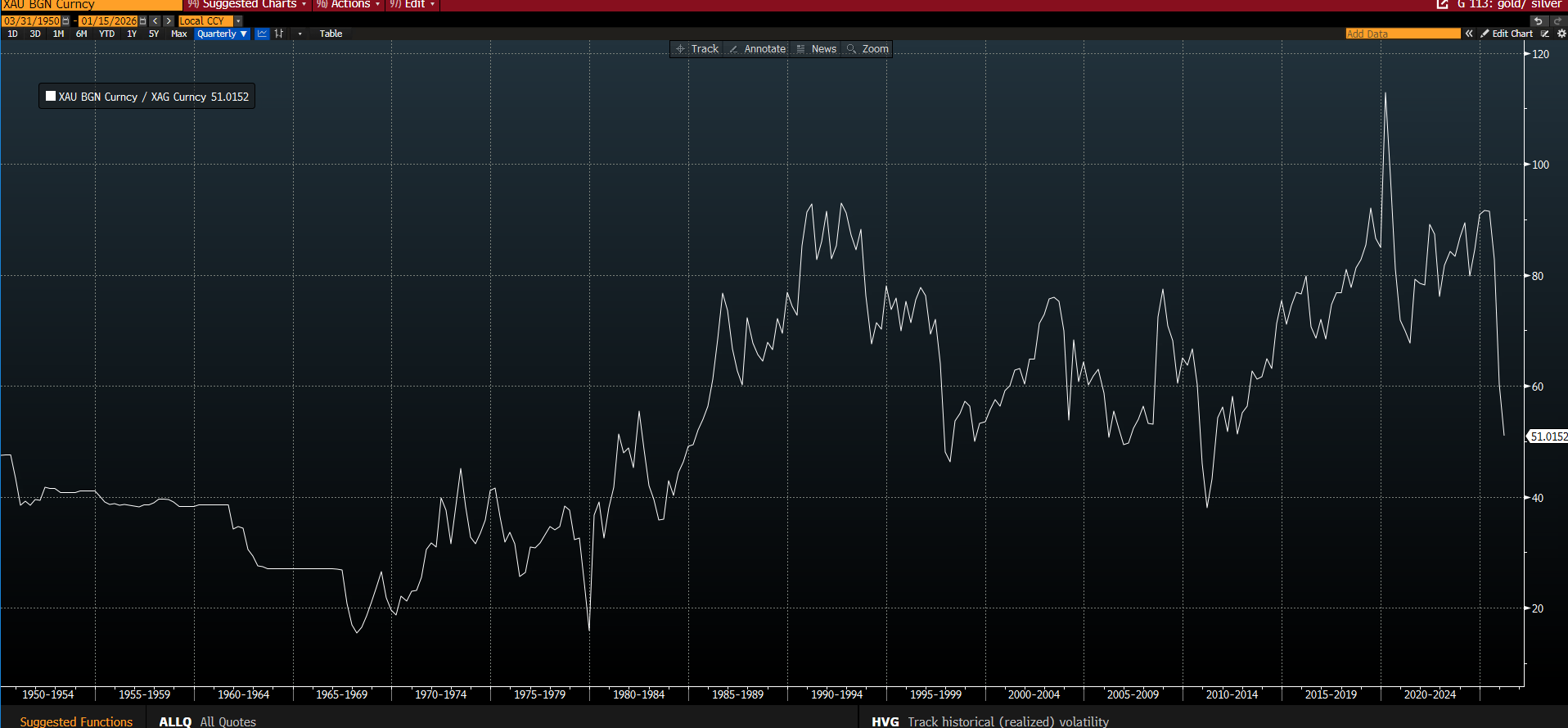
The surge in the silver price and the subsequent selloff suggests that gold could start to play catch up with the white metal. The gold/ silver ratio had fallen to its lowest level since 2012 earlier this week, which means that gains in the silver price were rapidly outpacing gains int the gold price, as you can see below. While there is a solid story underpinning the rally in silver, this ratio suggests that the rally had gone too far, and today the ratio has gone into reverse, as gold remains stable and silver falls sharply.
The silver price has become prone to large upward and downward price swings, and on a long-term basis the silver/ gold ratio could drop further. Although the ratio is at low levels historically, this suggests that the top for silver could be in sight, and the road to $100 an ounce may be treacherous.
Chart 1: The Gold and Silver ratio, long-term chart
Source: XTB and Bloomberg
US stocks on course for another record high of 2026
While the commodity market comes under pressure, demand for stocks continue to build as we move through 2026. So far this week, stocks are managing to eke out a gain. However, today the market is on fire. US stocks have had a strong open led by tech. This comes after a stunning set of results for TSMC in Taiwan, which suggests that demand for semiconductors remains robust.
In Europe, the tech sector is surging. The Eurostoxx tech sector is higher by 4.7%, led by a 7.6% gain for ASML, which makes equipment needed to produce AI chips. Nvidia, which has been shunned so far this year and is down 3.5%, is higher by 2.5% today, and could extend gains as enthusiasm for the AI trade returns to financial markets.
US banks in recovery mode after suffering from the glare of Trump
The US banking sector is also in focus. The KBW banking index is in recovery mode on Thursday after falling sharply this week on the back of some lackluster earnings from JPM and concerns about a credit card interest rate cap from the White House. JP Morgan had fallen 6% this week, however, it is higher by 1% so far today as the entire sector gets a boost. If Trump can back down from attacking Iran and slapping tariffs on critical minerals, then maybe he can back down from credit card interest rate caps too?
Goldman Sachs is leading the charge and is higher by 2% today after it reported record breaking trading revenue. Overall, the big US banks reported a strong set of earnings for Q4, which suggests that the US economy remains in robust health. However, their stock price performance will depend more on whether Donald Trump can keep his nose out of their business in the coming months.
US yields rise as more strong data in the US boosts the economic outlook
Although stocks are higher today, US yields are threatening to break out. Initial jobless claims data came in well below expectations for the second week and are close to the lowest levels of the last 2 years. A recent pick up in US data, including strong retail sales, has added more than 5bps to US interest rate expectations in a year’s time, and US Treasuries are underperforming their European counterparts. This also threatens to cause a breakout in US 10-year Treasury yields, which may test 4.2% in the coming days. If this happens, then mortgage rates and credit card rates could push higher, which may leave President Trump in a difficult spot as he attempts to address the cost-of-living crisis in the US.
Overall, it is still worth watching the news flow when it comes to Iran and the US, as any re-escalation in tensions could see the oil price rise again. For stocks, a fresh record high is back on the cards for the S&P 500 today, as the tech sector enjoys a strong day of gains. If this happens, will valuation concerns come back to haunt investors?
Author

Kathleen Brooks
XTB UK
Kathleen has nearly 15 years’ experience working with some of the leading retail trading and investment companies in the City of London.