The big event of the day, Powell’s semi-annual speech to Congress, is likely to be a dud
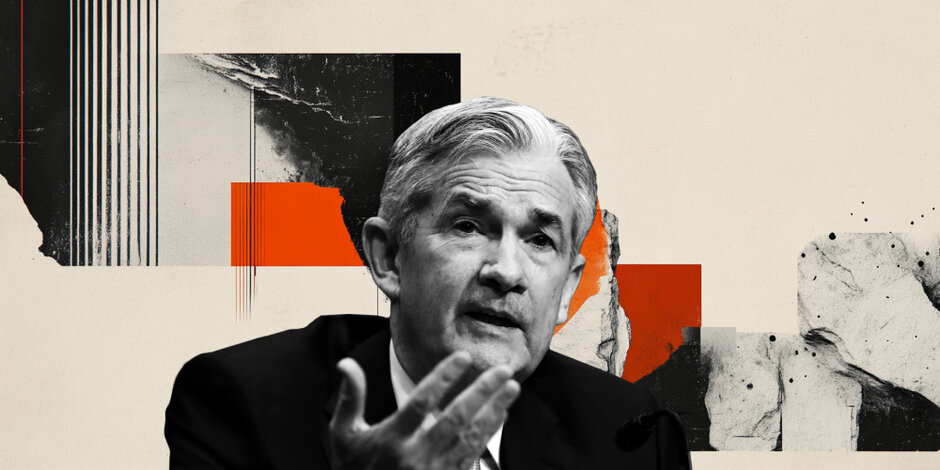

The big event of the day, Powell’s semi-annual speech to Congress, is likely to be a dud. He can’t announce any change in the Fed’s stance and will have to hopscotch his way around tariff effects on inflation and growth.
The reversal to long dollars was as short-lived as any we have ever seen. As soon as it did become clear that Iran is down and out, FX traders made the switch lickety-split. They didn’t trust Trump to handle it properly, but even nitwits get it right sometimes. Now we can return to selling dollars for all the good reasons we were doing it in the first place.
A contributing factor is Fed Vice Chair Bowman saying “It is time to consider adjusting the policy rate. Should inflation pressures remain contained, I would support lowering the policy rate as soon as our next meeting in order to bring it closer to its neutral setting and to sustain a healthy labor market.”
This makes her the second Fed to point out that tariffs may well be a one-time shock that the economy can absorb, as Waller said on Friday. Even economist and Chicago Goolsbee said the Fed could lower borrowing costs again “if we do not see inflation resulting from these tariff increases. Then, in my mind, we never left what I was calling the golden path before April 2.”
These are minority views. Nobody knows what it means that both Waller and Bowman are Trump appointees. Are they competing for Powell’s job? The folks on cable TV are trying to appear smart by referring to Fed chief Burns who lowered rates under pressure from Nixon and then got rising inflation, to his dismay and not a little disgrace.
What do the numbers say? Headline PCE fell from 2.5% in Jan to 2.1% in April. Technically this is the number the Fed looks at although it became fashionable to claim they look at core PCE. That was 2.51% in April. We could very well see a cut in July, even if the CME Fed fuds futures bettors give it only a 20.7% probability. A lot can happen between now and the next meeting on July 30. Much of it could be Trump repeating his nearly daily insults to Powell.
We’d give it a higher probability, and it’s possible that the Fed comments and enough FX traders think so, too, that it influenced the loss of interest in being long dollars.
The Fed has some additional reasons to contemplate a July cut, and that’s the loss of immigrant labor that will skew the payrolls and other employment data. Given the Trump crackdown and drop in immigration, the labor shortage can only get worse and that means higher wages. A lower Fed funds rate doesn’t have any effect on immigration but may buck up employers facing the labor shortage.
As for the rest of the huge plate of data releases today, the market may home in on consumer confidence and the TICs report on capital flows, although that comes late in the day. We also get the quarterly trade deficit and two regional Fed surveys (Philly and Richmond).
Forecast
Be nimble: we almost always get a burst of volatility when it’s month end, quarter-end and half-year end.
The dollar has lost so much year-to-date because of gross mismanagement by Trump just about everywhere. He got lucky with Iran so far, but traders are not forgetting the tariffs, the big bad budget and cumulative deficit, nor the breaking of the norms of decency and the law. If there was a smidgeon of safe haven buying as the Iran crisis unfolded, it was fleeting.
Here’s the issue: the US economy is huge. It can take a beating. Even Feds are saying the economy may well be able to get over a one-time tariff-driven inflation freakout and in any case, if it’s coming, it’s coming later in the year. Besides, the folks getting the most harm piled on them are the lowest classes. They may vote but they don’t donate to politicians (although they may buy golden Bibles, sneakers and the other junk for sale by the grifter-in-chief).
We need to worry that the downtrend may be petering out. That means a prolonged sideways move, the trader’s worst nightmare.
Tidbit: Is it true that foreigner are exiting US assets? Reuters has a dandy story on that using multiple sources, including the BoA survey.
The report says the dollar is flailing because yes, foreigners are selling. “Unsurprisingly, non-U.S. investors are responsible for the bulk of the selling, with equity-related selling pressure concentrated among European investors and fixed income-based selling mostly coming from Asia.”
While big European funds are dumping US equities, “research shows that most of the dollar's average daily declines in the last few months have come in Asian trading hours, suggesting Asian holders of U.S. bonds may also be increasing their dollar hedges.”
This is an excerpt from “The Rockefeller Morning Briefing,” which is far larger (about 10 pages). The Briefing has been published every day for over 25 years and represents experienced analysis and insight. The report offers deep background and is not intended to guide FX trading. Rockefeller produces other reports (in spot and futures) for trading purposes.
To get a two-week trial of the full reports plus traders advice for only $3.95. Click here!
This is an excerpt from “The Rockefeller Morning Briefing,” which is far larger (about 10 pages). The Briefing has been published every day for over 25 years and represents experienced analysis and insight. The report offers deep background and is not intended to guide FX trading. Rockefeller produces other reports (in spot and futures) for trading purposes.
To get a two-week trial of the full reports plus traders advice for only $3.95. Click here!
Author
Barbara Rockefeller
Rockefeller Treasury Services, Inc.
Experience Before founding Rockefeller Treasury, Barbara worked at Citibank and other banks as a risk manager, new product developer (Cititrend), FX trader, advisor and loan officer. Miss Rockefeller is engaged to perform FX-relat