The $1 million home: What’s pushing the Australian housing market to new highs
With the average house price having just passed the symbolic $1 million mark, the Australian real estate market is experiencing a phase of vigorous growth.
This momentum, underpinned by falling interest rates, a persistent imbalance between supply and demand, and a solid economic base, is raising questions about the sustainability of the Australian housing model.
The Australian real estate market heats up
The latest report from the Australian Bureau of Statistics (ABS) has confirmed what property market players have been observing for several months: Australia has reached a new stage in the recovery of its housing market.
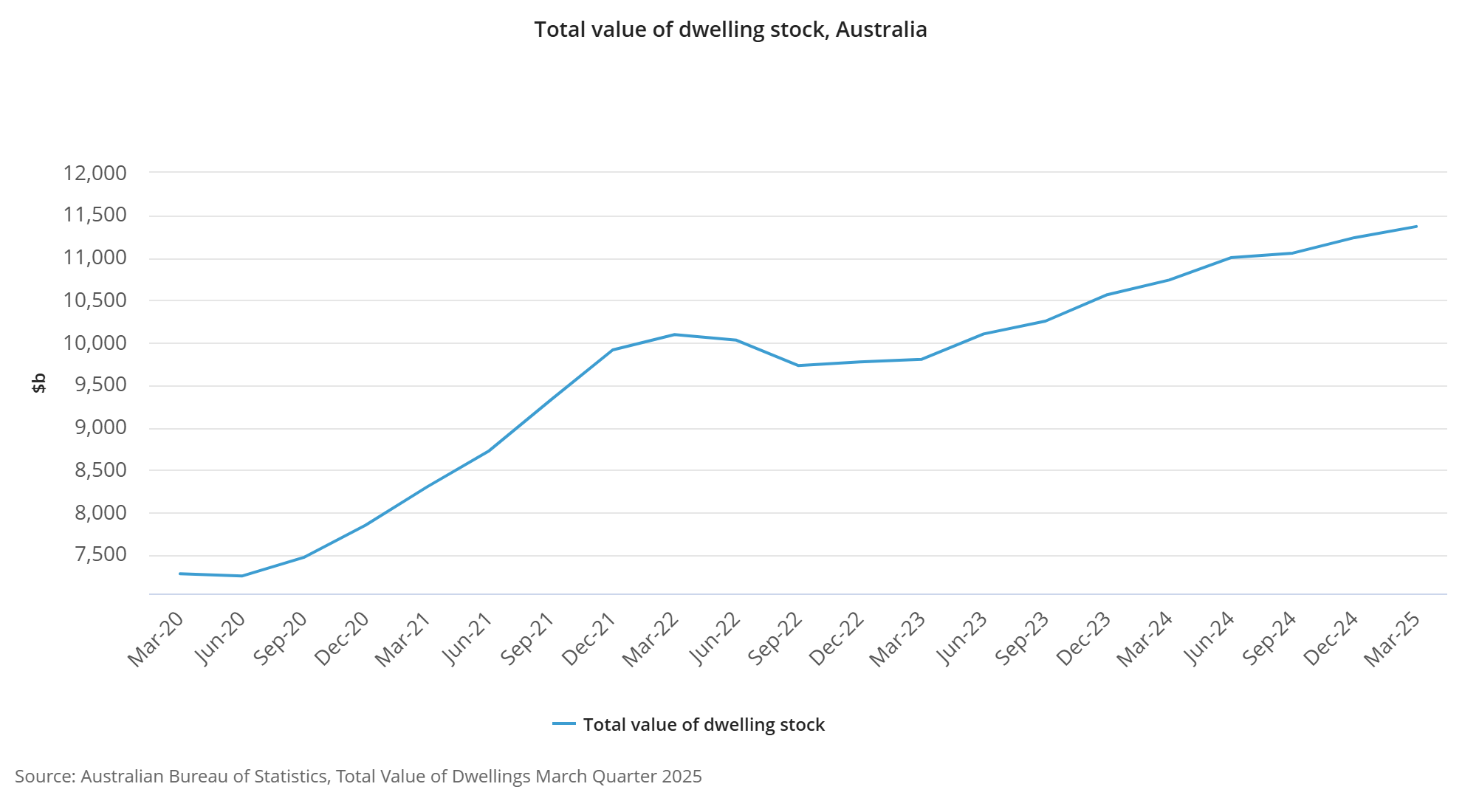
At the end of the first quarter of 2025, the total value of the country's residential dwellings stood at $11,366 billion, up 1.2% over the quarter and almost 6% YoY. The national average house price now stands at $1,002,500, a level that not only reflects housing market strength but also significantly contributes to the country’s rising cost of living.
Property prices vary from city to city
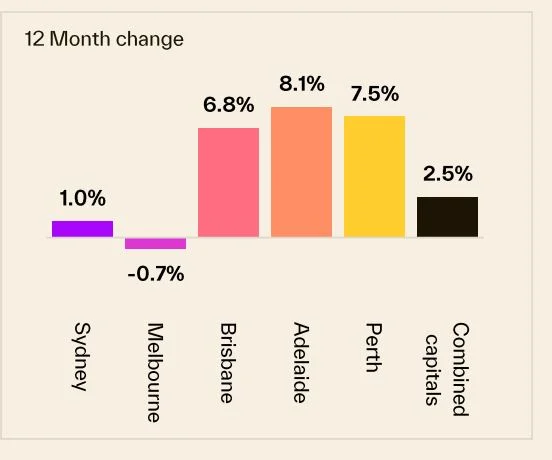
Behind this overall performance lies a more nuanced reality. While all capital cities are showing growth, the dynamics are highly differentiated, according to data from Cotality, reported by Property Update:
- In Brisbane, prices have risen by 6.8% over the past year, making the city the second most expensive in Australia after Sydney, in terms of the average cost of a home.
- Perth and Adelaide also posted substantial annual increases, of 7.5% and 8.1%, respectively, buoyed by sustained inward migration and very limited new supply.
- Melbourne, on the other hand, remains one of the few capital cities where prices have fallen YoY, down 0.7%.
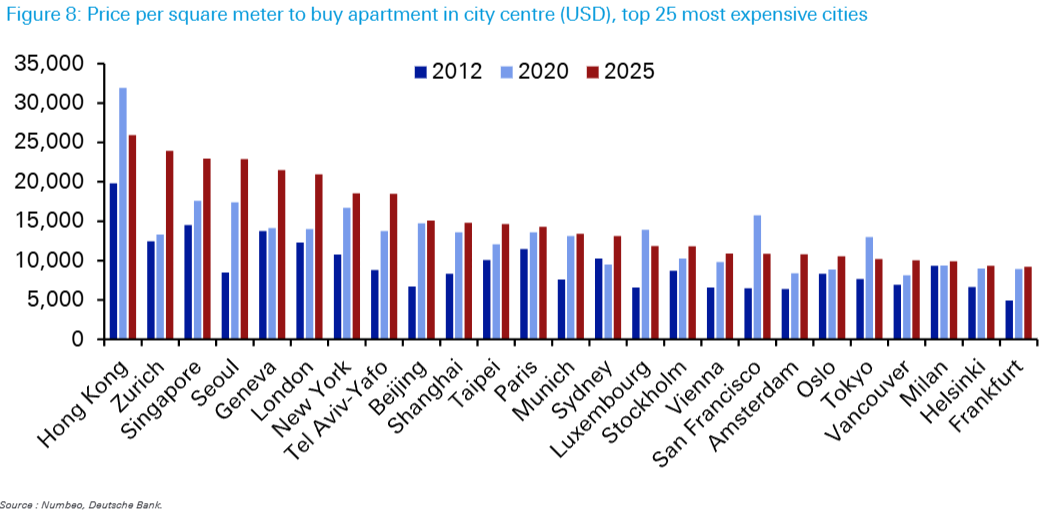
- Sydney, despite its reputation as a hard-to-reach market, saw prices rise only slightly, with a growth of 1% YoY. The country's economic capital remains one of the world's most expensive cities, ranked thirteenth in the world in terms of price per square metre, according to a study by Deutsche Bank.
Overall, prices in the capital cities rose by 2.5% YoY, but differences between cities are widening, reflecting the structural fragmentation of the Australian market.
Source: Property Update
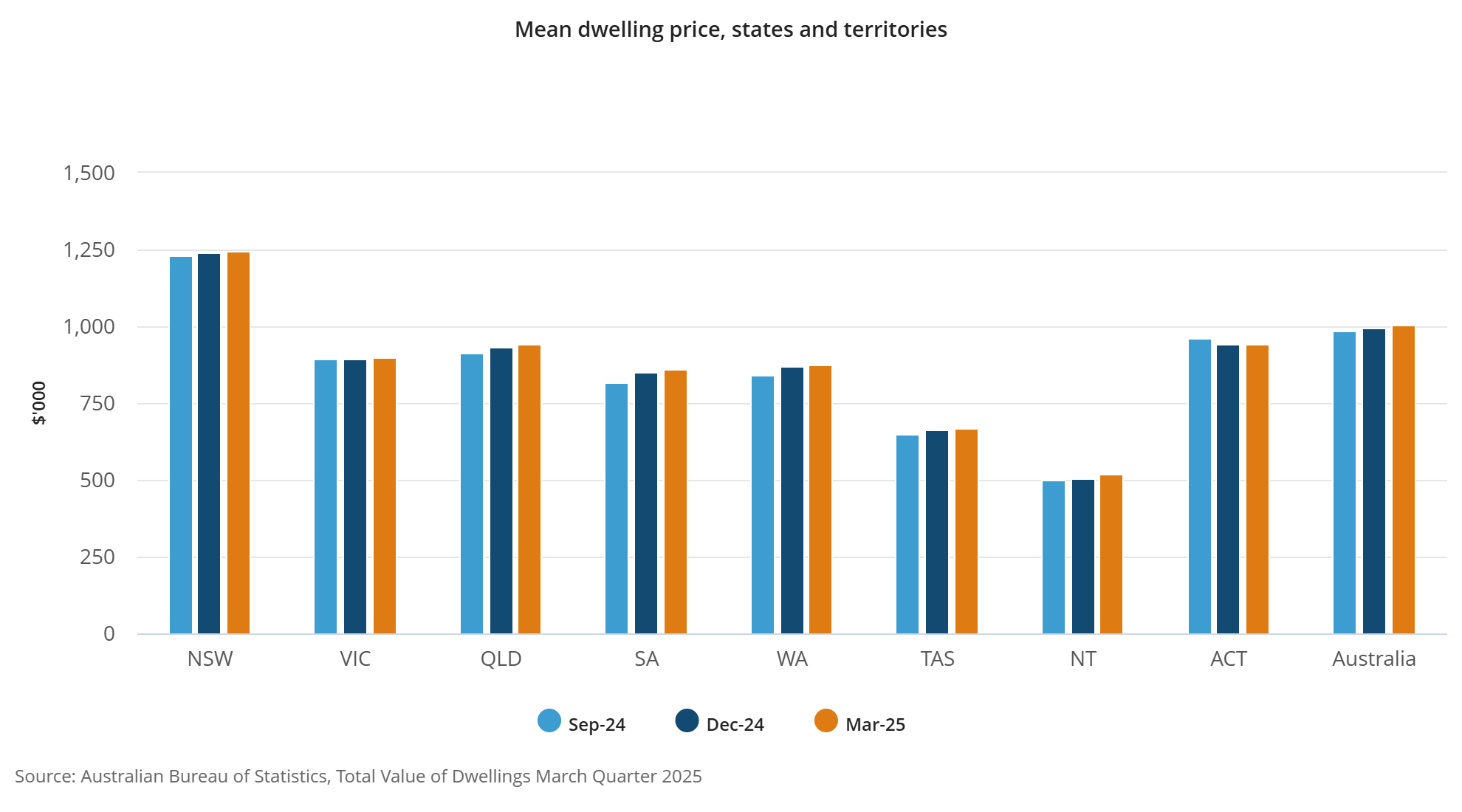
In terms of states and territories, ABS notes that the average residential house price in New South Wales (NSW) ($1,245,900) remains the highest in the country, followed by Queensland (QLD) ($944,700) and the Australian Capital Territory (ACT) ($941,300).
The Northern Territory (NT) retains the lowest average price at $517,700.
Australian housing market fueled by three powerful engines
One of the main catalysts for this recovery is the interest rate policy of the Reserve Bank of Australia (RBA). After raising interest rates to 4.35% in 2023 to contain inflation, the central bank turned the corner in 2025.
Two interest rate cuts have been implemented, and market expectations are for up to three further cuts by mid-2026. This easing is helping to restore households' borrowing capacity and support the market.
“The continued momentum we’re seeing across almost all markets is no doubt being fuelled by rate cuts – both those that have already happened, but also potential cuts in the coming months,” said Tim Lawless, executive research director of CoreLogic's Asia–Pacific research division, according to Reuters.
The fall in interest rates is all the more influential as Australia is characterized by a mortgage system dominated by variable-rate or short-term loans.
Unlike the United States, where borrowers can lock in their rate for 30 years, the majority of Australians see their rate revised every two to five years, making monetary transmission more direct. A 0.25 point drop in RBA interest rates can reduce monthly payments on a $1 million loan by around $150, according to Real Estate.
At the same time, structural demand remains very strong, driven by rapidly growing demographics. In 2024, Australia's population exceeded 27.3 million, boosted by net migration of 547,300 people, notes Property Update. This migratory dynamism, higher than pre-Covid levels, is keeping the housing market under constant pressure.
Above all, however, it is the shortage of supply that is the main driver of growth. In 2024, only 179,900 homes were built, well short of the 240,000 per year required under the National Housing Accord, Property Update reports.
Construction delays, the cost of materials, labor scarcity and administrative constraints are weighing heavily on the production chain. Building permits are at their lowest level for over a decade.
The result is a chronic shortage, particularly in major cities, and persistent pressure on prices and rents.
Worsening affordability despite subsidies
Soaring property prices are accompanied by a significant decline in affordability in the context of rising cost of living. According to Demographia's 2025 report, the cities of Sydney, Melbourne, Brisbane and Adelaide are all among the world's most unaffordable metropolises, with price/income ratios exceeding nine times the median salary.
Sydney is a case in point, with a median house price of $1.83 million, or almost 27 years' net income for the average household, notes ABC News, reporting ABS data.
The federal government is trying to cushion this blow with support measures for first-time buyers. From January 2026, access to the public guarantee, which allows buyers to purchase with a 5% deposit and no loan insurance, will be extended to virtually all purchasers, with no income ceilings.
While this measure promises to stimulate access to home ownership, it also risks boosting demand in the short term without solving the housing shortage.
The market’s structure further complicates matters. A growing proportion of sales are loan-free, fuelled by boomers and inheritances, while young working people are forced to buy on the outskirts or opt for units instead of houses.
The "rentvestor" phenomenon is also on the rise: households that invest in an affordable area while renting out their main residence in a better-located neighborhood.
A lasting rise in property prices or a controlled overheating?
Analysts agree that prices will continue to rise in 2025-2026, but at a more moderate pace than in previous cycles.
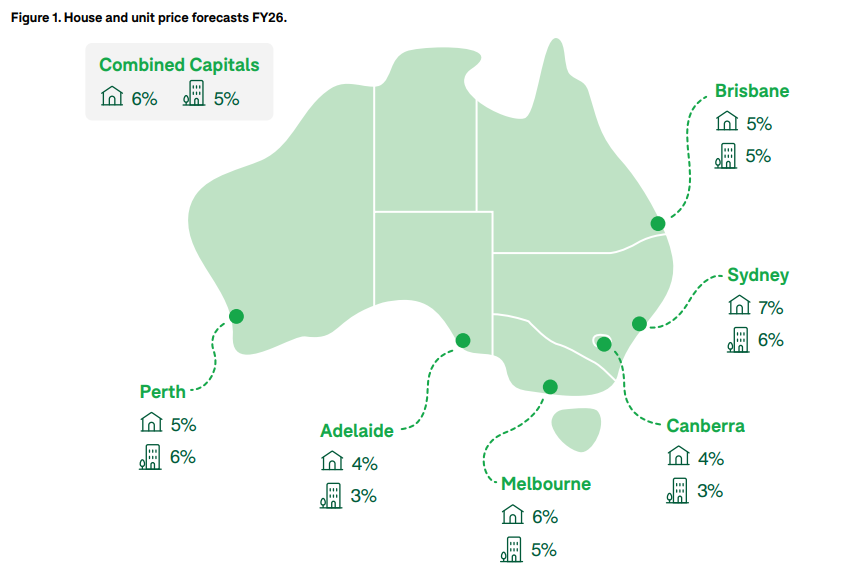
According to Domain's forecasts, house prices could rise by an average of 6% in the capital cities over the next 12 months, while unit prices are expected to increase by 5%.
Source: ABC News
The Sydney, Melbourne and Brisbane markets are expected to drive this growth, as they are more sensitive to changes in interest rates and investor movements.
However, increases should remain limited by affordability constraints, high household indebtedness and potential buyer fatigue after several years of fiscal stress.
A surprise rise in inflation, a relapse in the job market or a crisis of confidence could reverse the dynamic, but the fundamentals –demographics, employment, and scarcity– remain solid.
An opportunity for investors, a challenge for buyers
The Australian real estate market is entering a new phase, one of recovery fuelled by lower rates, but hampered by structurally insufficient supply and increasing affordability constraints.
The prospect of moderate but steady growth offers opportunities for long-term investors, particularly in cities with high demand and in intermediate segments (family apartments, gentrifying neighborhoods).
For first-time buyers, however, the situation remains complex. Stabilizing interest rates could breathe new life into purchasing power, but without a structural response to the supply crisis, prices will remain persistently high.
The challenge is clear: Australia needs to build more, faster and better, while rebalancing public policies between support for demand and action on supply. Otherwise, home ownership could become an increasingly inaccessible dream for a large proportion of Australians, and housing will continue to weigh heavily on the country’s overall cost of living.
Author

Ghiles Guezout
FXStreet
Ghiles Guezout is a Market Analyst with a strong background in stock market investments, trading, and cryptocurrencies. He combines fundamental and technical analysis skills to identify market opportunities.