Tech and tariff tantrums


Equity market futures are attempting to stabilize today, but the aftershocks of DeepSeek's impact on US tech valuations might linger. Given the close ties between AI growth and dollar dynamics—often seen as reciprocal drivers of capital flows—the dollar wasn’t the immediate haven it typically is during equity downturns. Traders, anticipating the potential for capital outflows due to the tech shakeup, initially sold the dollar. However, the Treasury’s strategy for phased-in tariffs, combined with President Trump's comments supporting these measures and more, seems to have solidified new support levels for the greenback.
This week's narrative has shifted from the usual macroeconomic and central bank influences to focusing on tech and tariffs rocking the market. However, this doesn’t mean central bank activities should be ignored, particularly those of the Federal Reserve and the ECB. Despite the expected 25 basis point cut from the ECB and the Fed on pause, renewed tariff concerns could spark a widening guidance divergence in the EUR vs. USD Swap spreads, much to the dollar bulls’ pleasure.
Since the beginning of the week, USD/JPY has been catapulted into a rollercoaster ride. This was ignited by a tech sector selloff that heralded a yen rally fueled by classic risk-off sentiment and tumbling US rates. The Bank of Japan's decision to hike rates last Friday further turbocharged the yen's ascent, injecting more momentum into its rally.
Yet, the thrill was fleeting; the yen's descent below 154.0 didn't last. As the narrative shifted to universal tariffs, the dollar muscled its way back up, propelling USD/JPY to hover between 155.50 and 156.0. This dynamic rebound underscores the intricate dance between US protectionist maneuvers and a potentially hawkish Federal Reserve stance, spotlighting these factors' profound impact on the jittery yen.
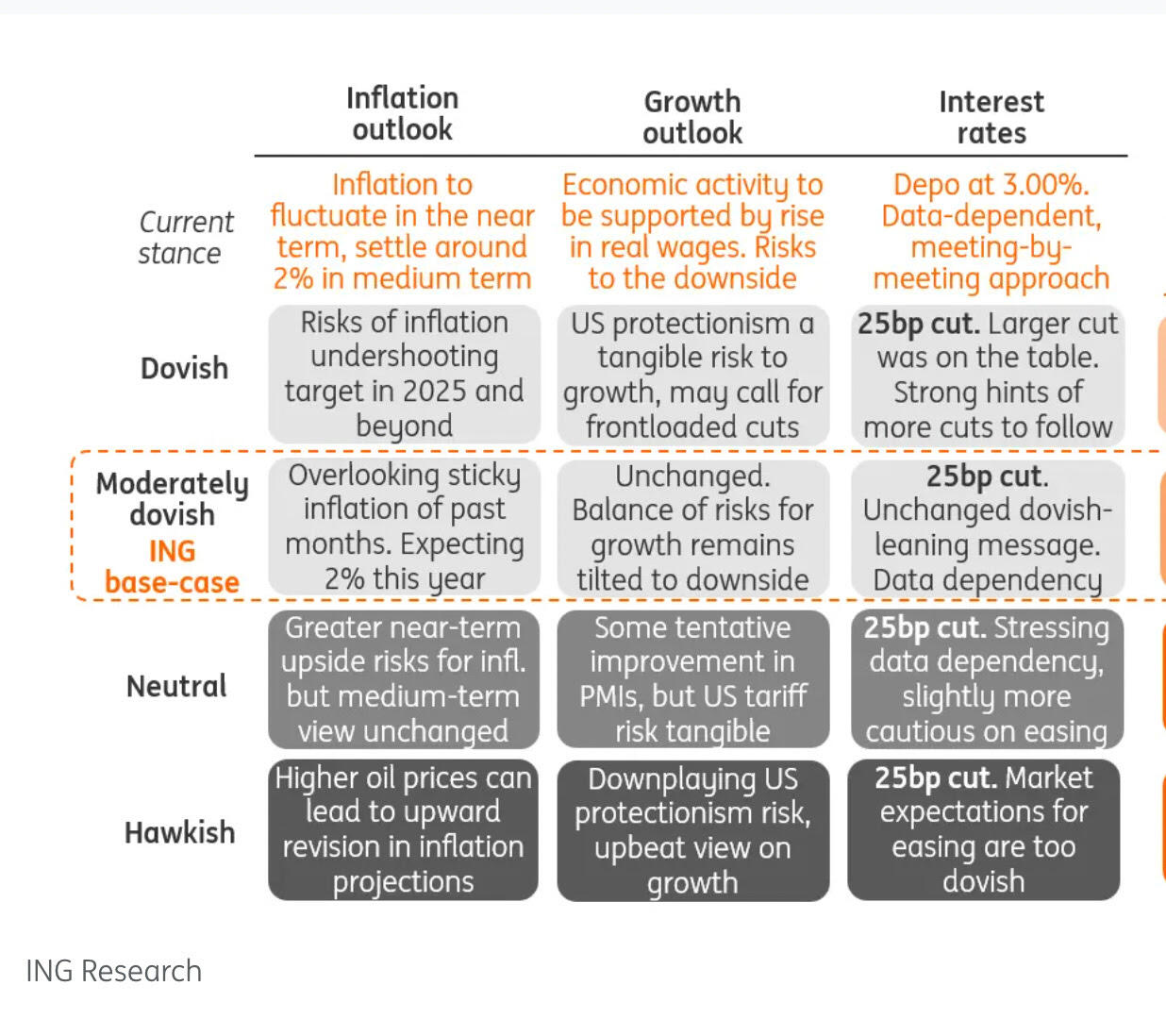
I've already shared my expectations for the ECB's upcoming decision in this morning's Asia open note, but I always find reviewing ING Bank's insights valuable. They've recently released their ECB cheat sheet, analyzing four potential scenarios ahead of Thursday’s policy meeting.
What is the Jevon Paradox? Satya Nadella explains, ‘As AI becomes a commodity, its energy demands will skyrocket!’
Microsoft CEO Satya Nadella describes the Jevons Paradox, an economic concept in which increased efficiency in using a resource leads to a greater overall consumption rather than less. In the context of AI, Nadella highlights that as AI technologies become more efficient and accessible, their usage is likely to increase significantly. This phenomenon could transform AI into a ubiquitous commodity integral to numerous industries and tasks.
This paradoxical effect implies that as AI becomes capable of performing tasks more efficiently and is adopted more broadly, the demand for the resources needed to power AI—like computational power and energy—might actually increase. While this makes AI more entrenched in our daily lives and industries, it also raises concerns about sustainability and resource consumption, suggesting that advancements in AI could drive a higher overall resource use despite their efficiencies.
Author
Stephen Innes
SPI Asset Management
With more than 25 years of experience, Stephen has a deep-seated knowledge of G10 and Asian currency markets as well as precious metal and oil markets.

















