Tariffs remain front and centre this week
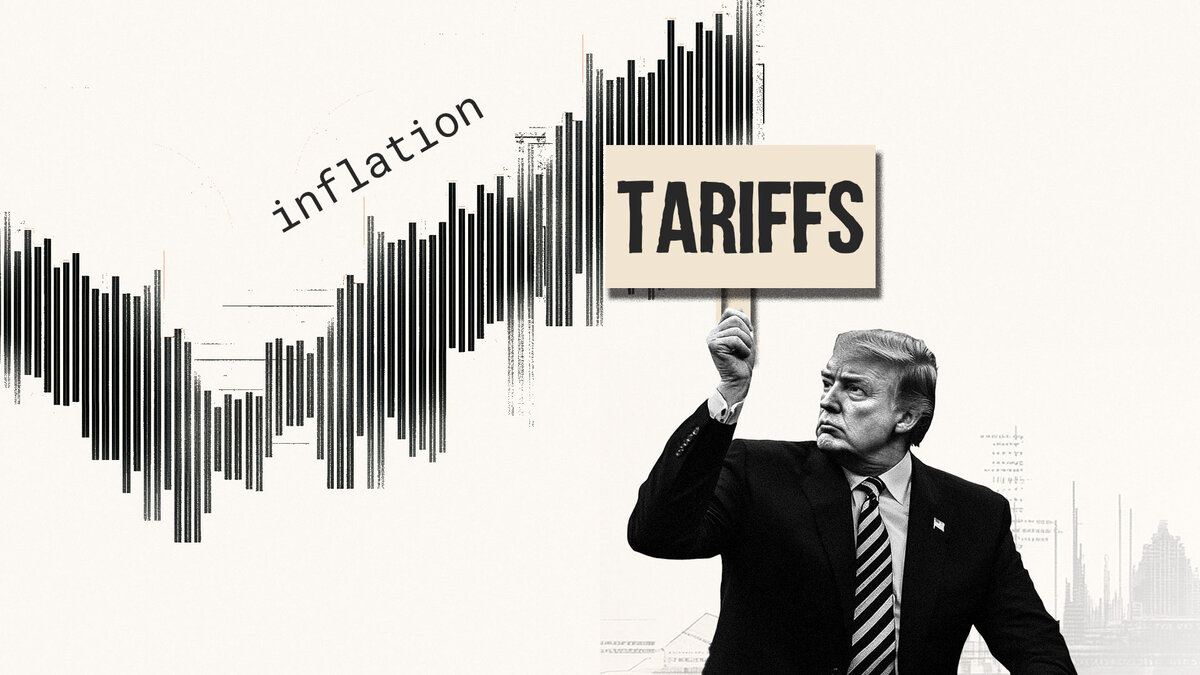

Traders unwound dollar (USD) exposure last week amid US President Donald Trump’s back-and-forth tariffs, which threaten to undermine confidence in US assets and the economy. While a 90-day tariff reprieve has been granted to most nations, the escalating trade tensions between the US and China pressure global supply chains, potentially fuelling inflationary pressures and slowing economic growth.
Another week, another round of tariffs
For the Research Team here last week, it was a case of ‘Another Day, Another Tariff’. Frankly, many market participants – myself included – struggled to keep up.
Following ‘Liberation Day’ earlier this month – an event that saw Trump impose 10% baseline tariffs on all nations and higher levies on approximately 60 countries – the President staged a considerable U-turn last week, pausing higher tariffs for 90 days and applying a 10% blanket tariff on all non-retaliatory countries. Of course, while this was welcomed news – and risk assets demonstrated their relief – we are far from free-trade bliss.
The US and China remain at loggerheads after Trump excluded China from the temporary halt and increased tariffs to an eye-popping 125% on goods exported to the US, following Beijing’s 84% duties on all US imports. The tit-for-tat exchanges escalated in the second half of the week, with the US imposing a tariff rate of 145% on Chinese imports, to which China responded by slapping the US with 125% tariffs. However, according to a policy release from the Ministry of Finance (MoF) last Friday, China stated they will now ignore the US. The MoF noted: ‘At the current tariff level, there is no market acceptance for US goods exported to China. If the US continues to impose tariffs on Chinese goods exported to the US, China will ignore it’.
Amid the ongoing uncertainties between the US and China, the economy is facing ‘considerable uncertainty’, according to Jamie Dimon, the CEO of JPMorgan Chase. Economists at JPMorgan also estimate a 50/50 chance of a recession occurring. Additionally, Larry Fink, the Chairman and CEO of BlackRock, has indicated that the US may already be in a recession.
Unfortunately, this tit-for-tat US-China trade theme is unlikely to be resolved anytime soon. I do not see China backing down to the US – despite problems at home – and the Trump administration has been downplaying the market impact; it is fair to say that uncertainty will remain high and markets are on edge.
This week’s focus?
Last week’s macro slate revealed softer-than-expected US inflation on both the consumer and producer side, though the market’s reaction was limited and did little to slow the rise in US Treasury yields. It is also worth mentioning that consumer sentiment data released from the University of Michigan came in much cooler than expected, and inflation expectations surged.
For many traders worldwide this week, despite the long Easter weekend ahead and the focus remaining on tariff developments, the upcoming week does not lack tier-1 macro drivers. In addition to updates from the European Central Bank (ECB) and the Bank of Canada (BoC) this week, US retail sales numbers will be closely watched, inflation data from the UK, Australia, and New Zealand will also make the airwaves, as well as employment data from the UK and Australia.
Kicking off with the US, retail sales data are out on Wednesday at 12:30 pm GMT and are forecast to have firmed between February and March, up 1.4% from a meagre 0.2%. Excluding autos, retail sales are also expected to tick higher to 0.4% from 0.3%. According to a ‘Consumer Checkpoint’ report from the Bank of America: ‘The import content of consumer goods and services is substantial, raising the risk of price rises from higher tariffs. In Bank of America data we find some evidence that consumers were buying durables ahead of the introduction of tariffs. The evidence is strongest in autos sales’.
Regarding central banks, the BoC is making a show on Wednesday. As of writing, markets are currently pricing in 11 bps of easing (about a 43% chance that the central bank will reduce the overnight rate by 25 bps to 2.50%). I feel it is about a 50/50 chance that the BoC will pull the trigger again at this week’s meeting – the central bank has cut rates in its last seven meetings. Economic activity growing at an annualised pace of 2.6% in Q4 24, up from 2.2% in Q3 24, and headline year-on-year (YY) inflation rising by 2.6% in February (note that the March CPI inflation data will hit the wires on Tuesday) suggests the bank could hold the overnight rate at 2.75% this week. On the other side of the fence, the BoC, like many other central banks, are working in uncertain times and could opt to reduce its interest rate given the uncertainty Trump’s tariffs bring to Canada’s economy. According to Statistics Canada, the country is a dominant trading partner to the US, with over 75% of its exports sent to the US.
We also have the ECB up on Thursday. Swaps traders are fully pricing in that the ECB will reduce all three benchmark rates by 25 bps; a cut this week would lower the deposit rate to 2.25%. Unlike in Canada, eurozone inflation has continued to trend in the right direction (inflation eased to 2.2% in March on a YY basis, marking the lowest rate since late last year). Although the European Union now face lower-than-expected US tariffs, the central bank is expected to step in and shore up the economy amid risks to growth.
Market outlook
The first full trading week of April wrapped up with the USD taking a solid hit to the midsection, down 3.0% according to the USD Index; this was despite a rally in US Treasury yields across the curve. In the equity space, US indexes teetered in and out of bear market territory but ultimately finished the week positively, and Spot Gold (XAU/USD) chalked up a one-sided move to fresh all-time highs of US$3,245.
The USD Index ended the week shaking hands with monthly support between 98.72 and 99.67, though daily charts suggest further underperformance to at least 98.58. The rebound in the S&P 500 still has some room to manoeuvre according to the technical picture, targeting daily resistance from 5,570, while Gold shines the spotlight on two daily support levels to watch this week: US$3,148 and demand from US$3,000-US$3,058.
While monitoring the upcoming macro events closely is important, most of the data this week will take a backseat to any developments regarding tariffs.
Author
Aaron Hill
FP Markets
After completing his Bachelor’s degree in English and Creative Writing in the UK, and subsequently spending a handful of years teaching English as a foreign language teacher around Asia, Aaron was introduced to financial trading,

















