Tariff Check: Import and Export Prices by Region



Trump imposed tariffs to make imports more expensive and fuel exports. Let's check the results.
Earlier today, I noted an Unexpected Plunge in Export Prices.

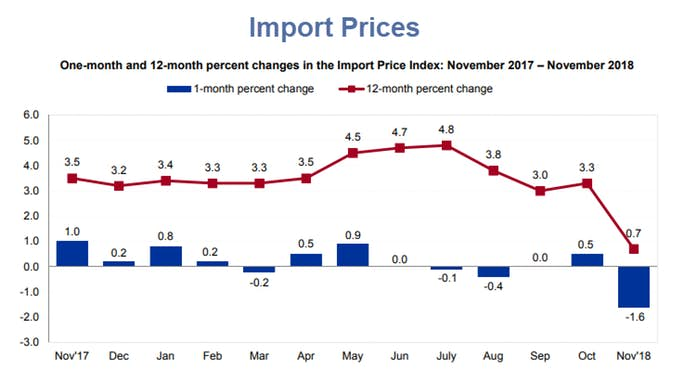
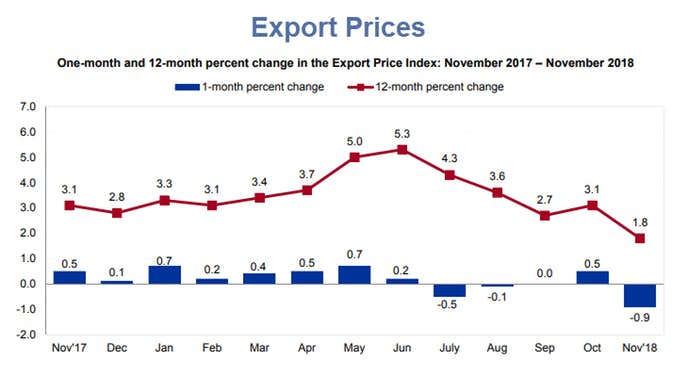
A second item caught my attention. In addition to overall pricing levels, the BLS report on Import and Export Prices also gives regional details. Here are the two charts once again.
Import Prices
Export Prices
Imports by Locality of Origin: The price index for imports from China edged down 0.1 percent in November, after falling 0.3 percent the previous month. A decrease in the computer and electronic product manufacturing price index was a primary contributor to both the November and October declines. Prices for imports from China have not recorded a monthly rise since ticking up 0.1 percent in May and fell 0.3 percent for the year ended in November. Import prices from Japan decreased 0.1 percent in November following a 0.1-percent increase in October. The price index for imports from Japan rose 1.2 percent over the past year. In November, prices for imports from Canada declined 3.4 percent, from Mexico 1.4 percent, and from the European Union 0.5 percent. Lower petroleum prices in November contributed to the declines in each of the indexes.
Exports by Locality of Origin:Prices for exports to China edged down 0.1 percent in November following a 0.8-percent advance in October and a 1.7-percent decline in September. The price index for exports to Japan recorded no change in November, after a 0.2-percent advance and a 0.3-percent decrease in the previous 2 months. Export prices to Canada rose 0.3 percent in November. The price index for exports to Canada has not recorded a monthly decline since July. Prices for exports to the European Union fell 0.4 percent in November, after rising 0.4 percent in October. Export prices to Mexico decreased 1.3 percent in November following a 1.1-percent increase the previous month. The November declines for the price indexes for exports to the European Union and Mexico were both the largest 1-month drops since the indexes were first published in December 2017.
The BLS cites the decline in petroleum as a factor. Notably, the "November drop was the largest 1-month decline since the index fell 15.6 percent in January 2016."
OK, but petroleum prices had been rising most of the year. Yet, "Prices for imports from China have not recorded a monthly rise since ticking up 0.1 percent in May."
Soybean Exports Collapse

China says it will buy more soybeans. Hooray?
Let's now turn our attention to another tariff mitigation tactic: Foreign Exchange.
Yuan Weekly Chart

Trump's Trade War With China: The US is Not Winning
Finally, please consider Trump's Trade War With China: The US is Not Winning.

Author
Mike “Mish” Shedlock's
Sitka Pacific Capital Management,Llc

















