Supply chain constraints evident in third quarter GDP data

Summary
Real GDP grew only 2.0% at an annualized rate in the third quarter, which marked a significant downshift from the rate of growth that the economy posted in the first half of the year. Supply chain constraints, which are causing many prices to rise sharply and making many goods simply unavailable, were evident in the underlying details. The only saving grace was that inventories did not decline as much in the third quarter as they did in Q2. Without that positive contribution from inventories, the U.S. economy would have essentially stalled in the third quarter.
Looking forward, we expect that growth will rebound, albeit not to the pace seen earlier this year, as supply chains become unglued. The need to restock empty shelves and continued resilience in consumer spending should underpin spending growth. Butunblocking supply chains will take time. We look for the rate of consumer price inflation, which rose to a 31-year high in the third quarter, to slow next year. But we also do not think that it will recede all the way back to 2%, as some policymakers at the FederalReserve expect.
Consumer spending on goods declined sharply in Q3
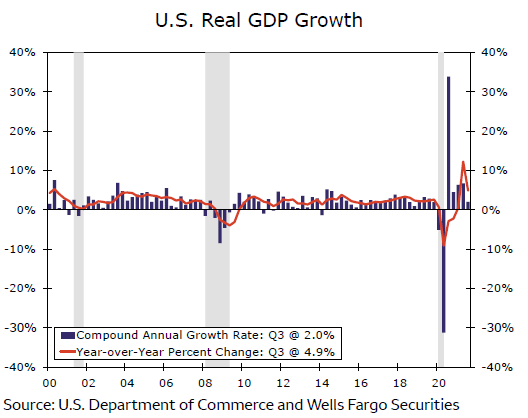
Data that were released this morning showed real GDP in theUnited States grew at an annualized rate of 2.0% in Q3-2021relative to the previous quarter (see chart). Not only was the outturn a bit weaker than the consensus forecast of 2.6% had anticipated, but it also represented a significant downshift from the growth rates in excess of 6% that were registered in the first two quarters of the year. Moreover, most of the individual spending components were rather anemic.
In that regard, real personal consumption expenditures (PCE) edged up only 1.6% (annualized) in the third quarter while fixed investment spending slipped 0.8%. Although real personal spending on services was rather strong, growing 7.9% on a sequential basis in Q3, real spending on goods tumbled over 9%. As we have written on many occasions, consumer spending on goods in the quarters following the onset of the pandemic had been robust, so some payback was to be expected. But the sharp rise in goods prices over the past year or so and supply chain constraints, which are making many goods essentially unavailable, likely are weighing as well on consumer spending on goods.
As flagged yesterday by preliminary trade data for September, real exports of goods and services declined 2.5% in Q3. So real final sales, which measure growth in real PCE, fixed investment, government spending, and real exports, were essentially at in Q3. The only saving grace was that inventories did not fall nearly as much in the third quarter as they did in Q2. Indeed, inventories added 2.1 percentage points to top-line GDP growth. Without that contribution, the U.S. economy would have completely stalled in the third quarter.
Author
Wells Fargo Research Team
Wells Fargo

















