|

$SPY: Elliott Wave Impulse Simple Rule Imply Bulls are Still in Control

The Elliott Wave Theory is famous for the 5 waves advance and 3 waves declined, as we are showing in the following chart:
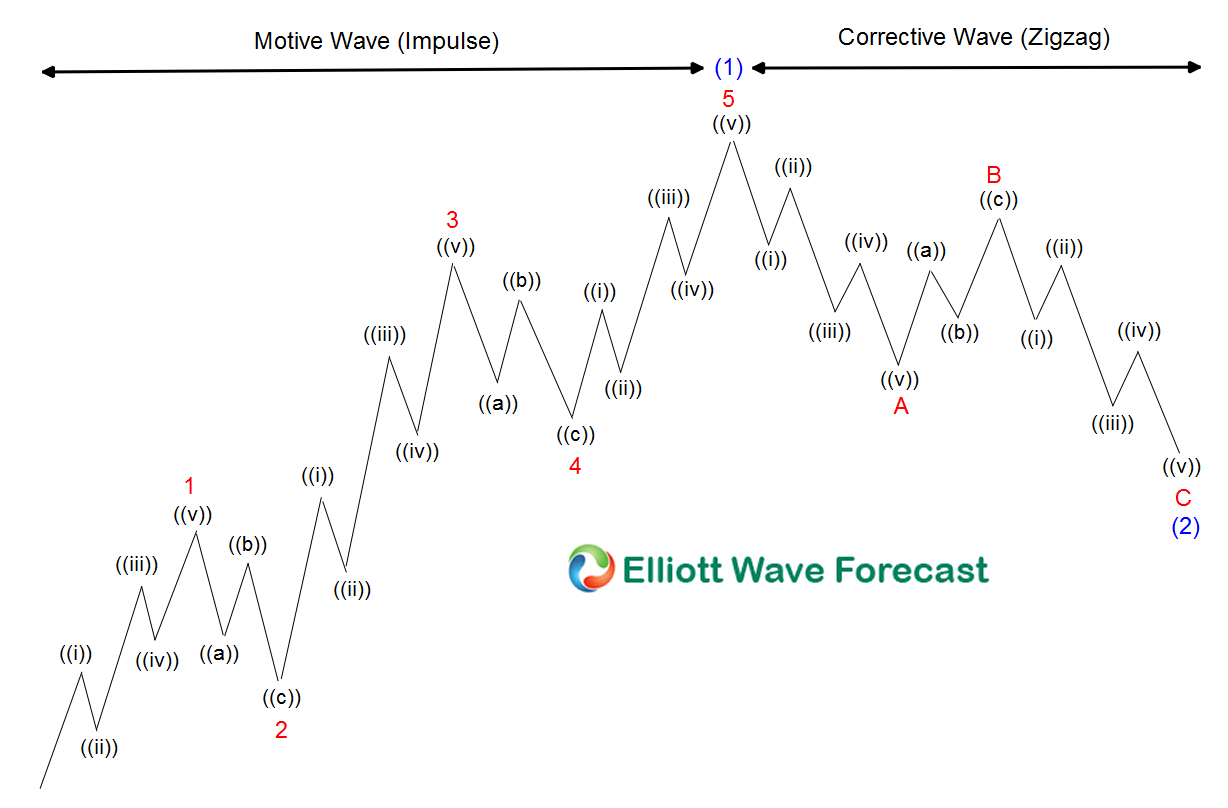
Elliott Wave

As we can see, there are 5 waves up, which each one comes with the subdivisions of 5 wave structure. Most of the trades are able to see and understand the idea. But there are other details within the pattern, which are as important, as the simple 3 rules :

1: Wave 2 cannot pass the beginning of wave 1.

2: Wave 3 cannot be the shortest.

3: Wave 4 can not overlap the peak of wave 1.

We at elliottwave-forecast.com always look at more tools and details to keep members on the right side and not enter traders against the main trend. One of those details is the Elliott Wave Channels. The Channels are a great tool to know when a cycle has ended helping traders to enter the wrong side of the Market and get trapped for the 5 waves advances. In Elliott Wave Theory there are extensions which happen in one of the 3 main impulses within the higher degree impulse, as we showing in the following chart:

Elliott Wave

As we can see, there is wave 1 extension. Wave 3 extension or wave 5 extension. Sometimes trades see the 5 waves and start selling premature and get caught at the wrong side.

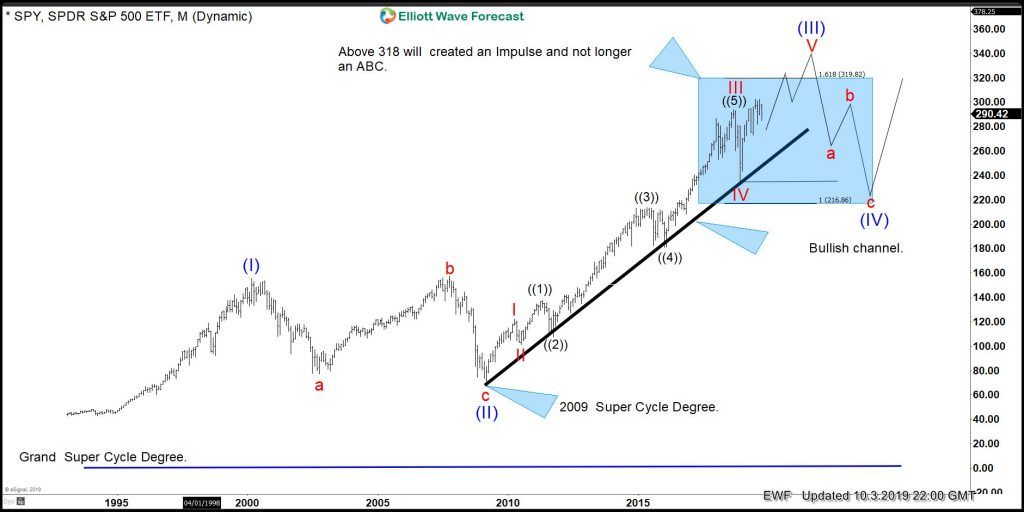
The Following Chart of $SPY:
SPY

The $SPY Monthly chart which is showing a very nice 5 waves since 2009, which is tenting many traders to sell the Index without any indication that any top is in place. If we look at the Blackline is the bottom part of the channel and consequently saying that the Bulls are in control. Therefore, we don't need to pick a top, not even to called wave (III) in place. Sometimes little details are overlooked and traders ending losing money. Learn that picker gets it wrong 9 times and right only 1. We would rather get it right 9 and wrong 1.

Author

Elliott Wave Forecast Team

Elliott Wave Forecast Team

ElliottWave-Forecast.com

More from Elliott Wave Forecast Team
Share:

Editor's Picks

EUR/USD holds losses near 1.1850 as US, China holidays keep trade muted

EUR/USD opens the week on a softer note, trading near 1.1860 during the Asian session on Monday. Activity is likely to remain muted, with United States markets closed for the Presidents’ Day holiday, while Mainland China is also shut for the week-long Lunar New Year break.

GBP/USD flat lines as traders await key UK macro data and FOMC minutes

The GBP/USD pair kicks off a new week on a subdued note and oscillates in a narrow range, just below mid-1.3600s, during the Asian session. Moreover, the mixed fundamental backdrop warrants some caution for aggressive traders as the market focus now shifts to this week's important releases from the UK and the US.

Gold remains below $5,050 despite Fed rate cut bets, uncertain geopolitical tensions

Gold edges lower after registering over 2% gains in the previous session, trading around $5,030 per troy ounce during the Asian hours on Monday. However, the non-interest-bearing Gold could further gain ground following softer January Consumer Price Index figures, which reinforced expectations that the Federal Reserve could cut rates later this year.

Week ahead: Data blitz, Fed Minutes and RBNZ decision in the spotlight

The US jobs report for January, which was delayed slightly, didn’t do the dovish Fed bets any favours, as expectations of a soft print did not materialize, confounding the raft of weak job indicators seen in the prior week.

Global inflation watch: Signs of cooling services inflation

Realized inflation landed close to expectations in January, as negative base effects weighed on the annual rates. Remaining sticky inflation is largely explained by services, while tariff-driven goods inflation remains limited even in the US.

Ripple Price Forecast: XRP potential bottom could be in sight

Ripple edges up above the intraday low of $1.35 at the time of writing on Friday amid mixed price actions across the crypto market. The remittance token failed to hold support at $1.40 the previous day, reflecting risk-off sentiment amid a decline in retail and institutional sentiment.













