SNB: Still the same old policy
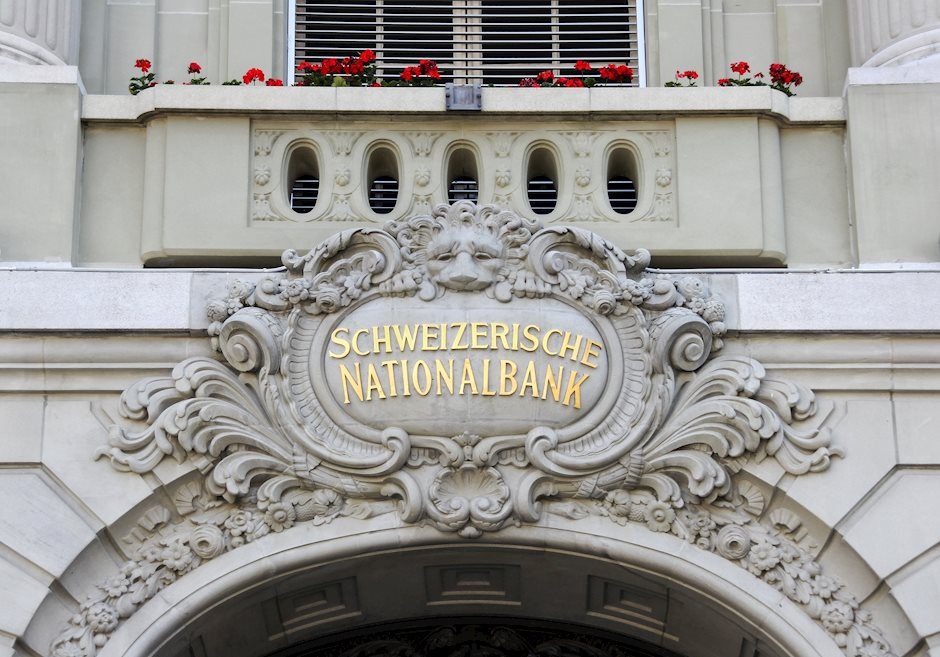

The Swiss National Bank has not changed its monetary policy or its willingness to intervene in the foreign exchange markets. The US Treasury report categorising Switzerland as a currency manipulator is not expected to change the SNB's behaviour.
Monetary policy unchanged
The SNB decided not to change its monetary policy in December. It still maintains its interest rate at -0.75%, the lowest level in the world. It also still considers the Swiss franc to be "highly valued" and is prepared to increase its intervention in the foreign exchange market if necessary.
Growth revised upwards, inflation downwards
The SNB's growth forecasts have been revised upwards for 2020, thanks to the strong rebound in the third quarter. It is now forecasting a 3% contraction in GDP over the year, compared with a forecast of -5% in September. For 2021, it believes that the restrictive measures put in place to fight the pandemic cannot be lifted before the spring. It forecasts Swiss GDP growth of 2.5 to 3% for 2021 as a whole.
Despite an upward revision to growth forecasts, the inflation forecast has been revised down. The SNB now expects inflation to be at -0.7% in 2020 and 0% in 2021 (compared to -0.6% and 0.1% previously forecast). The forecast for 2022 has not been changed but remains at the incredibly low level of 0.2% for the year. Finally, the forecast for the first three quarters of 2023 suggests that inflation will not rise much higher than 0.5% that year. This low inflation is above all a consequence of the strength of the Swiss franc, which is pushing down the price of imports. This explains the need for the SNB to maintain negative rates and exchange rate intervention. These extremely low inflation forecasts are, for us, a sign that monetary policy will remain expansionary, as it is at present, for the next few years. No monetary tightening is to be expected between now and then.
Manipulator?
Yesterday, Switzerland was designated a currency manipulator by the US Treasury. This is not surprising, given that Switzerland violates all three criteria set by the US. In the four quarters up to June 2020, Switzerland's bilateral trade surplus with the US amounted to $49 billion ($20 billion limit), its current account surplus was 8.8% of GDP (2%) and its foreign exchange market intervention was 14.2% of GDP (2%).
We believe that this designation will have no impact on the SNB's monetary policy in the coming years and that it will continue to conduct its current policy. In fact, given the level of inflation, it has little choice but to intervene regularly in the foreign exchange market to weaken the Swiss franc. If the US report were to raise doubts among investors about the SNB's willingness, and thus lead to a strengthening of the Swiss currency, we believe the SNB would have no choice but to reinforce its message even more and intervene further in the foreign exchange market.
In the end, this report could complicate the SNB's task a little if it leads to uncertainty, but it will probably have no impact on monetary policy and the intervention it makes in the foreign exchange market, if not increase that intervention even further.
Read the original analysis: SNB: Still the same old policy
Author
ING Global Economics Team
ING Economic and Financial Analysis
From Trump to trade, FX to Brexit, ING’s global economists have it covered. Go to ING.com/THINK to stay a step ahead.

















