SNB Preview: Firing up the franc? Currency war, 3 other reasons, imply massive 100 bps hike
- The Swiss National Bank is set to raise interest rates by 75 bps to +0.25% in September.
- Inflation aversion, scarcity of meetings and catching up with other banks imply an even bigger move.
- Comments about the exchange rate will also be eyed.
- The franc is set to gain ground across the board, and indirectly impact the pound.

The Swedes have done it, and so can the Swiss – a quadruple-sized, 100 bps cannot be ruled out, and it could rock markets. Economists expect the Swiss National Bank (SNB) to raise rates from -0.25% to 0.50%, but I will argue why I think they could go further.
Four reasons to go big
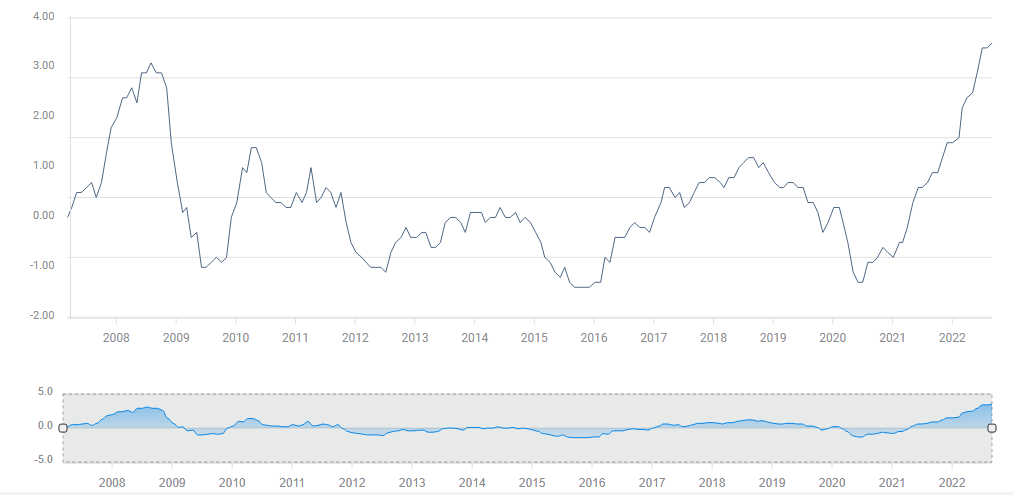
The first place to look for high expectations is inflation, which has risen to the highest in over a decade – yet the obvious reason is not the real one:
Source: FXStreet
1) Pressures regarding inflation: The chart looks impressive, but inflation in Switzerland is only 3.5% YoY. Yes, that is headline inflation, not core. In the eurozone, which surrounds the country in the Alps, the Consumer Price Index is around 9%, and in the UK it has just dipped under 10%.
Nevertheless, the Swiss are averse to price rises, and as the public owns the bank, the bankers need to listen. The government influences the SNB in another way – by publishing updated forecasts. That adds to pressure on the SNB.
2) Currency war: The neighbors, near and far, are a good reason to raise rates. As part of central banks' efforts to depress inflation, they need to keep their currencies strong, lowering the costs of imported goods such as energy. Weakening the currency was the name of the game in the previous decade – now it is the other way around.
Officials at the European Central Bank have been coming out in a chorus, calling for further rate hikes. And while the Swedish economy is relatively small, Stockholm's decision may indicate the path forward for other central banks.
The SNB announces its decision less than a day after the US Federal Reserve makes public its decision. A hawkish message from Fed Chair Jerome Powell could also convince policymakers in Switzerland to push the envelope.
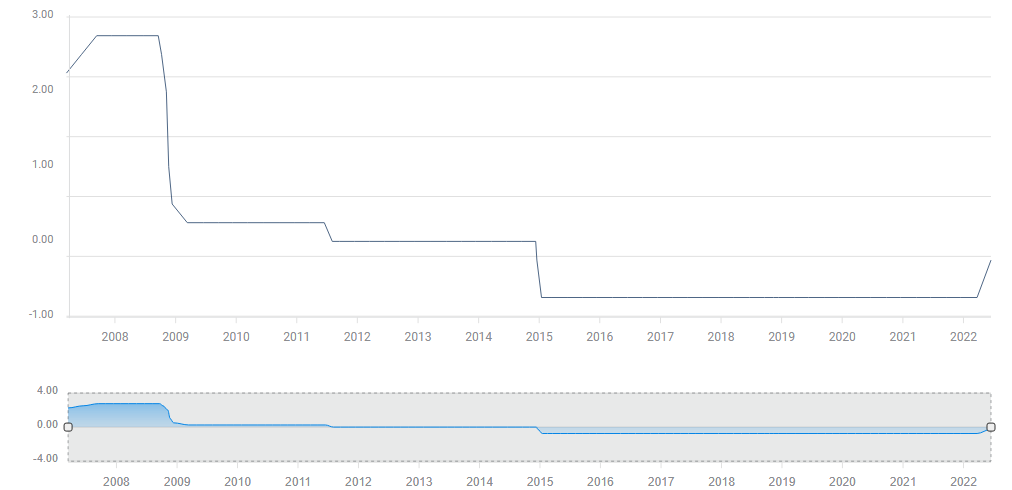
3) Room to run and surprise: The SNB has more catching up to do – the current negative rate means the SNB's policy is still ultra-loose. It is time to shift gears.
Source: FXStreet
Moreover, SNB Chairman Thomas Jordan is fearless regarding surprising markets. He shocked investors with a 50 bps hike in June. It came out of the blue. Back in 2015, he abandoned the bank's EUR/CHF peg, decimating forex brokers.
4) Rarity of rate decisions: Most central banks announce rate decisions eight times a year, or roughly every six weeks. Some change their policy every month. The SNB is different, holding scheduled decisions only four times per year, which makes every decision more significant.
With inflation rising rapidly, the SNB could opt for a bigger rate increase now – as part of catching up with others and also to avert an unscheduled rate decision. Front-loading now could prevent aggressive action later on.
CHF impact and comments about the exchange rate
With economists expecting a 75 bps hike, the initial response depends on the new interest rate. A 100 bps move to +0.75% as I expected, would boost the Swiss franc. A 75 bps move could trigger a minor "buy the rumor, sell the fact," and a highly unlikely 50 bps move to only +0.25% would send the franc melting like Swiss chocolate.
As always, and especially in case of an "as expected" outcome, the bank's statement is also critical to the next moves. If the SNB vows to keep raising rates to fight inflation, it will support the franc, while a more nuanced "wait and see" approach would weigh on it.
But perhaps in the SNB's case, comments on the franc's value are the most valuable for the currency. Back in June, the bank said that it no longer sees the franc as overvalued – that statement added extra oomph to the rally.
Does it still see the franc as fairly valued? If so, it could continue rising. If it warns against overvaluation, fears of intervention could weigh on the franc.
Final thoughts
The SNB has a good chance of shocking markets with a big, 100 bps rate hike in its September meeting, boosting the franc. The reaction depends on the change to borrowing costs but also comments about future moves and the exchange rate.
As the Swiss watch the Swedes, the Brits watch the Swiss – the Bank of England announces its decision 3.5 hours after the SNB. A hawkish move from Switzerland could boost the pound, raising expectations for a more aggressive BOE hike. That could turn into a "buy the rumor, sell the fact" response in the pound.
Author

Yohay Elam
FXStreet
Yohay is in Forex since 2008 when he founded Forex Crunch, a blog crafted in his free time that turned into a fully-fledged currency website later sold to Finixio.

















