SNB first G10 bank to cut rates

In focus today
It should be a quiet finish to a very busy week for macro news. Today we will get the second wage tally from the Japanese "spring wage offensive". It will be interesting to see if the solid pay hike in big business has rubbed off more broadly.
Today we also look out for German ifo data for March.
Economic and market news
What happened overnight
Japanese CPI excl. fresh food rose to 2.8% y/y in February (prior: 2.0%), in line with polls, and affected by base effects due to energy subsidies last year. Stripping away energy, the "core-core" CPI, which the BoJ closely monitors, moderated to 3.2%. The BoJ will be closely watching whether they are right that sustained inflation near the 2% target has been reached after hiking earlier this week.
What happened yesterday
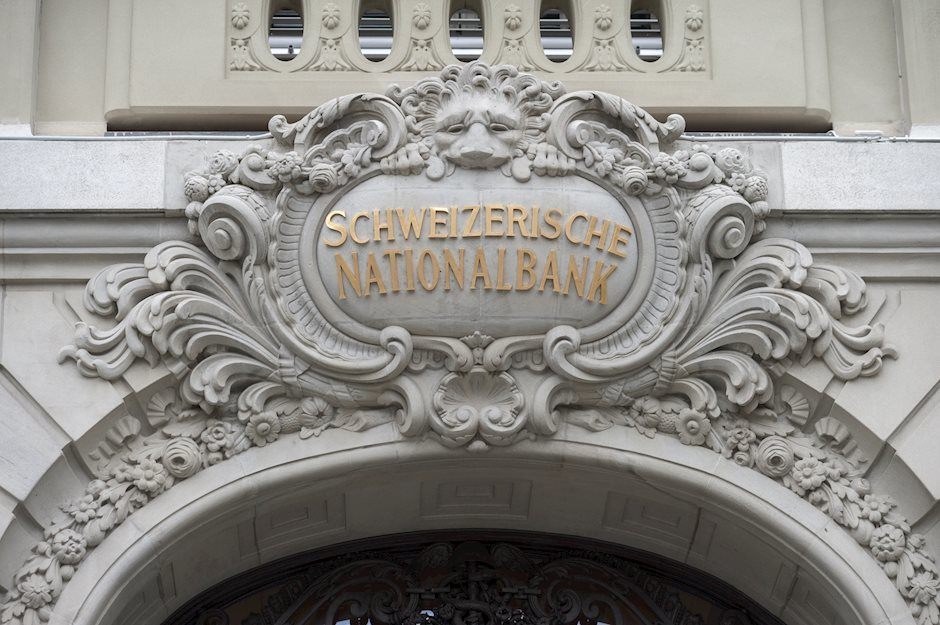
The SNB delivered a 25bp rate cut to 1.50%, in line with our expectations, and cited reduced inflationary pressure and a strong CHF, as well as materially lower inflation projections. Consensus was for a hold and markets sent the EUR/CHR higher during the day with the cross up 0.8% as of last night. The SNB is the first of the G10 central banks to lower rates, so this could be the start of a global rate-cutting cycle.
The BoE maintained the Bank Rate at 5.25% in line with consensus, but the committee gave dovish signals as Mann and Haskel (hawks) voted for unchanged rather than their previous hike-stance.
Norges Bank also maintained the policy rate as expected and maintained guidance for a first rate cut in September. We got a slightly hawkish surprise however, with Norges Bank upgrading the medium-term growth outlook and lifting the 25/26-part of the rate path. The NOK gained on release and traded higher during the day.
Euro area PMIs painted a mixed picture, with the service PMI remaining in growth territory, and beating expectations at 51.1 (cons: 50.5), while the manufacturing contraction worsened with the PMI at 45.7 (cons: 47.0). However, the underlying indicators showed an improvement in output, employment, and new orders, so things are not as bad as the headline numbers suggest.
US PMIs were largely in line with expectations, with the manufacturing outlook improving and service activity growth weakening a tad. Yields and the USD edged slightly higher upon release as the data showed an uptick in price indices.
Equities: Global equities were higher yesterday, heading for a very strong week and another set of all-time highs in several indices. Yesterday, a cyclical value driven outperformance with small caps also outperforming large caps. In other words, it could not have matched our strategy better although there were some macro signals which did not fully match our expectation. In US Dow +0.7%, S&P 500 +0.3%, Nasdaq +0.2% and Russell 2000 +1.1%. Asian markets are mostly lower this morning led down by China. Japanese stocks go against the trend as USD/JPY approaches 152. US futures are marginally higher this morning while European futures are mixed.
FI: European bond yields ended the trading with a modest decline in the long end and very modest curve steepener after the rate cut by the Swiss National Bank (SNB) and a dovish statement from Bank of England. 10Y US Treasury yield also declined yesterday but bounced back in the afternoon. Hence, the overall picture is that global central banks are looking towards a rate cut in June, although Norges Bank was a bit more hawkish than expected and here we are looking towards a rate cut in September.
FX: The SNB surprised markets, but not us, and cut its policy rate yesterday, which triggered a sharp sell-off in CHF. GBP followed CHF lower as the BOE, while keeping rates unchanged, struck a more dovish tone. NOK also lost some ground yesterday even though Norges Bank was a little less dovish than expected.
Author
Danske Research Team
Danske Bank A/S
Research is part of Danske Bank Markets and operate as Danske Bank's research department. The department monitors financial markets and economic trends of relevance to Danske Bank Markets and its clients.