Six Fundamentals for the Week: Tariffs, US Retail Sales and ECB stand out
- President Trump is set to clarify policies on consumer electronics after pausing tariffs on them.
- US Retail Sales may have jumped in March, as Americans anticipated the "Liberation Day."
- The ECB will likely cut interest rates, with investors speculating on the next moves.

"Nobody is off the hook" – these words by US President Donald Trump keep markets focused on tariff policy. However, some hard data and the European Central Bank (ECB) decision will also keep things busy ahead of Good Friday.
1) Tariffs saga set to continue rocking markets
Red light, green light, what's going on with tariffs? The latest is that the US will pause 145% duties on consumer electronics imported from China and 10% from anywhere else. The price of iPhones that are not already in the US will not rise – but only for a while. Trump said that these will move to another bucket.
This uncertainty is set to continue rattling investors, and the prospects of fewer imports into the US also means less recycling of money back into America. The pressure on the US Dollar (USD) will likely continue – and so will volatility.
However, this week could be calmer on the tariff front for several reasons. First, Trump 1.0 has returned, as he shows some sensitivity to stock valuations. That could delay or soften big announcements on new tariffs.
Secondly, Susan Collins, President of the Federal Reserve (Fed) Bank of Boston, signaled her institution will step in to help in times of trouble.
Even without extreme volatility like last week, the action is set to continue.
2) Chinese retail sales test Beijing's willingness to consume
Wednesday, 2:00 GMT. How is the world's second-largest economy doing? A slew of reports early on Wednesday will provide some answers. China will report the Q1 Gross Domestic Product (GDP), industrial output for March, and most importantly, retail sales data for last month.
Is China finally pivoting from investment and industry to services and consumption? The 4% rise in Retail Sales recorded in February was encouraging. Officials have been working to shore up the property markets, which should give people confidence to buy.
Economists expect an increase of 4.2% for March, a month in which some US tariffs came into full effect.
3) US Retail Sales may have jumped on pre-tariff buying
Wednesday, 12:30 GMT. Shortly after China releases its consumption data, the US publishes retail sales figures for March. Some two-thirds of the world's largest economy is centered around consumption.
According to consumer sentiment surveys, shoppers are depressed — but that does not mean they do not buy. Some wanted to seize the lower price in anticipation of higher prices due to tariffs.
The economic calendar points to an increase of 1.3% year-over-year expected for March, up from 0.2% recorded in February. The Retail Control Group – aka "core of the core" – jumped by 1% in February, and it may have come down now. This figure is critical for GDP calculations.
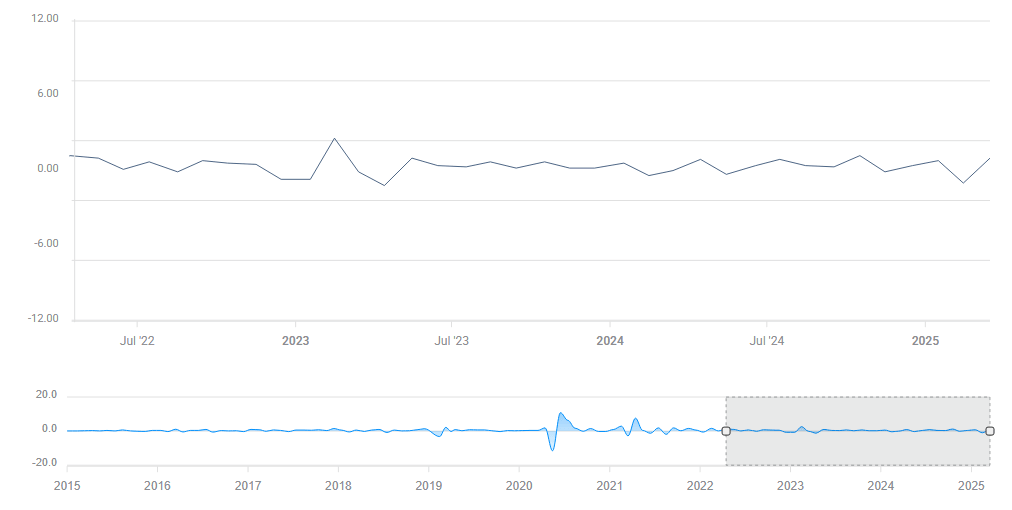
US Retail Sales Control Group. Source: FXStreet.
4) Fed Chair Powell may shift from inflation to supporting the economy
Wednesday, 17:30 GMT. Is the world's most powerful central banker worried? Fed Chair Jerome Powell last spoke on April 4, just two days after "Liberation Day," where he acknowledged that tariffs were higher than expected – but conveyed a calm message.
Since then, investors have become worried about recession risks – and there were some jitters in bond markets. The worries moved from higher inflation to concerns about a financial crisis.
So far, only his colleague Susan Collins said the Fed will be there to help. While investors expect the central bank to step in to prevent a financial freeze-up, hearing that from the man at the helm makes a difference.
Powell will also have last week's soft inflation figures to lean on – expressing less concern about rising prices.
5) ECB may signal more rate cuts are coming
Thursday, decision at 12:15 GMT, press conference at 12:45 GMT.
Eurozone inflation is falling, and that is a reason for the European Central Bank (ECB) to cut interest rates in its upcoming meeting. Officials have signaled that a reduction in borrowing costs is coming, and that is fully priced in.
But, what's next? Does Germany's massive defense spending imply more growth and faster price rises?
What about US tariffs? They push prices higher, but could it hurt the economy? What about the stronger Euro?
ECB President Christine Lagarde will likely refrain from any commitments, telling reporters that the bank awaits its next forecasts, due in June, before making the next decisions.
Nevertheless, it will be hard for Lagarde to calm ever-nervous markets, and any comments on tariffs could trigger high volatility.
I expect Lagarde to convey confidence and optimism about the continent's ability to cope with challenges – lifting the Euro.
6) US Jobless Claims may always spike
Thursday, 12:30 GMT. Sandwiched between the ECB's events, this weekly gauge of the labor market is watched more closely since Elon Musk took over the Department of Government Efficiency (DOGE). Firings at the federal level have not yet been felt in official figures. Will it happen this time? Data for the week ending on April 12 is expected to be similar to the 223K recorded on April 5.
Any jump above 240K would cause worries about a recession, while any figure under this level is unlikely to have any significant impact.
Final thoughts
While this should be a calmer week due to the Good Friday holiday and some retreat on tariffs, Trump's ability to grab the headlines should never be underestimated.
Premium
You have reached your limit of 3 free articles for this month.
Start your subscription and get access to all our original articles.
Author
Yohay Elam
FXStreet
Yohay is in Forex since 2008 when he founded Forex Crunch, a blog crafted in his free time that turned into a fully-fledged currency website later sold to Finixio.

















