Silver just hit a fresh 3-month low after the CPI. This chart shows why it's falling harder than Gold
Precious metals edged sharply lower on Wednesday following the release of hotter-than-anticipated United States (US) inflation. The Consumer Price Index (CPI) printed 3.7% YoY in September, pretty much doubling the Federal Reserve (Fed)´s goal of 2%. Excluding food and energy prices, the annual CPI hit 2.6%, not far below its 2026 peak of 2.9%.
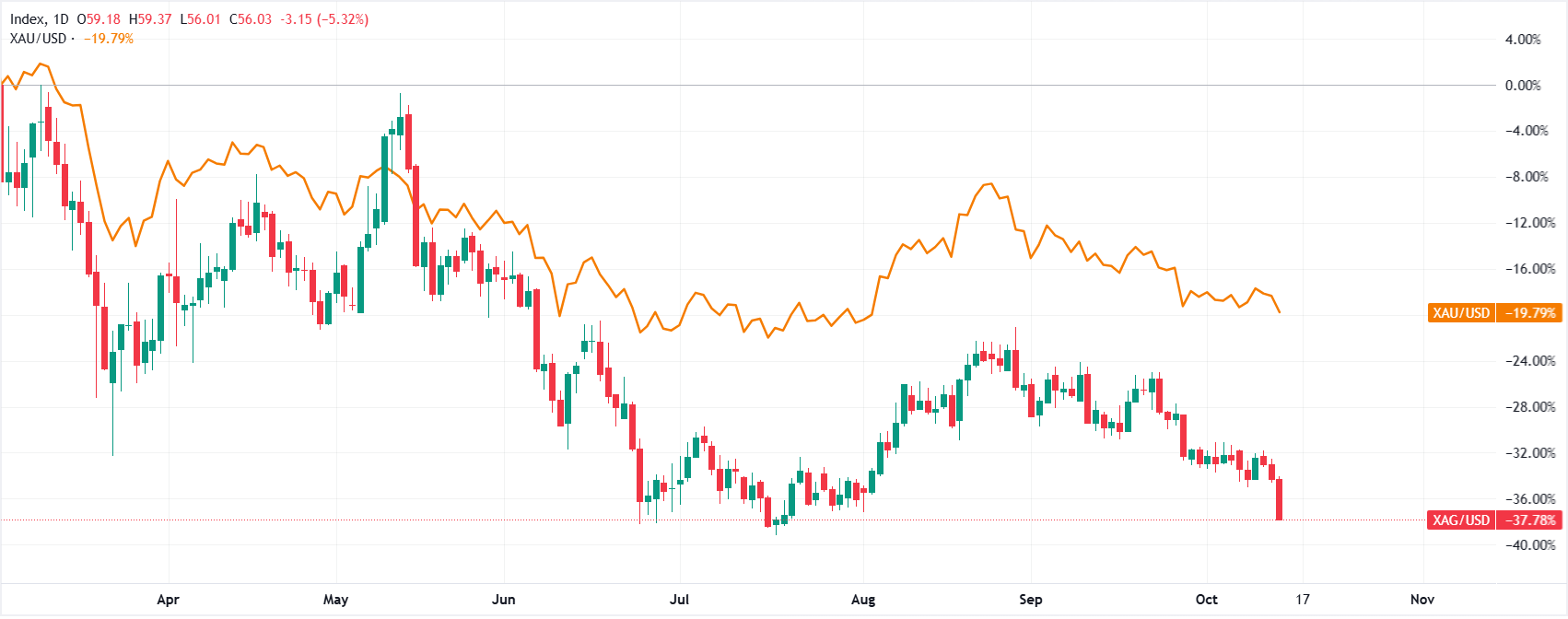
Silver (XAG/USD) dipped below $56, its lowest since July, and approaches the yearly low of $54.77. Gold (XAU/USD) price also fell, although it hovers around $4,100, holding above its yearly bottom at $3,942.
On a daily basis, Silver shed roughly 5.5%, while Gold shed a little over 1%. While their behavior is similar, as both swing with the rhythm of the US Dollar (USD), Silver has continued to weaken since mid June.
Rate cut odds are killing Silver
USD strength is tied to the Middle East war and its impact on energy prices. Fears of Oil supply shortages sent crude prices skyrocketing in early March, and they remain over 50% higher than pre-war levels. Fears of global-spread inflation have forced most major central banks to suddenly change course on monetary policy and rush into rate hikes.
Uncertainty surrounding the Persian Gulf crisis and its impact on consumer prices has boosted demand for safety, recently concentrated on government bonds. As a result, US Treasury yields stand at multi-year peaks, further supporting the Greenback’s safe-haven status.
Silver and Gold are also considered safe havens, but the biggest difference lies in the fact that Silver is not just a monetary metal, as roughly 55% of its annual demand is industrial, according to the Silver Institute’s World Silver Survey 2026. Silver is used in solar panels, electric cars, chips, and medical devices, yet it’s also an essential material in Artificial Intelligence (AI) hardware. Gold runs mostly on savings demand.
As rate-hike odds rise, Silver industrial demand suffers from fears of higher borrowing costs, which slow factory output. And that’s why Silver slides more than Gold.
There’s yet another factor weighing on Silver: manufacturers are decreasing Silver usage, particularly for solar panels. Solar PV silver demand fell 19% in 2026 to roughly 151 million ounces — the largest single-year reduction on record, according to the World Silver Survey 2026. The usage of the electrical and thermal conductivity metal, however, keeps growing, although not enough to compensate for contractions in the photovoltaic sector.
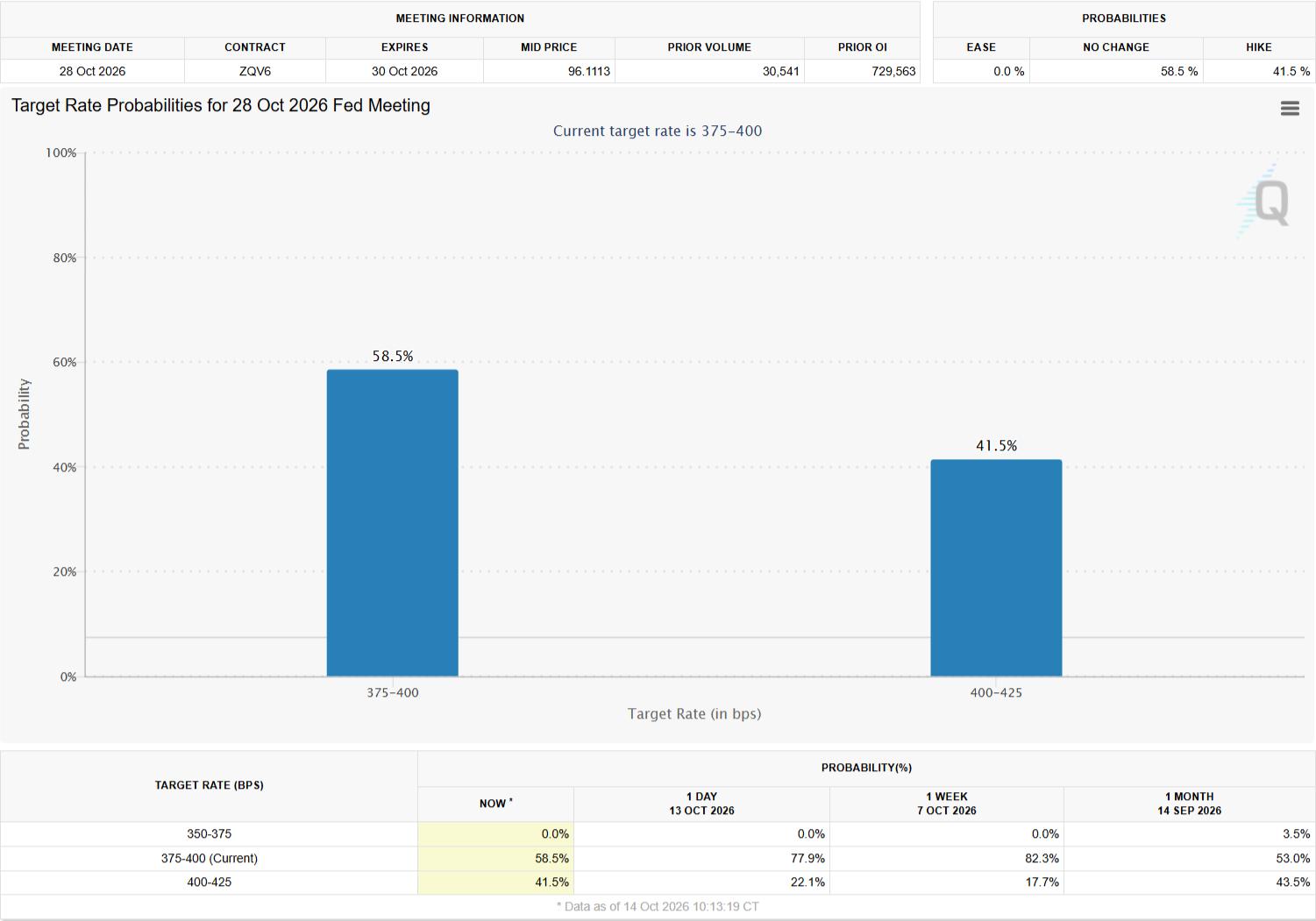
After the CPI release, odds of a Fed October rate hike rose from 22.1% to 41.5%. The odds for no change still stand above 50% but down from roughly 78%. Also, market participants are now lifting bets for a 50 basis points (bps) interest rate hike in December, should Fed Chair Kevin Warsh and co. decide to stay pat in October.
As long as investors pile up bets on upcoming Fed interest rate hikes, Silver will continue to suffer more than Gold.
Author

Valeria Bednarik
FXStreet
Valeria Bednarik was born and lives in Buenos Aires, Argentina. Her passion for math and numbers pushed her into studying economics in her younger years.

















