Robert F. Kennedy, Jr. announces sound money plank, tax exemptions
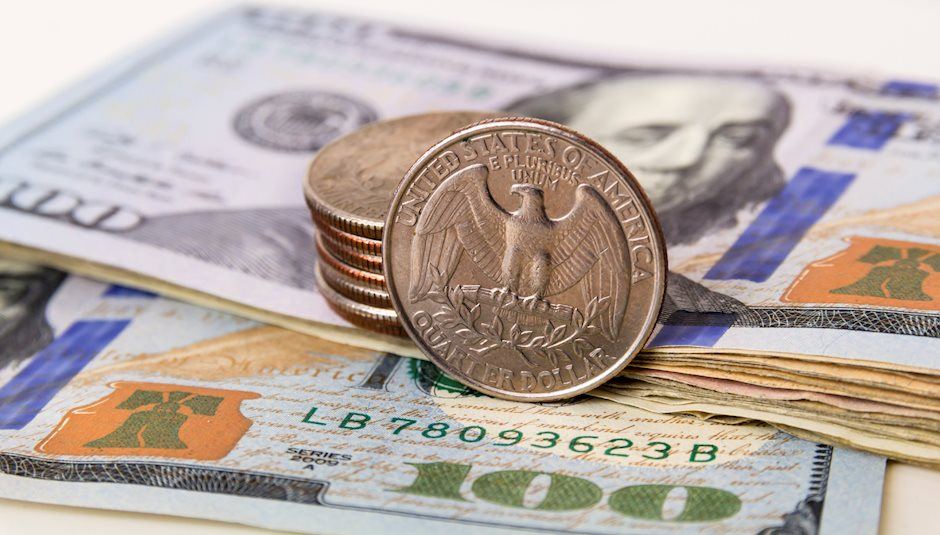

As the U.S. dollar continues to lose purchasing power at home and prestige around the world, a major presidential candidate is calling for a return to sound money.
Despite some constructive price action this month, it's still too early to conclude the summer doldrums are over. But there is a good chance that the seasonal lows for gold and silver have already been seen. If that's the case, then any pullbacks that do come in the weeks ahead could be shallow and short-lived.
As investors anticipate the Federal Reserve to soon declare an end to its rate hiking campaign, they will be looking to position themselves for an eventual pivot back toward monetary easing.
Although recent economic data has prompted many establishment economists and Wall Street cheerleaders to downplay the odds of a recession this year, it's only a matter of time until the next one comes. The warning signs from the interest rate market couldn't be clearer -- an inverted yield curve, unaffordable mortgages driving real estate sales volumes way down, and a tightening of credit available to consumers and small businesses.
We've seen this setup before. It almost always leads to a financial crisis of some sort. And that inevitably causes central bankers to try to come to the rescue with emergency liquidity -- also known as money printing.
These Fed-induced booms, busts, and bailouts are the consequence of a fiat monetary system that is no longer restrained by gold or any other sound backing.
Ever since President Richard Nixon severed the last official link between the U.S. dollar and gold in 1971, both Republican and Democrat administrations that followed have financed their favored domestic and foreign policy priorities by running up debt to unpayable levels.
The Biden administration is undeterred from continuing to borrow by the trillions because officials know they can count on central bankers at the Fed to buy government bonds in unlimited quantities.
Some say the last President who tried to push back against central bank power and toward sound monetary policy was John F. Kennedy. His nephew, Robert F. Kennedy Jr., is currently running for President.
He recently delivered remarks warning that Washington's abuse of fiat currency will lead to the destruction of the U.S. dollar's global reserve status.
Robert Kennedy Jr: "My uncle, President Kennedy, when he was in office, understood the importance of hard currency and the dangers of having pure fiat currency with no other option. He created silver certificates. He created gold certificates. After his death, those were discontinued, but he understood the relationship between fiat currency and war, fiat currency and large-scale, very, very destructive environmental projects, and also these giant aggregations of wealth, and the unbalance, the disparities in wealth that are the ultimate yield of every fiat currency, and then also the threat to America from the inflation, and ultimately, the destruction of the dollar as the global currency."
Kennedy testified before Congress this week about the weaponization of government in directing social media companies to censor content. RFK was specifically targeted for censorship after he raised doubts about the effectiveness and safety of experimental COVID vaccines.
House Democrats responded to his testimony by accusing him of "hate speech." They pushed a motion to ban him from appearing ever again before the Committee. Kennedy, in turn, blasted them for "trying to censor a censorship hearing."
The attacks on free speech, the collusion with big corporations, the reckless borrowing and spending, and the deliberate debasement of the dollar represent a dramatic shift in the party line from John F. Kennedy's time. Of course, he wouldn't have been able to fathom much of what has now been enshrined as Woke ideology.
Robert F. Kennedy faces an uphill battle in trying to defeat Joe Biden and the Democrat party machine that backs him. Many of his ideas are proving to be more popular among independents, Libertarians, and Republicans than among fellow Democrats of the current year.
One of his boldest policy proposals is to move the United States back toward hard currency.
Robert Kennedy Jr: "The Kennedy administration will begin to back the U.S. dollar with real finite assets such as gold, silver, platinum, and Bitcoin. My plan would be to start very, very small; perhaps 1% of issued T-bills would be backed by hard currency, by gold, silver, platinum, or Bitcoin, and then, depending on the outcome, we would increase that annually."
Kennedy also said he would exempt Bitcoin from taxes when converted to or from U.S. dollars. He didn't specifically say whether precious metals would enjoy that same tax-free status. But if he wants dollars to represent gold and silver, then gold and silver should be declared legal tender that is freely convertible into dollars without triggering capital gains liabilities.
RFK's candidacy could potentially bring sound money issues into the national spotlight in a way that hasn't been done since Ron Paul's presidential runs in 2008 and 2012. Dr. Paul
had gained a big platform via the Republican primary debates to present his critiques of the Federal Reserve system.
Unfortunately for RFK supporters, there doesn't appear to be any chance that Democrat party bosses will put Biden through any primary debates. And they certainly won't allow Kennedy to speak at the DNC convention.
On the Republican side, the playing field for candidates is more open. Former President Donald Trump is the front-runner at the moment. But he is potentially vulnerable to attacks from challengers on his record of adding to the national debt and installing Jerome Powell to pursue loose monetary policy at the Fed.
Whether a viable sound money candidate emerges on the Republican side remains to be seen. But there are Republican sound money advocates in Congress such as West Virginia Representative Alex Mooney.
He will be gaining a bigger platform for his ideas as he embarks on a campaign for the U.S. Senate. Interestingly, Mooney does have the endorsement of Donald Trump. Trump himself has spoken favorably of gold-backed money in the past. Perhaps he will again in the future.
To receive free commentary and analysis on the gold and silver markets, click here to be added to the Money Metals news service.
Author
Mike Gleason
Money Metals Exchange
Mike Gleason is a Director with Money Metals Exchange, a national precious metals dealer with over 500,000 customers.