Retail Sales Fall Again in February
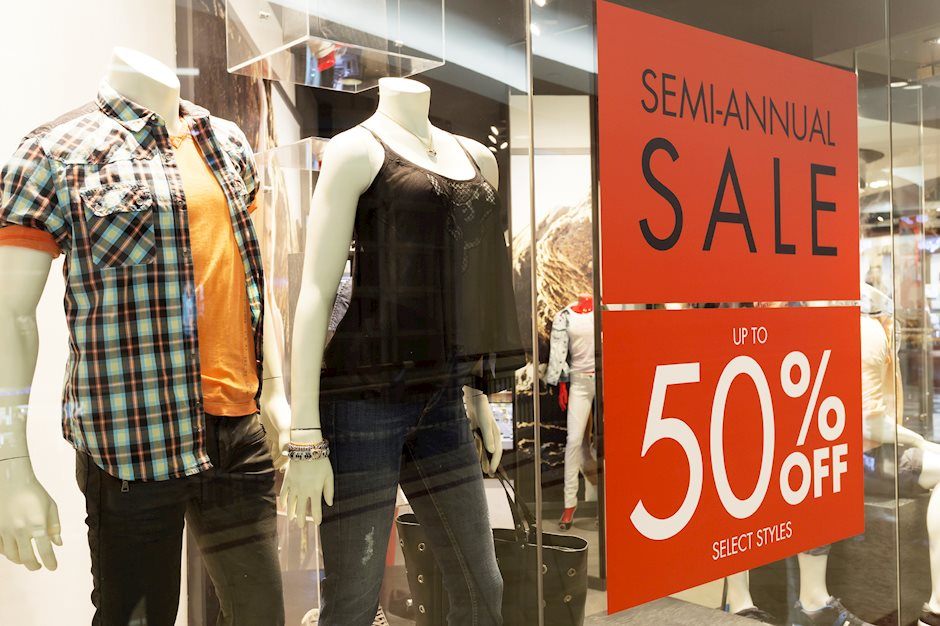

Retail sales disappointed for the second consecutive month, dropping 0.1 percent in February. January was revised up slightly to a 0.1 percent decline. Control group sales were also subdued, growing just 0.1 percent.
Disappointing Start to the Year Continues for Retail Sales
Retail sales disappointed again in February by dropping 0.1 percent, below the market consensus of a 0.3 percent increase. Excluding automobile and gasoline stations' sales, retail sales were up 0.3 percent, which was in line with market expectations. January's 0.3 percent drop in the overall index was revised up slightly to a 0.1 percent decline, while retail sales, exautomobile sales, was also revised up from a decline of 0.2 percent to a 0.1 percent decline.
The sectors that accounted for most of the decline in retail sales during the month were a 0.9 percent decline in motor vehicle & parts dealers' sales, a 0.8 percent decline in furniture & home furnishings stores' sales, a 0.1 percent drop in electronics & appliance stores' sales, a 0.4 percent decline in health & personal care stores' sales and a 0.4 percent decline in general merchandise sales. Despite higher gas prices in February, gasoline stations' sales also dropped 1.2 percent, after climbing 1.9 percent in January.
The weakness was not broad based, however, as several sectors showed positive growth. Sales at sporting goods, hobby, book & music stores' were up 2.2 percent, building material & garden equipment & supplies dealers' were up 1.9 percent and non-store retailers were up 1.0 percent. Clothing & clothing accessories stores' sales also increased 0.4 percent, and miscellaneous store retailers' sales were up 0.1 percent. Furthermore, sales at food services & drinking places increased 0.2 percent in February.
February Control Group Sales Only Slightly Positive
Control group sales, which exclude food, autos, gas and building materials and go directly into the calculation of GDP, were only slightly positive in February, again below the consensus view of a 0.4 percent increase. January control group sales showed no revisions to flat growth, indicating that consumption may have slowed in the first quarter of 2018.
We were expecting a bounce-back for retail sales in February following the weak January performance for the sector, as the new income tax withholding schedules took effect in February and should have given a boost to incomes. Despite the current softness, retail sales ended 2017 on a strong note, and seasonal factors may again have had an outsized role this month, something that has been a staple for the first quarter economic numbers recently.
We remain positive on the consumer this year even though the first look at consumption in January and February was not what we were expecting. Consumer confidence surged in February to levels not seen since late 2000, primarily driven by the strengthening job market. However, the biggest risk facing consumers is higher inflation, which has the potential to erode purchasing power and keep consumers on the sidelines. Over the past three months, core inflation has risen at a 3.1 percent annualized pace—the fastest of this expansion. We will continue to watch for the effect rising inflation may have on the consumer, as inflation is clearly trending upward.
Author
Wells Fargo Research Team
Wells Fargo

















