Probability of Brexit at 42% - Bloomberg tracker

Outlook:
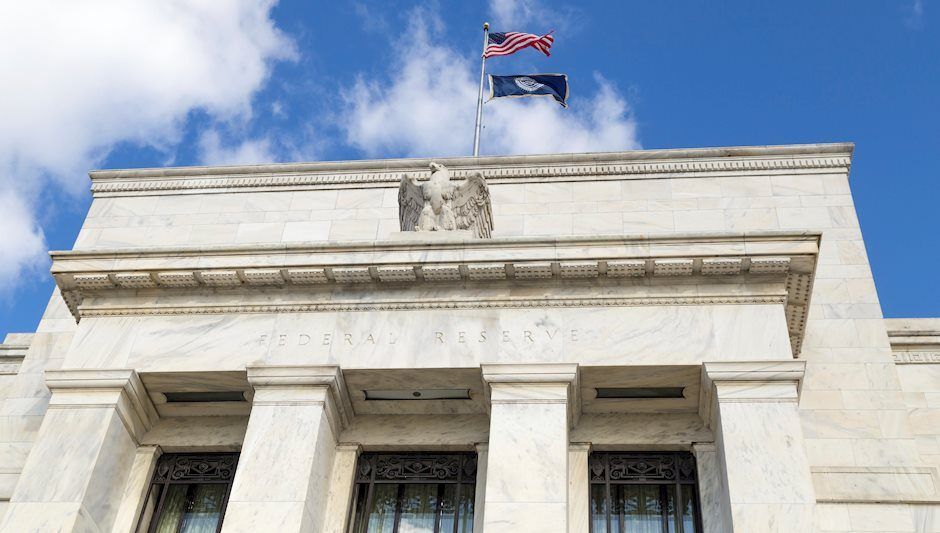
As fresh news keeps hitting the deadlines, attention is taken away from the Fed's new assessment of the US economy as in a malaise. Today the FT notes that the Fed lowering the long-term growth rate and thus the eventual Fed funds rate is a function of low productivity, in turn a function of low capital investment. "Analysis from the Conference Board suggests that the US will this year see negative productivity growth for the first time since the early 1980s, a toxic situation that could hamper income growth."
The labor force is contracting as baby boomers retire at a rate of 10,000 per day, something we are cer-tain the Labor Dept is not properly adjusting for. But the rate of household formation is also low as the new generation can't find jobs and won't dig ditches. No matter what you think of the hippie generation, it didn't live in the parents' basement and was always willing to dig ditches.
How much is demographics and how much is Summers' secular stagnation? The OECD is (weirdly) less pessimistic than the Fed. Output is 10% higher than the pre-crisis level, something not true in Europe and Japan. The 2016 report on the US economy states "Seven years after the financial crisis, the US economy has rebounded : output has surpassed its pre-crisis peak by 10%, robust private-sector employ-ment gains have sharply reduced unemployment, fiscal sustainability has been largely restored and cor-porate profits are high. The short-term outlook is for further growth near potential (albeit crisis-reduced at about 2%), where well-designed investments in infrastructure, skills and green growth would contrib-ute to a more robust and sustainable expansion." The OECD report has a nifty series of charts, once of which is titled "business dynamism is slowing." Also, income inequality is increasing. Here is the infla- tion chart (one of the better ones).

The bottom line on the OECD report: the US may have issues and some of them are structural rather than cyclical, but it's still in far better shape than Europe and Japan. What does this mean for the dollar? As a general rule, a currency trends to be positively correlated with growth, but that's over very long periods of time. A lot of water can flow over the dam before direct effects can be seen. Still, it's a supportive factor.
As for Brexit, the referendum is next week (June 23). The latest big shot to comment is Bill Gates, who said Britain would become a "significantly less attractive place to do business" if it votes to leave the European Union. BoA Merrill Lynch says equity fund withdrawals are the second highest ever because of the uncertainty surrounding Brexit. Reuters reports "BAML said the UK equity funds lost a net $1.1 billion, the biggest outflow in 13 months, in the week to June 15. The UK funds registered a record weekly outflow in the middle of last year when Britain's share market came under intense selling pressure on some poor UK economic data and uncertainty regarding Greece's debt situation. On a broader scale, European equity funds saw their 19th straight week of outflows, with $4.7 billion, the largest amount in seven weeks, leaving the funds."
IMF chief Lagarde repeated that Britain is better off staying in the EU. "The economic risks of leaving are firmly to the downside... "There is... a clear case as to how the U.K. has benefited—and will continue to benefit from its membership in the European Union." EU membership makes Britain richer, "more diverse, more exciting and more creative."
The Bloomberg poll tracker now puts the probability of Brexit at only 42%. F or once the pollster's methodology is explained, in detail. Considering how lousy polls are at predicting anything, this is useful. The FT's Brexit poll tracker has 48% voting to leave and only 43% voting to stay. As of late yesterday, Reuters reports "British support for leaving the European Union has surged, according to two telephone opinion surveys published a week before the June 23 referendum, with one pollster putting support for "Leave" at a more than three-year high.
"The Ipsos MORI poll of 1,257 adults across Britain from June 11-14 showed 51 percent of all voters wanted to leave the bloc and 49 percent wanted to stay. But, when filtered for those likely and registered to vote, the poll showed 53 percent would vote to leave and 47 to remain - the highest support for the 'Leave' campaign recorded by the pollster in more than three years."
The New Yorker notes that telephone polls tend to show a majority wanting to stay while online polls show the "leave" side winning. Conventional wisdom has it that telephone polls are more reliable, and the bookmakers concur—as of late yesterday, Betfair has "the implied probability of a ‘Remain' vote [at] about sixty-five per cent, and the implied probability of a ‘Leave' vote is about thirty-five per cent."
Does the murder of an MP make a difference? The central factor for the "leave" crowd seems to be an anti-immigration impulse. Another factor is the much disputed idea that Britain pays more to the EU than it gets back. It's very hard to identify a tipping point at the moment it is happening. And we still have a week to go. Probably the only deduction we can draw from this cacophony is that sterling will be volatile. This is nice for the options boys but not useful for directional forecasting. And consider that the BoJ took no action at the policy meeting this week almost certainly because of the UK referendum. Once the vote is behind us, we must expect some robust or at least aggressive-looking initiatives from Japan.
Our view is that UK voters will opt to remain in the EU and sterling will rally, having been oversold. But we are not betting a single penny on it.

This is an excerpt from “The Rockefeller Morning Briefing,” which is far larger (about 10 pages). The Briefing has been published every day for over 25 years and represents experienced analysis and insight. The report offers deep background and is not intended to guide FX trading. Rockefeller produces other reports (in spot and futures) for trading purposes.
To get a two-week trial of the full reports plus traders advice for only $3.95. Click here!
Author
Barbara Rockefeller
Rockefeller Treasury Services, Inc.
Experience Before founding Rockefeller Treasury, Barbara worked at Citibank and other banks as a risk manager, new product developer (Cititrend), FX trader, advisor and loan officer. Miss Rockefeller is engaged to perform FX-relat