Powell on Policy: What to Ask?
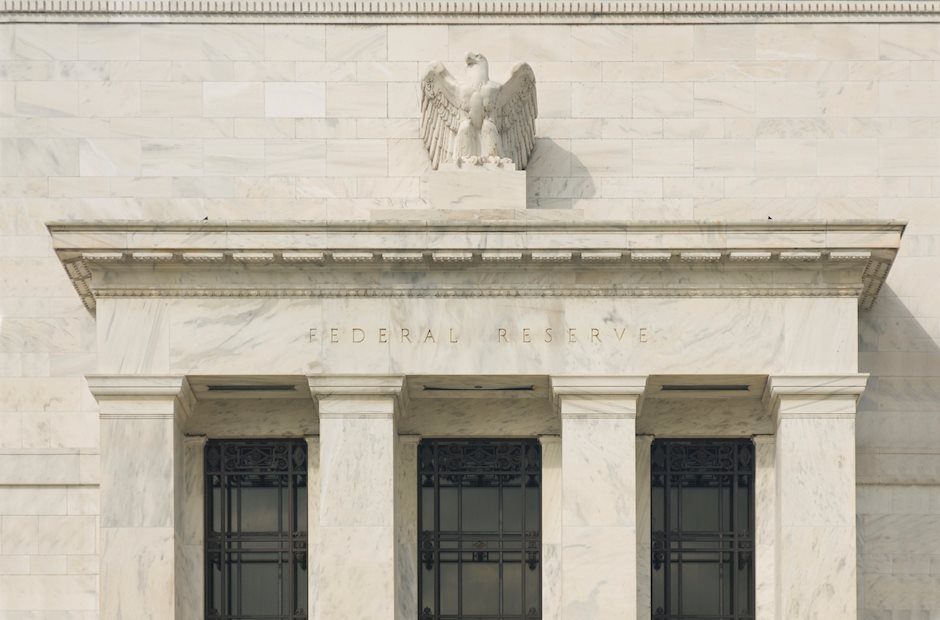

Jerome Powell has been nominated to head the Federal Reserve Board. The official changing of the guard will not occur until Chair Yellen’s term expires on February 3, 2018. Not surprisingly, financial markets have not reacted strongly one way or the other on the heels of this announcement, as Governor Powell is largely expected to pick up where Chair Yellen leaves off. Powell’s nomination does not change our outlook for monetary policy at this time. However, reviewing Powell’s previous public comments is an interesting exercise to discern how his views may differ slightly from the current Fed Chair. How might we view his comments on policy and financial markets? What would we ask at confirmation hearings?
Normalization of Policy
The Economic Club of New York, (June 1, 2017)
“While monetary policy can contribute to growth…, it cannot reliably affect the long-run sustainable level of the economy’s growth.” From an economist’s point of view, this is wellsaid. However, how will the Senators respond to the case for monetary neutrality? Question— what is your estimate of that long-run sustainable pace?
“The normalization process is projected to have several years to run…the endpoint long-run neutral rate of interest.” OK, but what is your estimate of that rate—especially given that the FOMC’s estimated rate has declined in recent years (Figure 1)?
“Once the process of balance sheet normalization has begun, it should continue as planned as long as there is no material deterioration in the economic outlook.” Excellent, judgement matters but how will you recognize “material deterioration” given the difficulty of forecasting, especially recessions, and given the perception of lags in the impact of monetary policy? Will this affect the planned shrinking of the Fed’s balance sheet (Figure 2)?
Economic Outlook
At the Forecasters Club of New York Luncheon, New York, New York, (February 22, 2017)
“Two percent annual inflation…is a symmetric objective.” OK, but Governor Powell, the PCE deflator has consistently run below 2 percent during the current economic cycle and has averaged below 2 percent since NAFTA was implemented in 1994 (Figure 3). Why and what could the Fed do to get back to 2 percent when, in fact, you are now talking about normalizing the funds rate and the balance sheet?
“A good way to see the range of possibilities (of policy paths) is through a generalized form of a Taylor-type rule…While these are often called “simple” rules, application of a rule requires a significant number of choices.” OK Governor Powell but you cite “estimating a neutral real rate of interest… deviations of inflation and output or unemployment from their longer-run values.” So, to what extent is this really a rule, since you cite many versions of rules based on research at the Cleveland Fed with seven different Taylor rules. Are these rules or guidelines and if there are seven versions then is there a rule at all?
Low Interest Rates and the Financial System
77th Annual Meeting of the American Finance Association (Jan. 7, 2017)
“And low rates can lead to excessive leverage and broadly unsustainable asset prices—things that we watch carefully for and do not observe at this point.”
OK, Governor Powell, but would you have said the same in 2005-2007 about housing, recall that the Fed issued reassurance that the housing issues were well contained. Moreover, the resiliency of any system is not revealed when the economy is doing well but when it is stressed. Finally, the government, not the private sector, appears to be the most leveraged at this time (Figure 4). Do you see a policy conflict ahead?
No Change to Our Outlook at this Time
Powell’s term as Fed chair is likely to represent a continuation of Chair Yellen’s monetary policies. Against the backdrop of cycle-low unemployment and modest economic growth, the new Fed chairman should be able to continue to gradually raise interest rates from historic lows. Powell’s nomination does not change our outlook for monetary policy at this time.
Author
Wells Fargo Research Team
Wells Fargo

















