Potemkin façade: The US labour market was a house built on sand
Creaky floor boards
The tape refuses to break, even as the floorboards creak. Tuesday gave us another limp drift higher in the S&P, the Nasdaq tagging along, while the Dow got an artificial lift from one stock’s adrenaline shot. On the surface, it looked like just another session of traders shrugging off the bad and clinging to the Fed cut oxygen mask. But under the boards, the rot was exposed in the form of the ugliest payroll revision in two decades.
The Bureau of Labour Statistics yanked nearly a million jobs out of the history books, a magician revealing that the rabbit in the hat was nothing more than a stuffed toy. This wasn’t a rounding error; it was a wholesale confession that the so-called “resilient labor market” had been puffed up by accounting smoke. If the U.S. economy was a vaunted cathedral of employment, yesterday’s revision ripped the stained glass out and left us staring at plywood. And yet, equities edged higher. Traders are like card sharps who see the dealer’s hand is crooked but keep playing because the chips are still flowing. Liquidity beats logic — until it doesn’t.
Powell’s crew is walking a circus wire with no net beneath them. Inflation data this week is the fire-breather waiting on the far platform: if CPI runs too hot, the crowd screams stagflation; if it cools, the doves demand a jumbo cut to make up for the policy delay. In reality, the jobs revision data just gave the Fed every excuse it needs to swing the axe and deliver a jumbo cut. After all, we’ve been living in a statistical jobs recession for over two years( if you include last year’s revision) — the government simply papered it over with phantom adjustments. That’s why the whole structure feels like a house built on sand, each incoming revision pulling the foundation further out to sea.
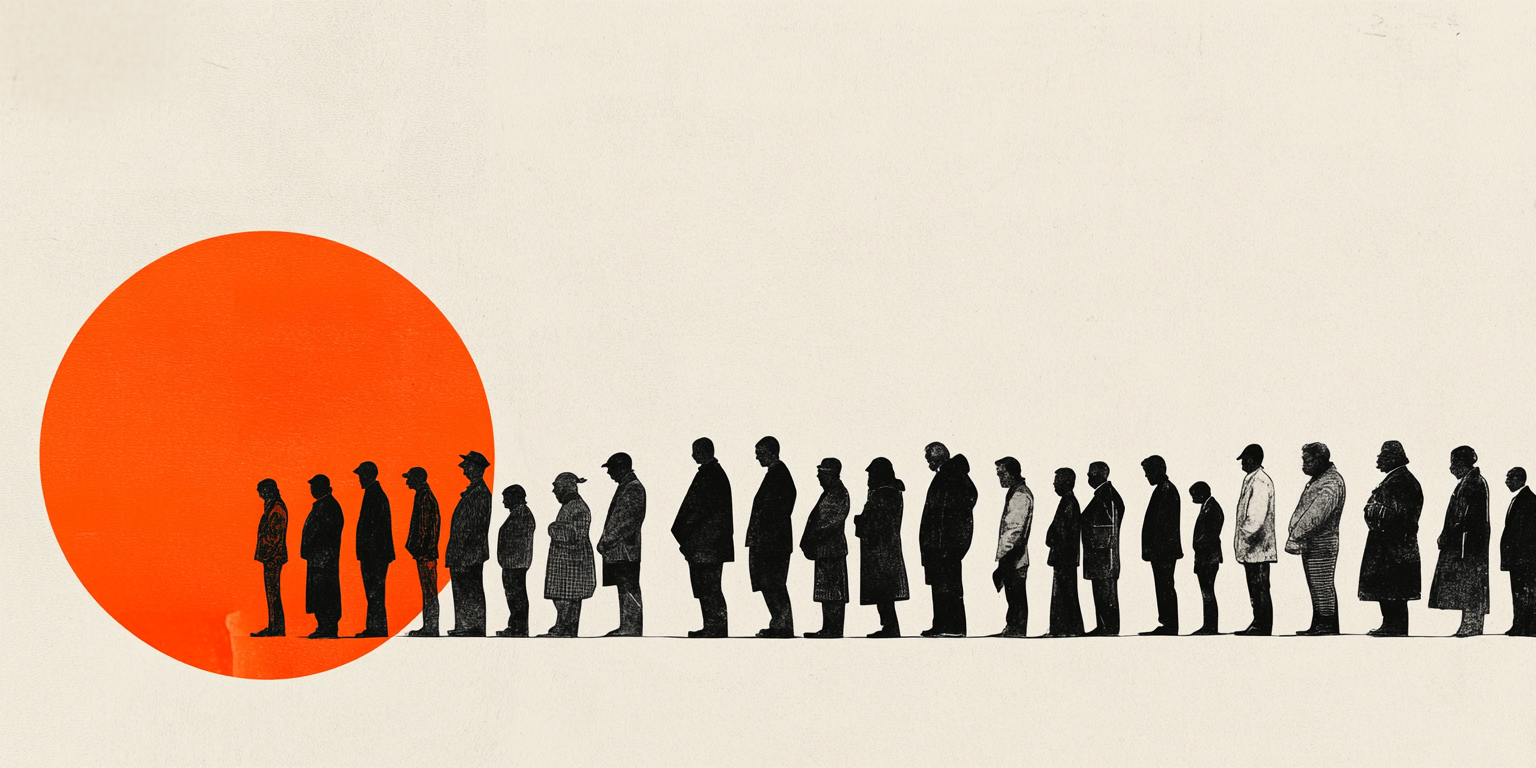
It also explains why the economy has felt so disorienting. We weren’t living in some paradoxical state of strength and weakness at once — we were staring at a Potemkin village façade. From the street, the labor market looked sturdy, but behind the painted walls there was nothing but scaffolding and sand. Markets traded the façade, policymakers clung to the illusion, and only now — with nearly a million ghost jobs erased (1.8 million if you fold in 2024) — do we see the hollowness exposed. The “resilience” wasn’t resilience at all; it was theater, a backdrop propped up for confidence’s sake. The house wasn’t built on solid ground, it was a stage set, and the tide has finally washed the paint off the plywood.
Meanwhile, the dollar added its own drama. It sold off as expected on the bigger revision, only to rally counterintuitively on a burst of safe-haven demand after Israel took out a Hamas leader in Qatar — a strike that sent oil higher and reminded the market that geopolitics still writes some of the script. Higher crude is poison for the euro and the yen, and as those currencies tried to claw higher, the rot of succession risk in Paris and Tokyo kept their wings clipped. For now, the greenback remains on life support, not out of hope for recovery, but because its rivals are stumbling.
Gold, the eternal mirror of the DXY, gave back gains despite Middle East flare-ups and aggressive rate cuts priced in the pipeline. Frankly, Gold has become the dollar’s Siamese twin — rising when the greenback buckles, fading when the dollar finds a faint heartbeat. Oil, spooked by new sparks in the Gulf, reminded everyone that geopolitics hasn’t gone away; it just takes a headline to make barrels lurch higher.
So here we are: stocks drifting higher on fumes, bond traders demanding cuts, FX positioning caught between Tokyo’s hawkish feints, Europe’s political cracks, Washington’s revisions, gold shackled to the dollar, and oil playing arsonist on the side. Wall Street is betting on the Fed to paper over the cracks with a steady stream of rate cuts. But this isn’t resilience. It’s a house built on sand, a Potemkin village façade where truth and fiction collide. And at the center of it all sits the greenback — still breathing, still trading, but only on life support, not out of its own vitality, but because its rivals are politically unfit to carry the crown this week.
Potemkin village: Façades built for show, with nothing behind them but scaffolding and sand
For more than a year, a small band of statistical economic quants ( not politically aligned) were flagging the “birth–death” adjustments as pure smoke. Their math suggested the annual payroll count was being puffed up by roughly a million jobs — not from hiring, but from a government algorithm that assumed new business creation was still booming at a post-COVID clip. The problem is that those assumptions were never grounded in reality; they were artifacts of a stimulus era riddled with PPP distortions and accounting conveniences.
This minority view, dismissed at the time as overly pessimistic, has now been vindicated almost to the digit — the latest benchmark revisions erased nearly a million jobs, proving that more than half of this year’s supposed gains were statistical fictions. Step back, and the picture is even darker: the U.S. may have quietly slipped into recession as early as 2023, hidden under the tarp of Biden’s stealth trillion-dollar stimulus. The official acknowledgment that roughly two million jobs reported over the last three years never really existed gives weight to what the contrarians argued all along: the “resilient” labour market wasn’t resilient at all, it was a Potemkin construct, built on paper scaffolding and wishful models.
Bloomberg’s Anna Wong laid it out bluntly in her note “Job Revisions Flag We’re in Recession, or New Cycle.” ( need terminal access), so let me surmise
The latest benchmark revisions don’t just trim a few jobs from the ledger — they rewrite the story of 2024. Net hiring slowed dramatically by late spring and actually contracted outright in August and October. The three-month moving average of payrolls collapsed from 196k in March to barely 6k in August. Against a backdrop of steady population growth, most economists will tell you the economy needed to add closer to 200k jobs a month just to keep the unemployment rate steady. By Wong’s math, the reality was closer to 71k over the year through March 2025 — less than half the breakeven level.
That picture looks nothing like the “resilient labor market” that policymakers clung to in real time. Instead, it suggests the U.S. quietly slid into recessionary territory just as the White House was touting strength ahead of the 2024 election. The subsequent rebound in jobs after the Fed’s jumbo 50bp cut last September was short-lived — payrolls perked up into December, but by the first quarter of 2025 the three-month average had slumped back toward 35k. That’s not momentum, it’s sputtering.
Wong’s takeaway is stark: the business cycle likely peaked in April 2024, and since then we’ve either been in a shallow recession or limping into the earliest phase of a new cycle. Negative payrolls — August at –5k, October at –32k — are the kind of signals the NBER treats as hard evidence when dating recessions. Add in her reference to Michaillat and Saez’s recession-dating model, which points to March 2024 as the starting line, and it becomes difficult to square the data with the Fed’s repeated refusal to ease last year. By now, the central bank is 100–200bps behind the curve, precisely the scenario Trump and others warned about.
The bottom line: those million phantom jobs that vanished in the revisions weren’t just accounting noise. They expose how fragile the labor market really was, how late the Fed was to react, and why Wall Street is suddenly more convinced than ever that aggressive easing isn’t optional — it’s already overdue.
Author

Stephen Innes
SPI Asset Management
With more than 25 years of experience, Stephen has a deep-seated knowledge of G10 and Asian currency markets as well as precious metal and oil markets.