PCE cools October rate hike expectations, as stocks recover into quarter-end

The Fed’s preferred inflation gauge showed that inflation remained steady in August, with core PCE rising at a 3% annual rate, less than the 3.3% expected by economists. Monthly PCE growth was also moderate at 0.2%, and even headline PCE was less than expected rising at a 3.4% annual rate, less than the 3.7% anticipated.
Fed Oct rate hike bets pared back
The immediate market reaction to this data has been a weaker dollar, and falling Treasury yields. The 2-year yield dropped 4bps on the back of this data. Expectations of a Fed rate hike in October have dropped sharply. The market now sees a 37% chance of a hike from the Fed next month, down from a 70% chance last week.
Second round effects of energy prices contained for now
The August PCE data seems fairly old right now, since then we have seen diesel prices in the UK and the US reach record highs, and inflation pressures escalated into September. However, this data does suggest that the second round effects of the energy price spike may not be passing through as quickly to the consumer as some had expected.
This data is allowing bonds to have a mini recovery before quarter end, after a volatile few months for sovereign bonds. The dollar is also under pressure, and it is weak on a broad basis. The stronger than expected revision to Q2 GDP in the UK earlier has boosted the pound, and in the aftermath of the PCE data, GBP/USD is attempting to reclaim the $1.33 level.
Can the S&P 500 eke out a gain for September?
This data has also boosted stock futures in the US, which are now pointing to a positive open later today. If this gain holds, then the rise in the S&P 500 could erase the index's loss so far in September.
Focus shifts from geopolitics to macro data
Although oil prices are rising today, and the continuous contract in Brent crude oil is up by 1%, and is trading above $97.70 per barrel, the focus is on macro data and not geopolitics, and we think that economic data will have the biggest impact on market moves in the coming days.
Traders and investors have given up hope of a diplomatic solution to the conflict in the Middle East in the short term. While the oil price and geopolitics matter for the Fed, it’s actually the pass through to consumer prices that the Fed cares most about. For now, that looks like it is contained, which could keep the Fed on hold at its October meeting, although there is still a near 60% chance of a hike in December.
Looking ahead to NFP
The impact of the PCE data could be short lived, as the payrolls report for September is due on Friday. The ADP reading showed a pick up in private sector hiring from 36k in August to 90k in September, the market had expected a reading of 70k. However, there is no real correlation between ADP and payrolls, so financial markets and investors are likely to remain sensitive to Friday’s data, and the market reaction could be volatile.
The S&P 500, can it eke out a monthly gain?
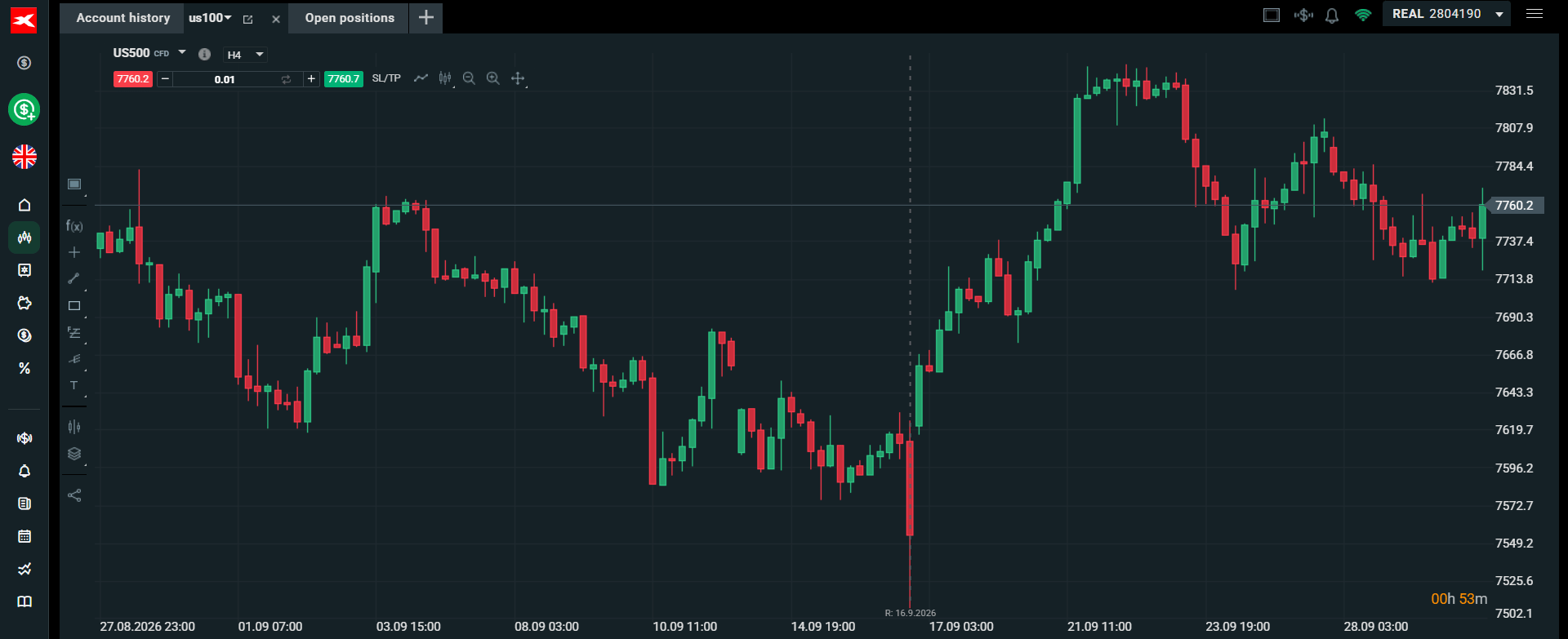
Source: XTB
Author

Kathleen Brooks
XTB UK
Kathleen has nearly 15 years’ experience working with some of the leading retail trading and investment companies in the City of London.