More relief than swagger in sentiment surge


Summary
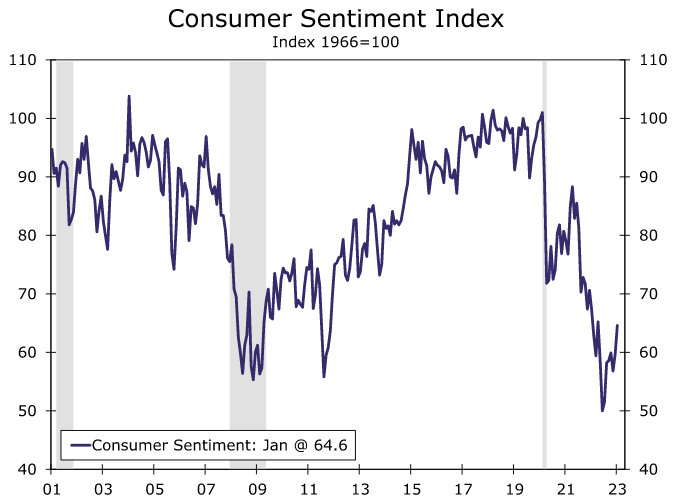
The 64.6 reading for consumer sentiment in January marks the top print in the past year. Relief on the inflation front and wage growth are lifting spirits, but still-sour buying conditions suggest the good vibes in this report may not translate into a spending surge.
Source: University of Michigan and Wells Fargo Economics
Sentiment Handily Exceeds Expectations, Still Historically Low
The soft-landing camp will find plenty to like in today's preliminary read of consumer sentiment from the University of Michigan. The 64.6 reading for January, while low by historical standards, is still the highest reading in the past year and marks the biggest monthly pick-up since August. The outturn was more than three points above the rosiest forecast of the more than 50 economists surveyed by Bloomberg.
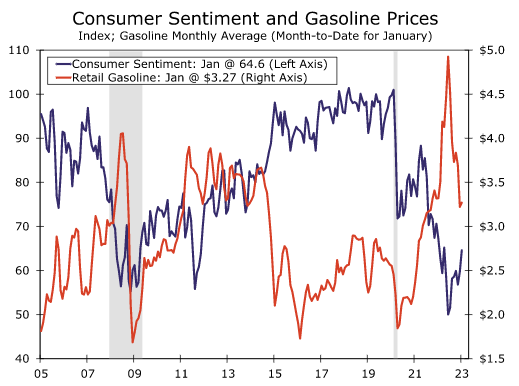
Consumers may not feel awesome about their finances, but they are undoubtedly less worried than they were when gas prices were north of $4/gallon and wage growth wasn't keeping up with inflation. Current assessments of personal finances surged 16% to its highest reading in eight months thanks to higher incomes and easing inflation...and a bit of a bounce in the stock market certainly did not hurt either.
The euphoria did not extend to the housing market. Home buying conditions improved slightly but are still very near the lowest levels on record. Elsewhere, buying conditions improved somewhat in January, potentially on the back of some recent reprieve in inflation, but a majority of households still view it as a bad time to buy a major household item or vehicle. We take this as a sign that higher financing costs are weighing on the purchases of these traditionally bigger ticket items. More plainly, the good vibes in this report may not translate into a spending surge.
Source: Bloomberg Finance L.P, University of Michigan and Wells Fargo Economics
Inflation Expectations Still Well-Anchored
Inflation expectations continue to be the most important component of this release. To that end, short-term (1-year ahead) expectations slid to 4.0% in January marking the lowest reading since April 2021. The Fed will be happy to see short-term expectations reverting back to more normal levels. While longer-term expectations (5-10 years ahead) rose a tenth to 3.0% from December, they importantly remain well within the recent range and at a level the Fed will view as well-anchored.
Expectations are important because if consumers anticipate higher inflation they may purchase more today in order to avoid higher prices tomorrow. This in turn further boosts demand-driven inflation, the very thing the Fed is working to counteract. It's not just consumer inflation expectations that matter either. Pricing plans of small businesses and market expectations for inflation are also key components in driving inflation lower. The latest data from the National Federation of Independent Business released earlier this week showed the smallest share of firms in two years reported plans to rise prices over the next three months. Longer-run market-based inflation expectations, measured by the difference between the 5-year Treasury rate and the 5-year Treasury inflation-indexed security rate (known as the 5-year, 5-year forward breakeven rate), also remain well-anchored.
The consumer price data for December showed signs that inflation is continuing to slow and thus suggest the Fed will slow the pace of tightening at its next policy meeting on February 1 by electing to bring the federal funds rate up just 25 bps. Nothing in this report suggests otherwise. We expect the Fed to view well-anchored and improving inflation expectations as positive developments.

Source: University of Michigan and Wells Fargo Economics
Author
Wells Fargo Research Team
Wells Fargo