May employment: Good enough


Summary
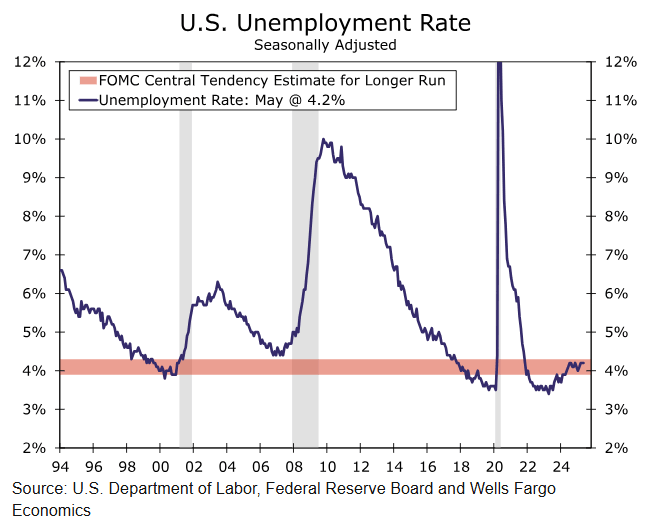
The May jobs report was on the softer side, but it was more of a caution sign than a flashing red light in our view. Nonfarm payrolls increased by 139K in May, 13K better than the consensus forecast was expecting, but a combined -95K downward revision to job growth in April and March overshadowed the beat. The industry composition of employment growth pointed to resilience in health care but weakness in more cyclically-sensitive industries like manufacturing, trade and temporary employment. In the household survey, the unemployment rate rose on an unrounded basis from 4.18% to 4.24% amid sizable outflows from the labor force.
Today's employment report is strong enough in our view to keep the FOMC on hold for at least a couple more meetings as higher tariffs have reignited concerns about inflation. That said, with both the soft and hard data on the labor market showing employment conditions softening, we still expect the FOMC to be cutting later this year.
A gilded jobs report
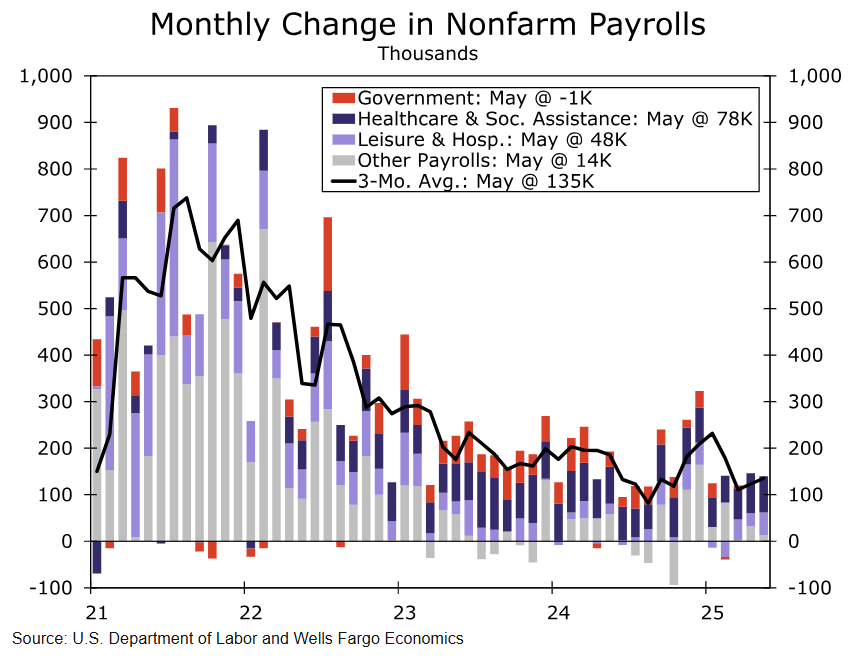
The labor market is treading water. Nonfarm payrolls expanded by 139K in May, a touch stronger than expected. Despite the headline beat, significant downward revisions to job growth in March (-65K) and April (-30K) lowered the three-month moving average of employment growth to 135K, down from 155K headed into today's report.
The industry composition of job growth illustrates increasing fragility. Hiring in leisure & hospitality (+48K) and healthcare & social assistance (+78K) accounted for 91% of the total job gains, punching well above their share of total employment and increasingly becoming the lone sources of job creation (chart). Elsewhere, layoffs and an ongoing hiring freeze weighed on federal government payrolls, which slipped 22K over the month. More cyclically-sensitive industries also showed softness as the growth outlook has clouded. Temporary employment slipped 20K, while manufacturing, retail trade and mining jobs also declined. The lack of broad-based hiring led the diffusion index down to 50, its lowest since July (chart).
Author
Wells Fargo Research Team
Wells Fargo

















