Markets assume more stimulus to come as Dems head for historic double-victory in Georgia
-
Democrats head for victory in Georgia.
-
Bonds & dollar offered, US 10yr Treasury yield breaks through 1%.
-
FTSE 100 climbs for 3rd straight day.

Markets are front-running a higher yield environment driven by even-more expansionary US fiscal policy and higher taxes as the Democrats head for historic double-victory in the Georgia run-off races for the Senate. There are important implications for the markets evidenced by the US 10yr Treasury yield breaking above 1% for the first time in nine months, whilst the dollar made fresh lows. Markets have a habit of overreacting to news but we should consider what a shift in Washington will mean. Meanwhile the FTSE 100 rose for a third day as the oil majors rallied firmly again and banks got a lift from the higher yield curve picture, with the index making a new high for the year at 6,677, its best level since March last year. Bond yields across Europe moved higher with the UK 10yr gilt jumping above 0.25% again and the 10yr Bund rallying from -0.6% to around -0.53%. European PMIs were a little weaker than anticipated but still reflect vaccine optimism.
Raphael Warnock was called victor in his race with Kelly Loeffler, while fellow Democrat Jon Ossoff's runoff with Republican David Perdue was considered too close to call with 98% of the vote counted. It's thought however that remaining votes to count should favour the Democrats. Joe Biden's party requires both seats to make the Senate split 50/50 with the tie-breaking vote of the vice-president giving it a blue hue. It will not be easy to force through all of the more socialist agenda, but the market sees this result as broadly more pro-cyclical and likely to lead to a higher yield environment. This means Nasdaq futures are lower, as tech stocks have been the biggest beneficiaries of the low-rate world, whilst Russell 2000 futures moved higher overnight. S&P 500 futures were lower with the tech sector weighing heavily. This may be the moment for a ‘healthy' correction in the US market.
Markets seem to assume more Democrat control means more stimulus, expansionary fiscal policy, more infrastructure spending and more Treasury issuance, which favours Value stocks over Growth. Financials and Energy should be the winners and this is at least what we are seeing in London today. It also implies – as the market is showing - rising nominal yields, steepening of the curve, which would tend to weigh on Tech/Growth (with its considerable weighting of the broad equity market potentially weighing on the S&P 500) and could put a dampener on the recent gold breakout, though inflation is also showing signs of picking up and gold has firmed this morning. Earlier this week, US 10-year breakeven inflation expectations rose above 2% for the first time in over two years. This morning US 10s trade above 1%, with the 2s10s curve steepening further to 0.89%, the widest in over 3 years. The 5s30s spread was at its widest since 2016. A stronger-than-expected US manufacturing PMI was also a factor is pushing up on yields.
Any hike to corporate taxes and capital gains tax creates policy uncertainty and could generate additional volatility. The Vix has started to show signs of waking up in the last two session and the market cannot now rely on gridlock on Washington to keep the ship steady. Higher nominal yields reduce equity risk premium, lowering the appeal of equities - also higher taxes will weigh on tech.
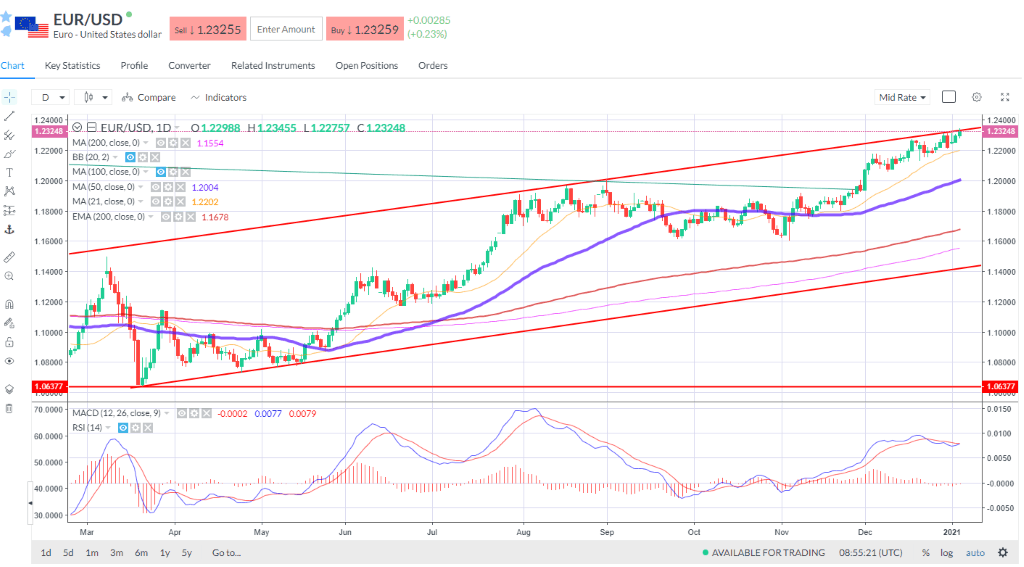
More stimulus etc is negative for USD with fiscal expansion and tax/regulatory regime weighing on demand for US equities, favouring rotation into emerging market currencies and equities as well as Europe/UK. The US dollar index fell to new lows not seen since April 2018 on the apparent Democrat win at 89.20. Still little support before 88. Likewise the euro made new almost-three-year-highs and moved out to test the top of the rising channel.
Elsewhere, Britain is ready to vaccinate millions over the coming weeks, at least if Boris Johnson gets the fair wind he desires. The prime minister says millions more jabs are on their way. But the targets are ambitious. This will be good news for the likes of Greggs, which today warns that it won't see pre-pandemic sales return before 2022. Nevertheless, it's pressing ahead with plans to open 100 shops this year. In a fourth quarter trading update today, management said like-for-like sales averaged 81.1% of the equivalent 2019 level. Total full year sales are seen at £811m vs £1.168bn in 2019 but still it opened 28 net new shops – expansion on track despite the pandemic shows confidence. Shares rallied 6%.
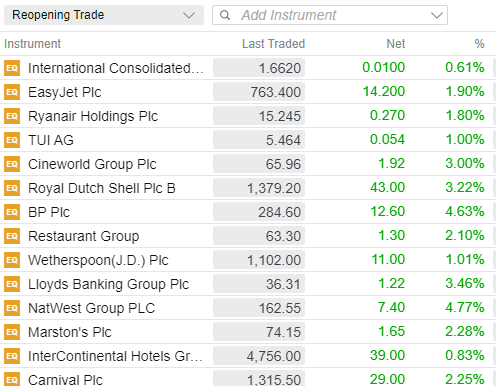
Reopening stocks were broadly higher in London with the news from the US and the dominance of the pro-recovery vaccine narrative still winning out over concerns about a stop-start recovery and missed targets.
Author

Neil Wilson
Markets.com
Neil is the chief market analyst for Markets.com, covering a broad range of topics across FX, equities and commodities. He joined in 2018 after two years working as senior market analyst for ETX Capital.

















