March consumer spending about more than just tariffs

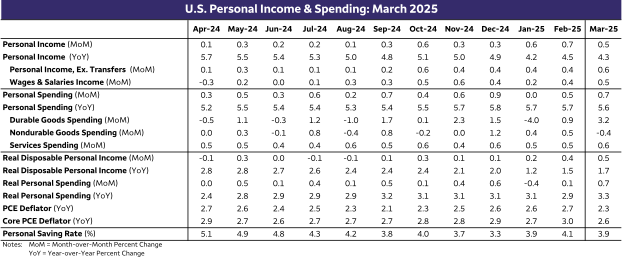
A March spending pick-up was about more than getting ahead of tariffs, although a surge in auto sales was the biggest driver. The next five largest increases were all services categories. Ultimately, income will determine the capacity for spending and that's holding up, for now.
Car salesman of the year: Tariffs
In the immediate wake of this morning's Q1 GDP report, the personal income and spending report for March offers greater details on how consumer spending surged in the final month of the first quarter. Real personal spending shot up 0.7% in March even as February's comparatively modest spend was revised higher. In what may be that last month without meaningful tariff impact, inflation was a non-factor in March with both headline and core inflation flat over the month.
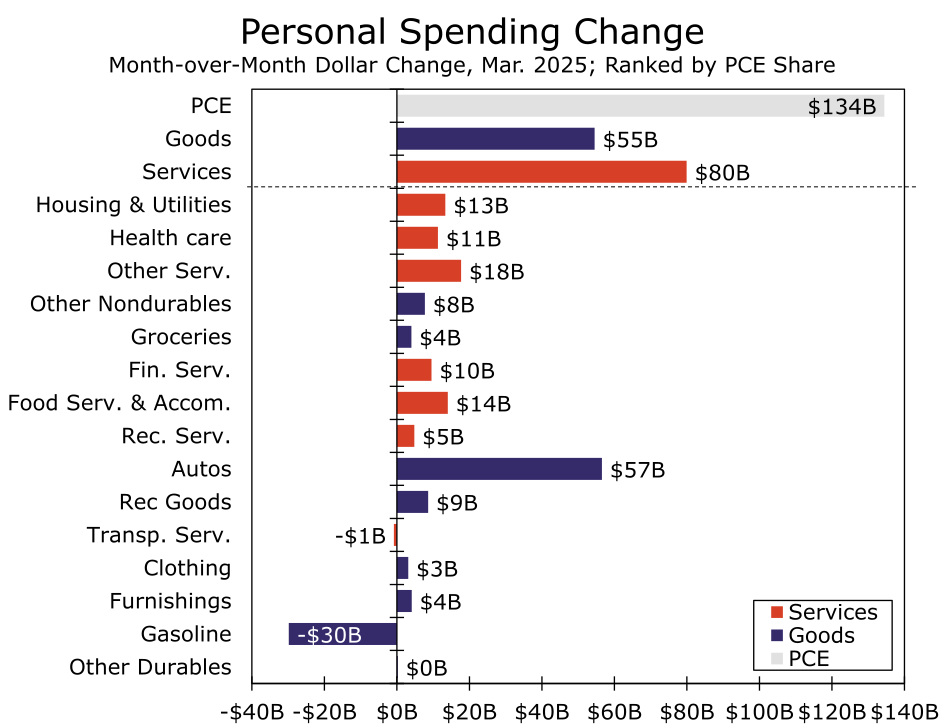
An immediately evident theme here is that people who were even thinking about buying a new car, truck or SUV headed out to make that purchase in March before April tariffs had a chance to impact the sale price. The $57 billion increase in motor vehicles and parts was bigger than the increases of the next four largest categories combined (chart).
The next five largest increases were all services categories including staples such as healthcare, but mostly discretionary categories such as food services and accommodations.
At a time when consumers report wilting confidence and mounting worries about inflation, it is interesting to note that spending on both recreational goods and recreational services both increased in March. We're reminded to watch what consumers do, not just what they say.
It may be that tariff worries are in the realm of the hypothetical at this early stage; the sort of thing you bring up when talking to a pollster, but perhaps not one that is yet front-of-mind when making point-of-sale decisions. Without a relevant precedent upon which to make a more measured assessment we can wager a guess that when and if store shelves become bare as they did during the pandemic, that might be the moment when the trade war gets real for consumers.
Income and labor market outlook
A big question surrounding the outlook is to what extent households are not just willing but able to keep spending. Income is at the root of that answer. While tariffs are stoking fears of inflation and driving optimism lower, as long as income keeps flowing, households may not be so quick to curtail spending.
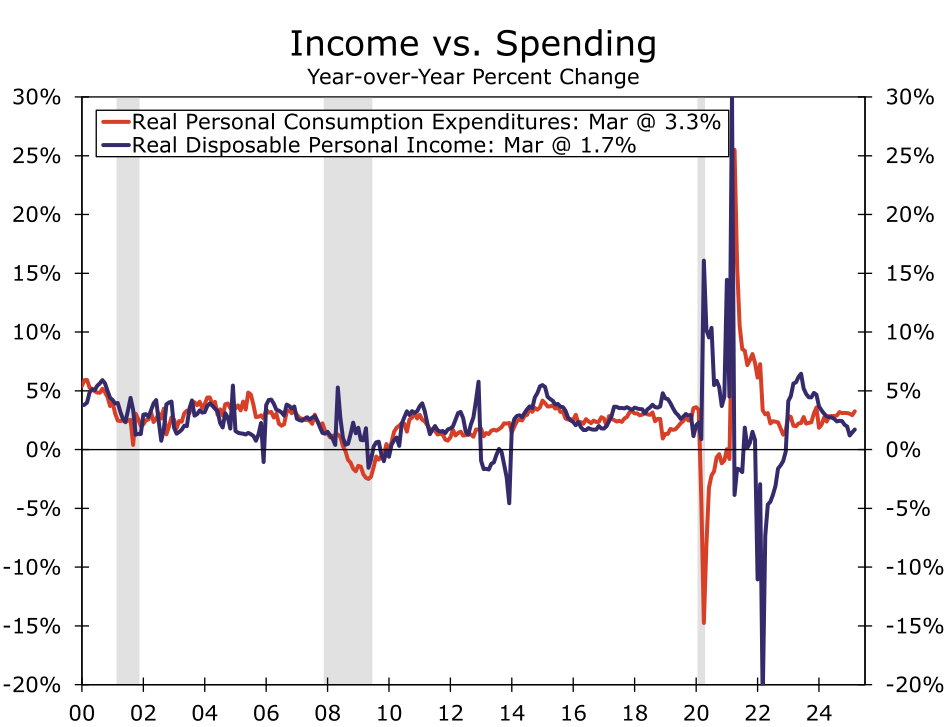
Income growth remained stable through March. Real disposable personal income, a measure of households purchasing power, rose by the most since the start of last year (+0.5%) amid sturdy wage growth. Income growth has slowed over the past year (chart) consistent with increased signs of a moderation in the labor market, yet it has not been a straight deterioration.
The jobs market outlook is clouded by some offsetting factors. Anecdotal comments stem from businesses looking to cut costs may layoff workers to offset tariff pressure. Yet others still reference shortages of qualified labor and say that the pandemic-era shortages remain a viable rationale not to slash their workforce, especially for what may be a 'temporary' economic slowdown. Ultimately the data tell us businesses are not hiring as many workers as they were previously, but they're not exactly laying off workers in droves yet either. Consumers can certainly be spooked into pulling back spending, particularly in an environment where any new price pressure will build on already elevated price levels. It is for this reason that a stable labor position remains important as the potential determining factor for sustaining consumers through whatever tariff-related disruptions are lurking in the months ahead.
Author
Wells Fargo Research Team
Wells Fargo

















