Manufacturing cycle: recession or recovery?
-
We think the euro area manufacturing recession will drag out into Q4 19, as trade war effects continue to work their way through the supply chain and orderinventory dynamics weigh on production.
-
In 2020 we envision a sluggish path of recovery for the manufacturing sector, supported by receding drag from the car and pharma sector and an upturn in the Chinese manufacturing cycle, but event risk remains elevated.
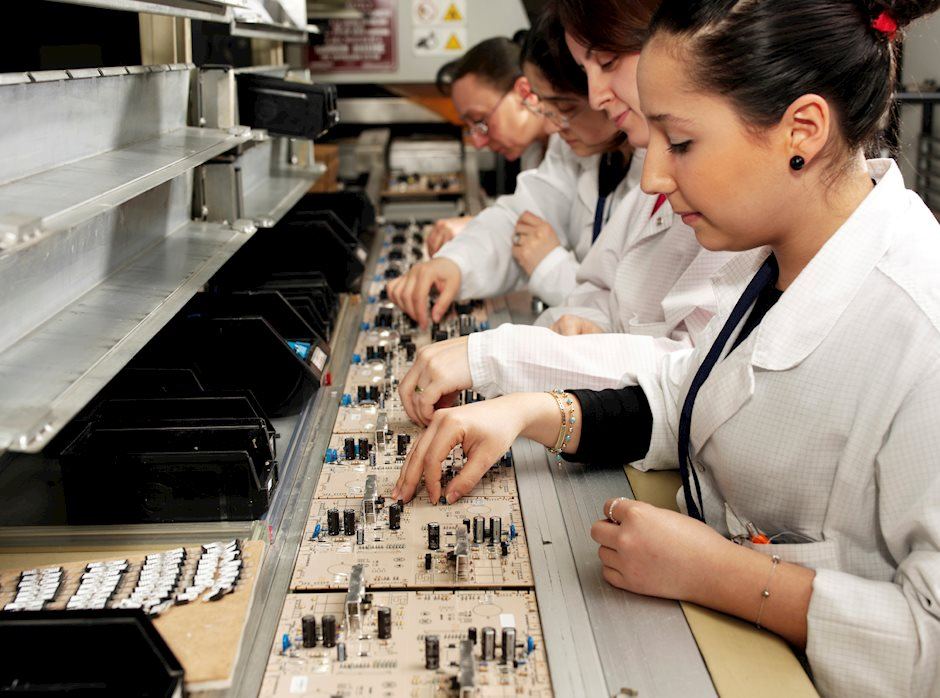

As the euro surprise index closes in on the lows reached at the start of the year (as we anticipated in Euro Area Research – Catching up with reality, 27 June), the focus in the market continues to centre on the protracted manufacturing recession and when a potential trough may finally be reached. Although weaker manufacturing activity is a global phenomenon, the euro area has experienced by far the largest collateral damage from the rougher global trade environment. In this publication we take a closer look at the drivers and outlook for the euro area manufacturing cycle, focusing especially on Germany which has been at the epicentre of the slowdown. In sum, we find evidence that things could start to brighten up in 2020, but a strong rebound is difficult to see and event risk remains elevated.
A broad-based slump in industry
Starting with looking at the drivers, a recent ECB study finds that the fall in euro area industrial production has both been driven by the intensification of global trade tensions and domestic developments. Whereas weakness in international trade was the main contributor to the fall in production in H1 18, since Q3 18 euro area specific developments also played a major role and contributed 63% of the fall in euro area industrial production growth. Much of these had their roots in Germany, but countries with close interlinkages to German industry – such as Italy – have also not been left unscathed.
The decomposition of German industrial production growth reveals that the car sector has been the major driver, also because of the importance of the industry for the German economy, constituting almost a quarter of the weight in manufacturing GVA. Together with a decline in pharma production, the weaker activity in the car sector can explain some two thirds of the slump in industrial production. However, it is fair to say that Germany is suffering from a broad-based industry weakness these days, with few sectors still registering positive production growth at the moment.
Author
Danske Research Team
Danske Bank A/S
Research is part of Danske Bank Markets and operate as Danske Bank's research department. The department monitors financial markets and economic trends of relevance to Danske Bank Markets and its clients.