|

Macro-Market Divergence: Trade Deficit

Trump abruptly cut the peace summit with North Korea without a deal. Ray Dalio, the hedge fund giant said odds of US recession before the next US presidential election have declined to 35% from 50% six months ago. The Swiss franc is the best performer, bringing our CHF Premium deeper into the green. China's February PMI slumped further to reach 49.2, highlighting the divergence between the economy and financial markets. US Q4 GDP finallly was released, coming at 2.6% (vs exp 2.2%) from 3.4% in Q3.  Yesterday, we shed light on the slwdown in US housing. Today we take a look at the swelling US trade deficit. 
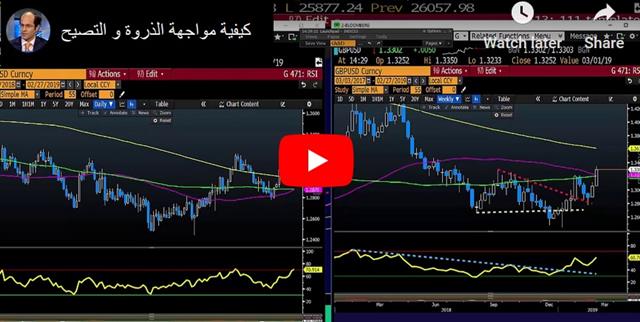
Chart

One of the core elements of Trump's political brand is closing the trade deficit, especially in goods. Yet on Wednesday the US trade deficit sprang to $79.5B compared to $73.9B expected. That will be a further drag on Q4 and along with other soft recent data it means that growth in 2018 will likely be below 3%.

Yet the key reason the dollar has remained so solid is that growth in the high 2% range, which remains better than other developed countries. That's all the reason that the deficit keeps rising.The risk shifts what kind of drastic measures will be taken by the White House to close the gap, and weighing on global growth. It's a potential viscous circle that would intensify if Trump were to win reelection.

In terms of market moves, yields are a driver once again. US 10-year yields rose 4.6 bps to 2.68%. Yields have been chopping near 2.60% for weeks but may have found a bottom and that may lead to a bounce, particularly if the US and China can make a trade deal. On that front, Lighthizer was hawkish in his comments to Congress Wednesday but said he believed a deal was likely.

The US gets a lift from higher than expected US Q4 GDP, but with the figure coming in well below Q1 supports the notion of US growth converging down with the rest of the world.

Author

Adam Button

Adam Button

AshrafLaidi.com

Adam Button has been a currency analyst at Intermarket Strategy since 2012. He is also the CEO and a currency analyst at ForexLive.


More from Adam Button
Share:

Editor's Picks

GBP/USD appears well offered near 1.3160

GBP/USD builds on Tuesday’s losses, although it now manages to pick up some pace and bounce off earlier multi-month troughs near 1.3140. The Greenback’s solid performance and continued political turmoil in the UK are keeping Cable under persistent pressure, with little sign of a meaningful recovery.

EUR/USD rebounds from lows, back to 1.1360

After bottoming out near 1.1320, EUR/USD gathers some traction and reclaims the 1.1350-1.1360 band as the NA session draws to a close on Wednesday. The pair’s drop to multi-month lows comes in response to the continuous leg higher in the US Dollar, which remains propped up by hawkish Fed expectations and uncertainty over the outcome of US-Iran peace negotiations.

Gold pressured near fresh 2026 lows

Gold accelerates its decline and gyrates around the key $4,000 mark per troy ounce on Wednesday, its lowest level since November 2025. In the meantime, tighter-for-longer Fed expectations and a broadly firmer US Dollar continue to weigh on the yellow metal, while uncertainty surrounding a potential US-Iran peace agreement has done little to revive demand for the safe haven space.

XRP nears key support as Fed hike risks suppress demand
Ripple (XRP) continues to face significant selling pressure, trading around $1.05 at the time of writing on Wednesday. This decline mirrors the broader weakness in the crypto market, exacerbated by mounting macroeconomic headwinds and persistent geopolitical uncertainties.
US-Iran talks: The next 60 days will decide where Oil prices go next
Oil markets received some encouraging news after weeks of rising tensions in the Middle East. But let’s not get ahead of ourselves: we’re far from victory, and markets just seem to have priced out the worst-case scenario. The US and Iran have reportedly made "substantive progress" in talks in Switzerland and agreed on a framework for working toward a broader deal within 60 days.
Regime change: Inside Kevin Warsh's first move to make the Fed unreadable on purpose

The rate did not move. That was the least interesting thing about Kevin Warsh's first meeting in charge of the Fed. The FOMC held its benchmark at 3.50%-3.75% for the fourth straight meeting, exactly as priced, and then the new chair used his first press conference to dismantle the machinery the market has leaned on for a decade.














