|

Long-Term Chaos Clamshell in the SP500

 
Since I discovered the Chaos Clamshell pattern in 1990, I have found it to be a most useful pattern for trading. In it's basic form, it is a 7 move complex zig-zag. It shows up on charts ranging from one minute bar charts, to daily, weekly, and even monthly. 

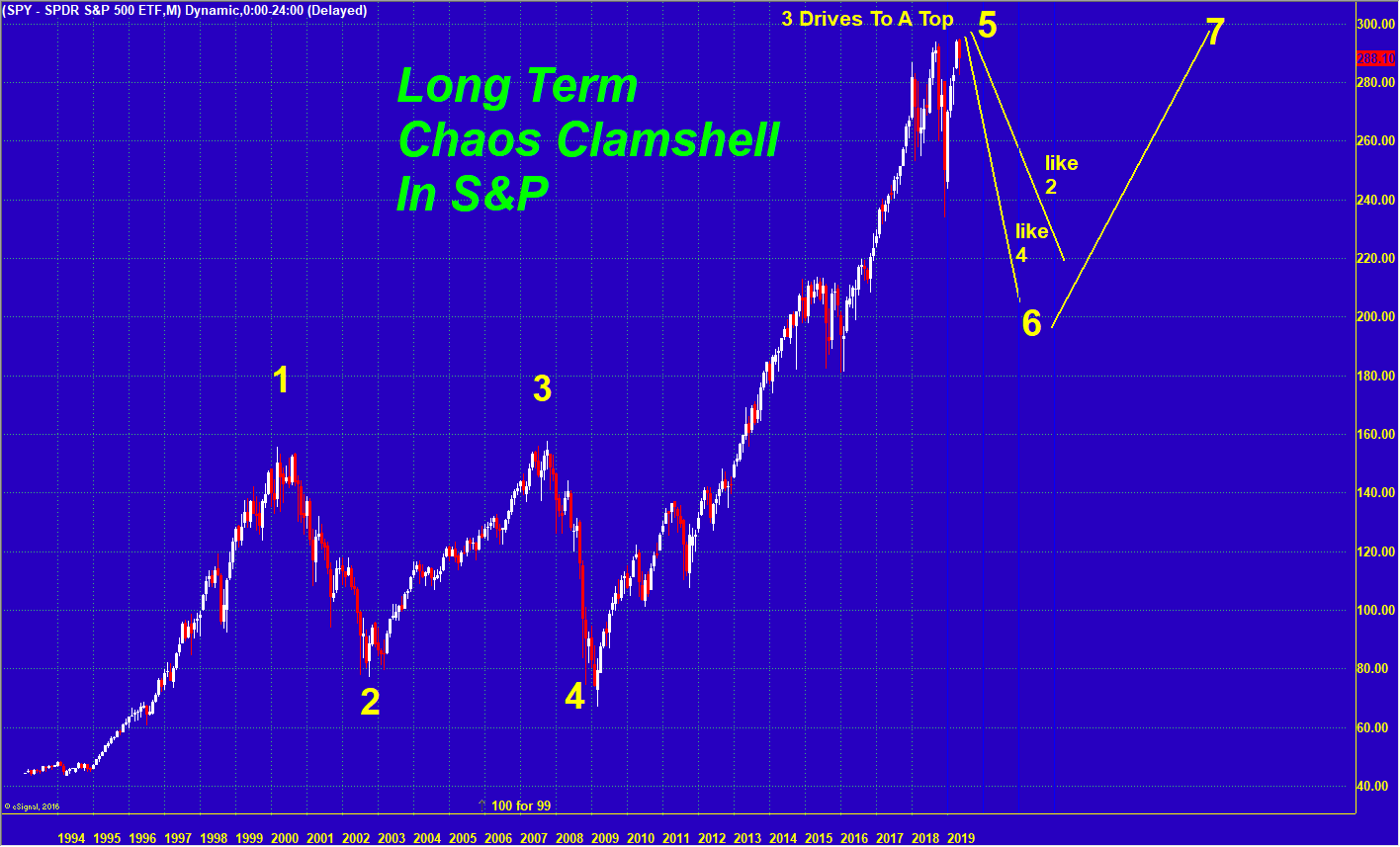
This chart shows the S&P Exchange Traded Fund, SPY since its inception, on a monthly chart. It starts out with moves 1, 2, 3, and 4, forming a base. Move 4 was the Great Recession. 

Move 5 is usually the biggest and fastest move. This is true of the SPY which has risen in a ten year super bull market. Now it looks like that bull is dead. 

In 2018, the S&P make two distinct tops. It has now make a slightly higher top in 2019. This has formed the pattern traders call "Three drives to a top." It is one of the most reliable patterns signaling the end of a move. 

Move 6 and 7 follow move 5. One way to estimate move 6 is to project it as a duplicate of move 2 or 4. That is shown on this chart. It suggests prices in SPY pulling back to 200-220. In the S&P futures, that is 2000-2200.

This content was published on Dr. Al Larson's Chaos Clinic which you can attend each Friday for free.
Dr. Al Larson has developed a complete Chaos Model of Markets, four unique courses that let you become a Certified Chaos Trader, some very unique eMylar fractal pattern overlays, and tools that permit forecasting individual stocks and markets years in advance. You can also sign up for a free weekly email, and attend a free Chaos Clinic on Fridays. To learn more, click on the author's profile.
Be sure to sign up for the free weekly email! 

Author

Dr. Al Larson, PhD

Dr. Al Larson, PhD

MoneyTide.com

Dr. Al Larson holds a Ph.D. in Electrical and Computer Engineering from the University of Wisconsin. He is a 1964 Distinguished Graduate of the U. S. Air Force Academy.


More from Dr. Al Larson, PhD
Share:

Editor's Picks

EUR/USD: US Dollar to remain pressured until uncertainty fog dissipates

Unimpressive European Central Bank left monetary policy unchanged for the fifth consecutive meeting. The United States first-tier employment and inflation data is scheduled for the second week of February. EUR/USD battles to remain afloat above 1.1800, sellers moving to the sidelines.

GBP/USD reclaims 1.3600 and above

GBP/USD reverses two straight days of losses, surpassing the key 1.3600 yardstick on Friday. Cable’s rebound comes as the Greenback slips away from two-week highs in response to some profit-taking mood and speculation of Fed rate cuts. In addition, hawkish comments from the BoE’s Pill are also collaborating with the quid’s improvement.

Gold: Volatility persists in commodity space

After losing more than 8% to end the previous week, Gold remained under heavy selling pressure on Monday and dropped toward $4,400. Although XAU/USD staged a decisive rebound afterward, it failed to stabilize above $5,000. The US economic calendar will feature Nonfarm Payrolls and Consumer Price Index data for January, which could influence the market pricing of the Federal Reserve’s policy outlook and impact Gold’s performance.

Week ahead: US NFP and CPI data to shake Fed cut bets, Japan election looms

US NFP and CPI data awaited after Warsh’s nomination as Fed chief. Yen traders lock gaze on Sunday’s snap election. UK and Eurozone Q4 GDP data also on the agenda. China CPI and PPI could reveal more weakness in domestic demand.

Three scenarios for Japanese Yen ahead of snap election

The latest polls point to a dominant win for the ruling bloc at the upcoming Japanese snap election. The larger Sanae Takaichi’s mandate, the more investors fear faster implementation of tax cuts and spending plans. 

XRP rally extends as modest ETF inflows support recovery

Ripple is accelerating its recovery, trading above $1.36 at the time of writing on Friday, as investors adjust their positions following a turbulent week in the broader crypto market. The remittance token is up over 21% from its intraday low of $1.12.