|

Lockdown linguistics
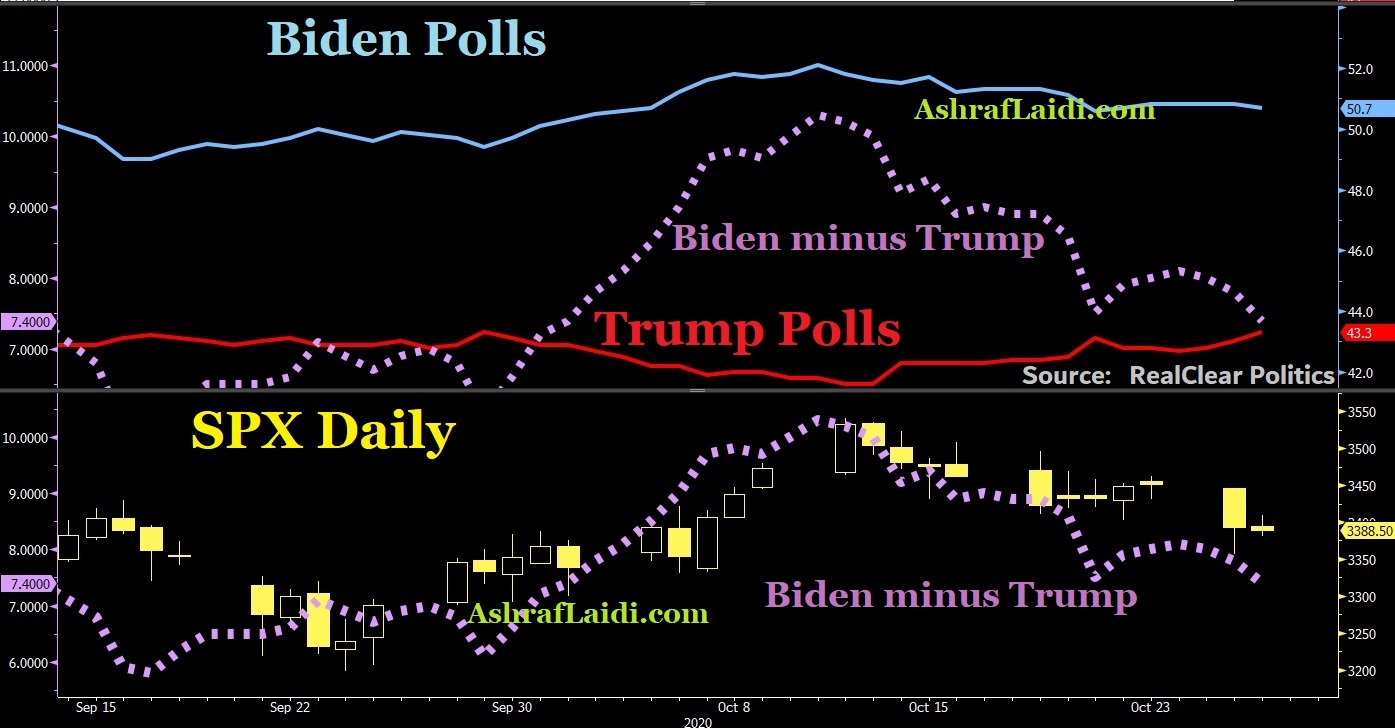
At the moment, the market is struggling with the question of 'lockdown vs no lockdown' as coronavirus cases surge but with that framing, we're asking the wrong question. Take a look at the GOLD and DOW30 charts at the bottom of this piece. Meanwhile, Ashraf posted this latest chart, highlighting the unfolding correlation between Biden-Trump polls and the market. 
There is no consensus definition for what a pandemic 'lockdown' means. It's used to range from everything to harshly-enforced home quarantines in China to the closures of bars. As cases mount, there's a fear of a new lockdown as if it's a binary event when in reality is a series of potential steps that governments could take.

The likelihood of true nationwide lockdowns was saw in March is remote. Even parks were closed in many countries and that's something that proved unnecessary.

The real question is how a resurgence in virus cases will impact economies. It's how much economic growth will be curbed by efforts to curb the virus, whether those are government mandated or behavioral.

Framing it as lockdown vs no lockdown is a mistake. What we should be considering is how much a continued spike through flu season will affect consumer behaviour. Part of the reason we don't hear much commentary about that is because it's so difficult to estimate. Returning to a lockdown would mirror what happened in March; economists now have a model for that.

What we don't have any idea on is how consumers will react to a long, dangerous and depressing winter. Will banks and governments continue their generosity? Will business owners continue to battle or close their doors?

There is no model to fall back on and almost every turn so far in the pandemic has been unexpected. Caution is warranted.

Author

Adam Button

Adam Button

AshrafLaidi.com

Adam Button has been a currency analyst at Intermarket Strategy since 2012. He is also the CEO and a currency analyst at ForexLive.


More from Adam Button
Share:

Editor's Picks

EUR/USD hits two-day highs near 1.1820

EUR/USD picks up pace and reaches two-day tops around 1.1820 at the end of the week. The pair’s move higher comes on the back of renewed weakness in the US Dollar amid growing talk that the Fed could deliver an interest rate cut as early as March. On the docket, the flash US Consumer Sentiment improves to 57.3 in February.

GBP/USD reclaims 1.3600 and above

GBP/USD reverses two straight days of losses, surpassing the key 1.3600 yardstick on Friday. Cable’s rebound comes as the Greenback slips away from two-week highs in response to some profit-taking mood and speculation of Fed rate cuts. In addition, hawkish comments from the BoE’s Pill are also collaborating with the quid’s improvement.

Gold climbs further, focus is back to 45,000

Gold regains upside traction and surpasses the $4,900 mark per troy ounce at the end of the week, shifting its attention to the critical $5,000 region. The move reflects a shift in risk sentiment, driving flows back towards traditional safe haven assets and supporting the yellow metal.

Crypto Today: Bitcoin, Ethereum, XRP rebound amid risk-off, $2.6 billion liquidation wave

Bitcoin edges up above $65,000 at the time of writing on Friday, as dust from the recent macro-triggered sell-off settles. The leading altcoin, Ethereum, hovers above $1,900, but resistance at $2,000 caps the upside. Meanwhile, Ripple has recorded the largest intraday jump among the three assets, up over 10% to $1.35.

Three scenarios for Japanese Yen ahead of snap election

The latest polls point to a dominant win for the ruling bloc at the upcoming Japanese snap election. The larger Sanae Takaichi’s mandate, the more investors fear faster implementation of tax cuts and spending plans. 

XRP rally extends as modest ETF inflows support recovery

Ripple is accelerating its recovery, trading above $1.36 at the time of writing on Friday, as investors adjust their positions following a turbulent week in the broader crypto market. The remittance token is up over 21% from its intraday low of $1.12.














