Live markets Elliott Wave: AUD/USD, Nasdaq and WTI [Video]
![Live markets Elliott Wave: AUD/USD, Nasdaq and WTI [Video]](https://editorial.fxsstatic.com/images/i/aud-usd-001_XtraLarge.jpg)

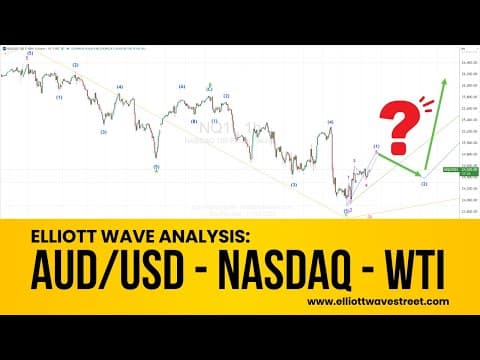
As a professional trader, every week brings new challenges and opportunities in the markets. This time, my focus is on the Australian dollar, the NASDAQ, and WTI crude oil—three key assets for today’s trading landscape. In this article, you’ll learn how to spot invisible liquidity walls, apply Elliott Wave theory to validate scenarios, and choose effective strategies based on the market’s current cycle.
Understanding Liquidity and the Invisible Walls
In professional trading, liquidity is one of the most crucial—yet often underestimated—elements. Identifying zones where price is likely to react, known as “liquidity walls,” can be the difference between a winning trade and an unexpected loss.
How do you identify a liquidity wall?
The most effective method is to analyze candle wicks in key areas and use specialized indicators. However, it’s equally important to “read” price action directly:
- A long wick on a candle = potential liquidity wall.
- A series of large candles with no pullbacks = low liquidity (price is likely to continue in the same direction).
AUD/USD
This week, we’re focusing on confirming the end of Wave 2 to pinpoint the start of the bullish Wave 3. It’s essential to read each candle carefully to gather liquidity information and confirm the plan.
NASDAQ and the Art of Wave 2
On the NASDAQ, flexibility is key:
- For swing trading, look for a clean Wave 2 setup before entering a long position.
- For day trading, prioritize shorter cycles, quick profit-taking, and tight management to handle potential reversals.
Remember: Every timeframe has its own rules. Higher timeframes favor wider swings, while lower timeframes require discipline and active trade management.
Additional Tips for Disciplined Traders
- Don’t rely on “predicting” the future—react to price action.
- Manage your trades candle by candle, adjusting stops and taking profits as the cycle unfolds.
Leveraging Elliott Waves and hidden liquidity zones allows you to trade with greater confidence while minimizing risk and maximizing opportunities.
Author
Juan Maldonado
Elliott Wave Street
Juan Maldonado has a University degree in Finance, and Foreign trade started his trading career in 2008. Since 2010 has been analyzing the markets using Elliott Wave with different strategies to spot high probability trades.